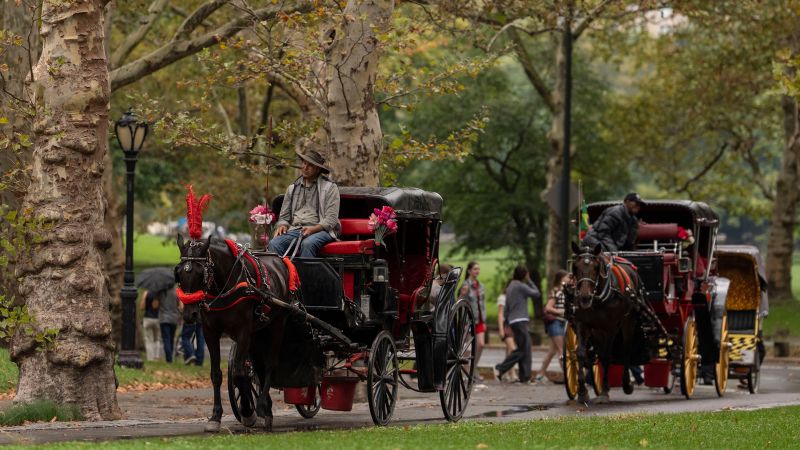
Facing a ban on horse-drawn carriages, Central Park’s drivers fear for their future

Daftar Isi
New York City Moves Toward Ending Central Park Horse Carriage Rides
Activelifezero.com – New York City is preparing to phase out one of Central Park’s most recognizable attractions: horse-drawn carriage rides. A City Council measure approved Thursday would prohibit the industry by June 2028, bringing an end to a tradition that has operated around the park for more than 150 years.
For visitors, the carriages have long represented a nostalgic view of the city. For animal welfare advocates, however, they have been a persistent concern. The council’s action follows the death last spring of 18-year-old Indian tourist Romanch Mahajan, who died after jumping from a runaway carriage during a ride. The incident appeared to be the first fatal accident involving a Central Park horse carriage since the service began.
While the vote sets a deadline for closing the industry, it leaves a deeply personal question unresolved for drivers: how will they support themselves, their families and the horses they care for once the rides stop?
A transition plan still to be written
The legislation directs Mayor Zohran Mamdani’s administration to produce a worker-transition strategy by next April. More than 150 remaining carriage drivers could receive career guidance and referrals to jobs in transit, hospitality and taxi-related fields. The city may also consider financial compensation for workers affected by the ban.
City Hall has begun discussions about possible compensation and is developing a more detailed workforce plan, a spokesperson for the mayor said. Mamdani has argued that the city has a responsibility to ensure workers are not abandoned as the policy changes.
That promise offers little certainty to many drivers who see their livelihoods disappearing. Alexus Lawson, a 28-year-old Queens carriage driver who grew up around horses and has also worked as a riding instructor, worries particularly about Starlight, her 7-year-old horse, and the other animals in her care.
“No one can come up with an appropriate answer because there is none,” Lawson said.
“Without a job, how can I take care of my horses?”
The issue extends beyond finding a replacement occupation. Carriage work is tied to the costs of maintaining horses, including their housing, feed and daily care. A career referral may help identify new employment, but drivers say it does not immediately answer what will happen to the animals or how owners will cover expenses during the transition.
Drivers fear another industry upheaval
Medet Fidan, 56, sees the proposed shutdown through the lens of his own previous career change. Once a cab driver, he turned to carriage work after ride-hailing apps disrupted New York’s taxi business. Now he believes the city is again taking away a profession without presenting a complete alternative.
“I think the city is leaving us a big mess,” Fidan said.
“We’re going to lose our businesses, we’re going to lose our jobs, we’re going to lose our livelihoods.”
Christina Hansen, a longtime driver and industry spokesperson, said the legislation does not yet provide a meaningful path for people whose businesses will be forced to close. Drivers have expressed sympathy for Mahajan’s family while maintaining that a single devastating event should not determine the future of every operator.
“It does nothing for alternate employment, for the continuation of our businesses,” Hansen said.
“Who’s going to pay my rent while I’m looking for a job?”
The union representing carriage drivers has pledged to challenge the measure in court as soon as it becomes law. That legal fight could become the next chapter in a long-running dispute over whether horses belong in one of the world’s busiest urban parks.
A tragedy becomes a call for change
Mahajan’s family has pushed personally for an end to the rides, telling city officials that they had believed the attraction was safe. At a Thursday rally, his uncle, Gaurav Mahajan, stood with animal welfare advocates and local lawmakers to welcome the council’s decision.
“The hour of justice has finally arrived,” he said.
“We’re turning our shattering loss into an unbreakable shield of kindness for the city. For months, our family hasn’t been allowed to just grieve.”
“We’ve had to fight. We’ve had to channel our devastating sorrow into a war for change.”
The proposal’s supporters say Central Park has changed substantially from the era in which carriage rides began. The park is now shared by walkers, cyclists, dog owners, runners, families and large crowds of tourists. Council Speaker Julie Menin said horses no longer fit comfortably within that crowded environment, while also stressing that displaced workers deserve protection.
A spokesperson for Menin said she would remain involved as the transition process unfolds. The law’s deadline for a city plan is intended to prevent workers’ future from being left as an afterthought.
An old political debate reaches a new stage
Efforts to eliminate horse-carriage rides have repeatedly failed in previous administrations. Former Mayor Bill de Blasio pledged during his campaign to end the service immediately after taking office, but the initiative faded amid union resistance and a high-profile campaign involving actor Liam Neeson. Eric Adams, Mamdani’s immediate predecessor, raised the possibility of a ban late in his tenure, but his proposal did not advance.
Even President Donald Trump weighed in against the new measure. Trump, whose namesake tower is located near Central Park, described carriage rides as an essential part of the city’s identity.
“It was a Great Tradition. Another piece of History that’s gone. It will be missed!” Trump wrote on social media.
For now, carriage rides will continue while the city prepares for the 2028 deadline and the industry contests the law. The coming months will determine whether officials can create a transition plan that delivers more than general assurances—one that addresses employment, compensation and the welfare of the horses at the center of the debate.
The council vote may have settled the policy direction, but it has not settled the human consequences. For drivers who have built their lives around Central Park’s carriage trade, the end of a historic attraction is also the beginning of an uncertain search for what comes next.
Related Reading
Frequently Asked Questions
What is Facing a ban on horse drawn?
Facing a ban on horse drawn is the main topic of this guide. The article explains the context, practical details, and next steps readers should understand.
Why does Facing a ban on horse drawn matter?
Facing a ban on horse drawn matters because readers are looking for a useful answer, not just a short summary. Good content should match search intent and help them decide what to do next.