Europe bows to US pressure to release diesel reserves ahead of midterm elections

Daftar Isi
Europe Bows to US Pressure on Diesel Reserves
Activelifezero.com – Europe bows to US pressure as governments prepare to release diesel from emergency stockpiles, seeking to ease fuel-market strain ahead of the November midterm elections. President Donald Trump said Friday that European countries would make a “massive amount” of heavily stocked diesel available immediately.
The decision followed crisis discussions among European officials and a France-chaired videoconference of G7 leaders. The group said existing commitments would be implemented through a release of 100 million barrels over four months, starting at once. G7 members and partners are expected to make a significant diesel drawdown during the first 20 days.
“The process will begin immediately.”
Why diesel supplies matter
Diesel plays a vital role in the global economy, powering freight trucks, agricultural equipment, commercial rail transport and other vehicles that carry goods. It is also important for household heating in places where demand increases during winter.
Rising diesel prices have become politically sensitive in the United States. Trump has promoted the possibility of restricting US diesel exports to keep more fuel available domestically. But the United States is the world’s largest diesel exporter, and a halt in shipments would create serious problems for overseas buyers.
Europe is a net diesel importer, leaving it particularly exposed to disruption in US supplies. Europe bows to US pressure in part because an American export ban could force importing countries to compete for a far smaller pool of fuel, according to analysts.
Emergency reserves provide short-term relief
European Union member states are required to maintain oil inventories equal to 90 days of net imports. Those holdings do not need to consist of a fixed share of diesel, crude oil, jet fuel or kerosene, allowing governments some flexibility during market stress.
That flexibility has limits. Emergency reserves can improve availability and moderate prices in the near term, but they are intended to protect economies during serious supply disruptions. If shortages persist, reduced inventories could leave governments with more difficult decisions later.
“If the underlying disruption continues, you cannot keep drawing inventories indefinitely without eventually creating a much bigger supply problem,” said Matt Stanley, head of market engagement at Kpler.
The reserve release may help meet demand during the harvest period and before the winter heating season. It does not, however, solve the supply disruptions that have tightened the global diesel market.
War and export restrictions tighten diesel markets
The US-Iran war, now in its eighth month, has interrupted flows of crude oil and refined products from the Middle East. Europe has avoided widespread physical shortages, but constrained supply has driven fuel prices sharply higher.
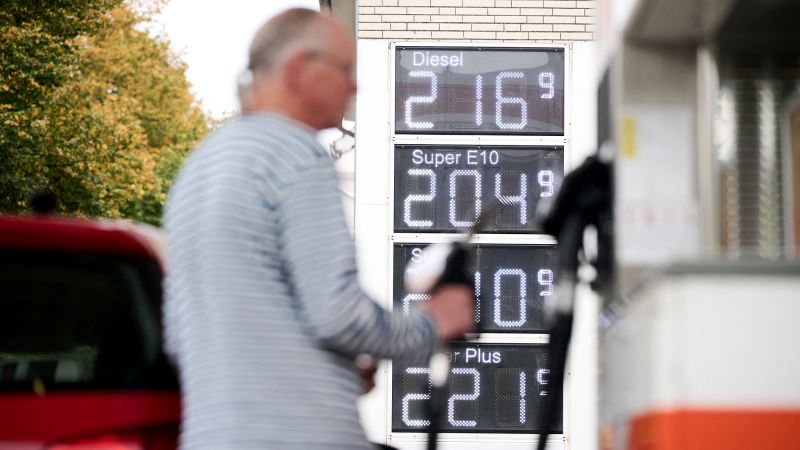
US diesel prices have also climbed since the conflict began. The national price rose above $6 a gallon for the first time last month and averaged $6.40 a gallon Friday morning. Prices fell 5% on Friday after news of the coordinated reserve release.
European benchmark diesel prices have more than doubled since the war began in late February. Russia has extended its diesel export ban through the end of October after Ukrainian drone strikes affected refinery operations. Possible tighter limits on Chinese oil-product exports could add further uncertainty.
US Treasury Secretary Scott Bessent and Energy Secretary Chris Wright urged European governments to release stored diesel during the week. Wright said the timing was important because agricultural and winter-heating demand are approaching.
FAQ: Europe’s Diesel Reserve Release
Why is Europe releasing diesel reserves?
European governments are releasing emergency diesel supplies to ease tight markets, support fuel availability and help reduce price pressure while major global supply disruptions continue.
Will the release eliminate higher diesel prices?
The additional supply may provide short-term relief, but prices will still depend on the conflict-related disruption in the Middle East, Russian export restrictions and potential changes to Chinese fuel exports.
Why is Europe especially vulnerable to diesel disruption?
Europe imports more diesel than it exports and relies heavily on international supplies, including cargoes from the United States. That dependence makes any interruption in global trade especially significant.
As Europe bows to US pressure to draw on its reserves, leaders must balance immediate price and supply concerns with the need to preserve emergency stockpiles for future disruptions.