Bulldozers rip into Big Bend National Park, driving anger and heartbreak

Daftar Isi
Environmental Destruction Looms Over Texas Desert Sanctuary as Border Construction Accelerates
Activelifezero.com – For centuries, the dramatic landscape of Big Bend National Park has served as a natural sentinel between the United States and Mexico. Towering limestone cliffs, rugged mountain peaks, and an unforgiving desert environment have created what locals call a “God-made barrier” against migration. Yet today, heavy machinery is tearing through this ancient wilderness, sparking outrage among conservationists, local officials, and even some supporters of border security.
The transformation of this remote corner of Texas represents one of the most significant environmental challenges facing the national park system in recent decades. While the park accounts for merely one percent of all unauthorized border crossings nationwide, federal authorities are investing billions in infrastructure that could permanently alter its character.
A Landscape Under Siege
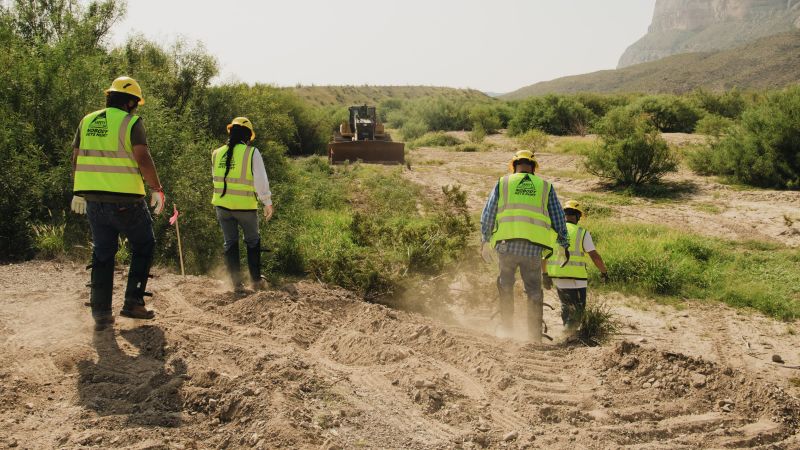
Video footage captured earlier this month showed bulldozers uprooting native trees and moving massive quantities of earth while deer and other wildlife cautiously trotted past the construction zones. These preliminary operations precede a $1.72 billion main construction project that federal officials have designated for the area within Big Bend National Park boundaries.
“We didn’t have to worry about any type of barrier. We had a God-made barrier,” said Sheriff Thaddeus Cleveland of Terrell County, a vast and sparsely populated area northeast of the park.
Cleveland, who spent twenty-six years serving in the US Border Patrol, recalled growing up in the region with little discussion about needing additional infrastructure. His perspective has shifted dramatically as the construction footprint expands across the desert landscape.
US Customs and Border Protection has clarified that officials do not intend to erect the same thirty-foot-high barriers that have become visible across portions of Arizona, California, New Mexico, and Texas. Nevertheless, environmental advocates argue that the current approach proves equally devastating to the ecosystem.
Legal Waivers Clear the Path
The acceleration of construction followed a critical decision in February when then-Secretary of Homeland Security Kristi Noem waived several federal statutes. These exemptions covered environmental safety requirements, historic preservation mandates, and wildlife protection measures, among other initiatives. Noem cited what she described as “an acute and immediate need to construct additional physical barriers and roads” throughout the Big Bend region.
Photographer Natalie Newman had already committed to documenting the area when these waivers took effect. What began as a project to capture the park’s natural splendor has evolved into something more urgent.
“It started out as just documenting the beauty of it, trying to get people to see why it’s special and what makes it special and what makes it so beautiful and worth protecting. But that has transformed just over the last week,” she told CNN, standing near Santa Elena Canyon, where tall cliffs rise nearly 1,500 feet high from the Rio Grande and where she first saw bulldozers working in the national park.
Newman’s observations reflect a broader concern among those monitoring the construction. The park, which spans more territory than the state of Rhode Island, traditionally offers visitors encounters with wildlife that outnumber human presence. Javelinas—mammals resembling small wild pigs despite belonging to an entirely different species—roam freely alongside hundreds of bird species.
Historical Parallels and Growing Opposition
Retired park superintendent Bob Krumenaker has drawn comparisons to one of the most consequential environmental debates in American history. He envisions a scenario where Big Bend’s transformation rivals the flooding of Hetch Hetchy Valley a century ago, an event that fundamentally shifted conversations about wilderness preservation.
“If they continue with this and build most of the things they have talked about, or even a good fraction of those, this will be the biggest desecration of the national park system — not just Big Bend National Park — since they built a dam in a pristine valley in Yosemite National Park more than 100 years ago. This is a story that our children and grandchildren will be telling,” he told CNN.
Krumenaker characterizes the entire initiative as “insane,” emphasizing that the cumulative impact extends beyond Big Bend’s boundaries. The park sits within the Chihuahuan desert, recognized as the largest desert ecosystem in North America, with cacti and wildflowers blooming across both state and federal lands.
The coalition opposing the construction spans political and generational lines. Critics include elected Republicans, young activists, a sheriff known for supporting border control measures, and former National Park Service leadership. Their shared concern centers on the permanent alteration of a landscape that has remained relatively untouched for thousands of years.
Looking Ahead
The broader border infrastructure plan aims to complete the wall—or some variation of it—before President Trump departs office. The vision encompasses steel walls, vehicle barriers, and hundreds of miles of new roads cutting through some of the most remote areas of the southwestern United States.
For Newman, the work has shifted from capturing scenic beauty to tracking construction progress through her binoculars. She remains optimistic that intervention may still be possible.
“I’m hopeful every single day that it’ll be the day that someone somewhere does something that puts a stop to it,” she said.
As bulldozers continue their relentless work across the desert, Big Bend National Park stands at a crossroads. The decisions made today will echo through generations, determining whether this ancient landscape remains a testament to natural beauty or becomes another casualty of infrastructure expansion.
Related Reading
Frequently Asked Questions
What is Bulldozers rip into Big Bend National?
Bulldozers rip into Big Bend National is the main topic of this guide. The article explains the context, practical details, and next steps readers should understand.
Why does Bulldozers rip into Big Bend National matter?
Bulldozers rip into Big Bend National matters because readers are looking for a useful answer, not just a short summary. Good content should match search intent and help them decide what to do next.