A tiny nordic nation weighs moving closer to Europe under the shadow of Trump

Daftar Isi
Iceland’s Arctic Crossroads: A 400,000-Person Nation Weighs Its Future Inside Europe
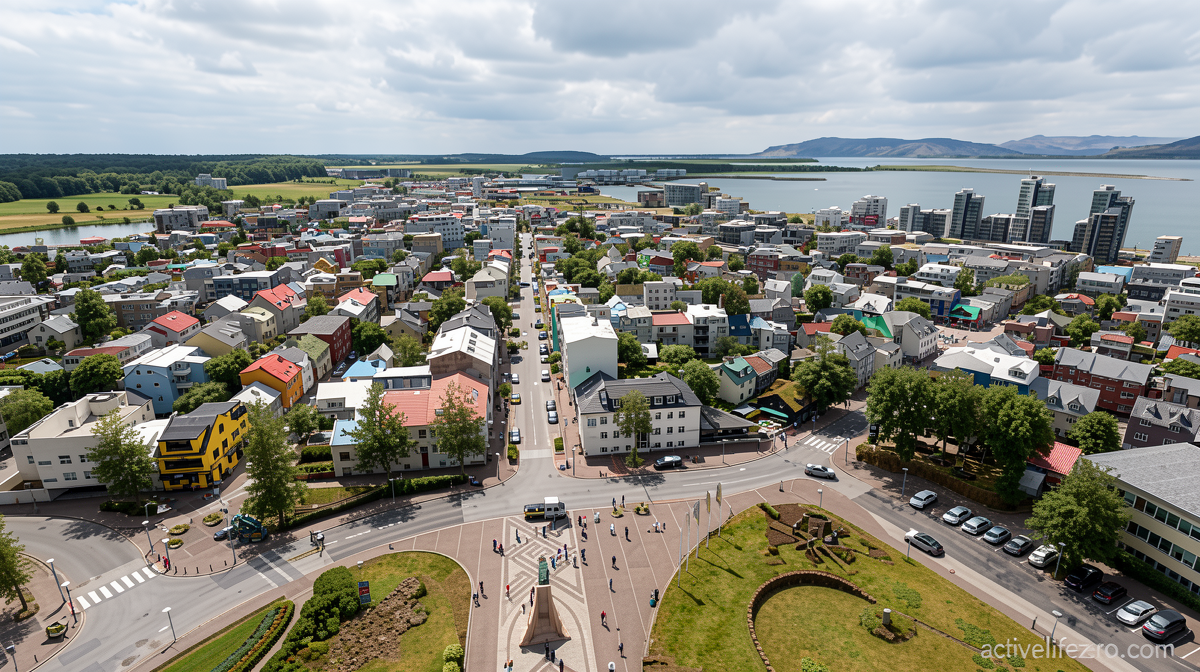
Activelifezero.com – For most of the year, Iceland endures temperatures that plunge well below freezing for roughly five months. Yet the government deliberately scheduled its most consequential national vote of the decade for a warm Saturday in summer — a day when residents could step outside, feel the sun, and cast ballots on a question that will reshape the island’s relationship with continental Europe. The referendum asks whether Iceland should reopen accession negotiations with the European Union, talks that have been suspended for over a decade.
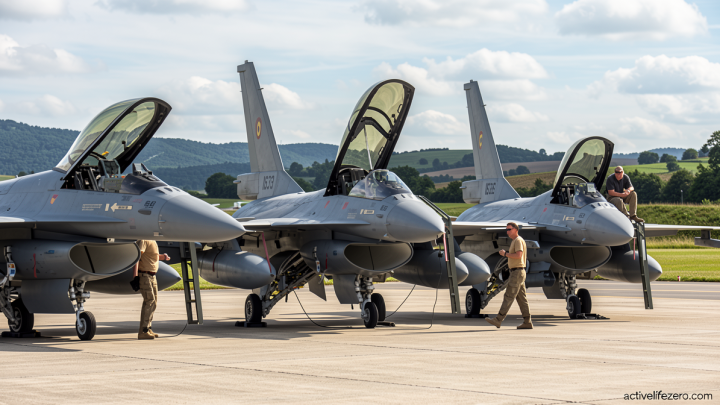
The timing is anything but accidental. Over the past year, President Donald Trump’s repeated and often brazen demands for control of Greenland have thrust Arctic security into the center of European strategic thinking. Iceland, a nation with a capable coast guard but no standing army and no dedicated defense ministry, now occupies a far more exposed position in a world where great-power coercion is back on the menu. The island’s geographic placement between North America and Europe, sitting astride key North Atlantic shipping lanes, has made it a focal point of renewed military attention.
A Frozen Process Thawed by Politics
Iceland first submitted its EU application in 2009, a decision driven largely by the financial catastrophe that had devastated households and enterprises across the small country of approximately 400,000 inhabitants. Negotiations progressed for several years before an incoming center-right administration abruptly halted the process, citing fears that membership would erode Iceland’s sovereign control over its vast territorial fishing waters. The talks have remained frozen ever since.
The current center-left coalition, led by the Social Democratic Alliance, entered power with a campaign pledge to hold a public vote on restarting those negotiations “no later than 2027,” paired with a broader foreign-policy platform emphasizing closer alignment with the EU, fellow Nordic states, and NATO. Saturday’s ballot fulfills that commitment.
The Economic Question at the Ballot Box
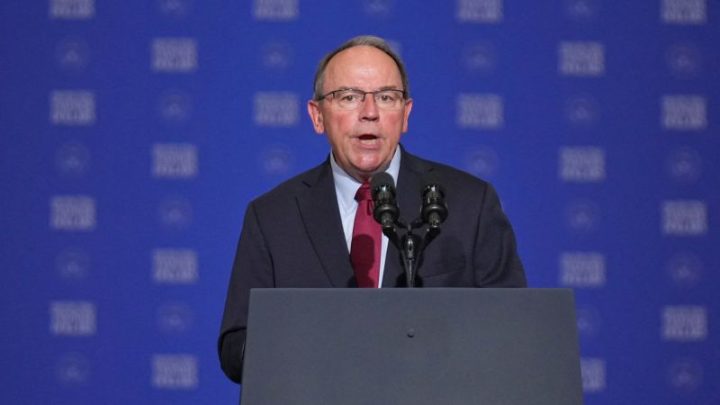
Public debate has gravitated almost exclusively toward economics: what membership in the eurozone would mean for Icelandic monetary policy, how changes to common fisheries rules would affect a sector that remains central to national identity and livelihood, and whether the regulatory burden of full EU integration would outweigh the benefits of a larger single market. Prime Minister Kristrún Frostadóttir has framed the “yes” case not as a commitment to join but as a commitment to explore.
“It’s preserving optionality” to see what an agreement looks like, according to the prime minister. “You can be a ‘maybe’ person on the EU and still say ‘yes’ (to talks) because you want to see what this looks like.”
In other words, a vote to restart talks is not a vote to surrender sovereignty. It is a vote to open a door and inspect the room before deciding whether to walk through.
Security Recalculates the Equation
Yet the referendum does not occur in a geopolitical vacuum. Iceland already belongs to NATO and the European Economic Area, which guarantees free movement of people, goods, and capital across 30 countries. It also participates in the Schengen area of passport-free travel. Most recently, the island signed a maritime-security compact with four other NATO partners aimed at strengthening patrols in the Arctic and North Atlantic — a theater of growing importance given sustained Russian naval activity in those waters.
Almut Möller, director for European and global affairs at the European Policy Centre in Brussels, argues that the security landscape has fundamentally altered the calculus for both sides.
“For the European Union, Iceland will be in the security environment a much more relevant partner compared to, say, 10 years ago,” Möller said. “This is a very different context.”
She added that, amid global instability, there is a genuine appetite within the 27-member bloc to demonstrate institutional vitality — to show that the union remains open, expanding, and strategically engaged.
“[The EU wants to] show the union is alive and ticking. That it’s welcoming new members, and it is a union that is also growing in geostrategy, geopolitics and security,” Möller said.
That appetite was sharpened by the United Kingdom’s 2016 Brexit referendum, which triggered a wave of speculation that other peripheral members might follow. A visible accession process, even one that stalls at the negotiating-table stage, would counter that narrative.
From Neutral Island to Strategic Node
Iceland maintained neutrality throughout World War II and, after the Cold War, experienced no serious external threat. The United States military, which had maintained a base on the island, withdrew in 2006 as the perceived Soviet threat evaporated. That quiet ended with Russia’s full-scale invasion of Ukraine in 2022, which brought renewed US Navy activity and fresh NATO investment back to Icelandic shores.
Ragnar Hjálmarsson, a senior adviser at the Icelandic think tank Varda, notes that the population is rapidly adjusting its self-image from peripheral island to strategically relevant actor. He acknowledges that Trump’s repeated misidentification of Greenland as Iceland — a gaffe that caused genuine anxiety in Reykjavik — inadvertently sharpened national awareness of the island’s own strategic value.
“But it also made Icelanders aware of… the strategic importance of Iceland. It has, however, not changed what the voters are talking about,” Hjálmarsson said.
Frostadóttir, speaking on The Rest is Politics podcast, has argued that the current geopolitical moment tilts the balance in Iceland’s favor at the negotiating table.
“I think this is a great time for Iceland to join, because of the geopolitical situation we’re in,” Frostadóttir said. “It also gives us a stronger position, I think, in accession talks.”
What Comes Next
Whichever way the ballot lands, the result will send immediate signals to Brussels, Washington, Moscow, and the other Nordic capitals. A “yes” would trigger a formal request to resume accession chapters, likely accompanied by intensified bilateral security coordination. A “no” would confirm that Iceland’s current architecture — NATO membership, EEA participation, Schengen travel, and ad hoc Arctic pacts — remains sufficient for the foreseeable future, even as the strategic environment continues to tighten around its shores.
For a nation of four hundred thousand people, the stakes of a single Saturday vote extend well beyond the island’s borders. The answer Iceland gives will be read as a statement about whether small states in the Arctic can still shape their own destiny, or whether the new era of great-power competition will absorb them regardless of preference.
Related Reading
Frequently Asked Questions
What is A tiny nordic nation weighs moving?
A tiny nordic nation weighs moving is the main topic of this guide. The article explains the context, practical details, and next steps readers should understand.
Why does A tiny nordic nation weighs moving matter?
A tiny nordic nation weighs moving matters because readers are looking for a useful answer, not just a short summary. Good content should match search intent and help them decide what to do next.