
Famed Magritte painting damaged by child with pine cone
Famed Magritte Painting Sustains Minor Damage from Young Visitor
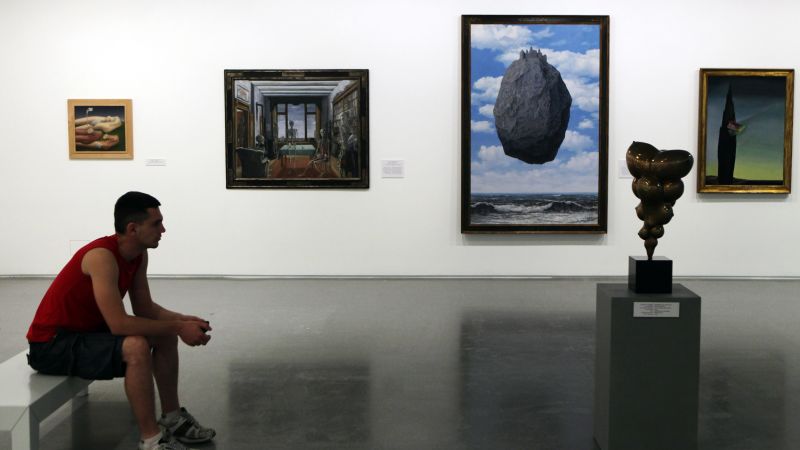
Famed Magritte painting damaged by child – René Magritte’s iconic artwork, *Castle of the Pyrenees*, recently experienced a small but notable incident when a 5-year-old boy inadvertently caused harm to the 1959 painting. The Israel Museum in Jerusalem, where the piece is housed, has initiated a restoration process to mend the damage. According to the museum, the boy was holding a pine cone during the event, which led to a minor scratch on the canvas. While the injury to the artwork is described as “not significant,” the occurrence has sparked discussions about balancing accessibility with preservation efforts in art institutions.
A Historic Piece of Surrealist Art
*Castle of the Pyrenees* is a celebrated centerpiece of the Israel Museum’s collection, renowned for its surreal depiction of a castle perched on a massive rock above turbulent waters. The piece, which has drawn admiration from visitors for decades, was originally commissioned by Harry Torczyner, a close friend and financial supporter of the Belgian artist. Torczyner gifted the painting to the museum in 1985 to commemorate its 20th anniversary, ensuring its place in public display for future generations. The artwork’s unique blend of dreamlike imagery and precise detail continues to captivate audiences, making it a frequent subject of both scholarly analysis and casual admiration.
Conservationists at the museum have emphasized the importance of maintaining the painting’s integrity while acknowledging the whimsical nature of the incident. In a statement provided to CNN, a museum spokesperson noted: “The damage, though minor, was unintentional and resulted from a child’s playful exploration of the galleries.” The same source highlighted that the painting is among the most visited in the museum’s modern art section, underscoring its cultural significance and popularity. Despite the setback, the museum remains optimistic about the restoration timeline, aiming to reintroduce the piece to the galleries as soon as possible.
A Pattern of Unintentional Art Damage
This incident is not the first time a globally recognized artwork has faced similar mishaps due to young visitors. Just a year prior, a Mark Rothko painting, *Grey, Orange on Maroon, No. 8*, suffered damage when a child scratched its surface at the Museum Boijmans Van Beuningen in Rotterdam. The Rothko piece, valued at millions, was temporarily removed for repairs but has since been restored and is now part of a major exhibition in Florence, Italy. The museum spokesperson described the event as “an unfortunate but common occurrence in the art world,” where the curiosity of children often leads to unexpected interactions with priceless works.
Such cases highlight the delicate challenge museums face in preserving art while allowing public engagement. The Israel Museum’s team has stated that they are continuously refining their approach to safeguard valuable pieces. “We strive to create an immersive experience for visitors while implementing measures to protect the artwork,” the spokesperson said. This includes the strategic placement of barriers and the evaluation of visitor access protocols. The *Castle of the Pyrenees* incident serves as a reminder of the unpredictable nature of art appreciation, where even the most innocent actions can leave a mark.
The Value and Legacy of Magritte’s Work
Magritte, a pivotal figure in the 20th-century surrealist movement, is celebrated for his ability to blend the absurd with the familiar. His works often feature enigmatic scenes that provoke thought and curiosity, a quality that has made them highly sought after in the art market. In 2024, one of his masterpieces, *L’empire des lumières*, sold for an astonishing $121 million at Christie’s in New York, setting a new auction record. This underscores the enduring value of his creations, even as they face occasional challenges in public spaces.
*Castle of the Pyrenees* itself has a storied history that extends beyond its visual appeal. The painting’s provenance was explored in depth during a dedicated exhibition in 2022, which highlighted how Torczyner commissioned Magritte to address an “ugly view” from a large window in his office. The story of its creation and journey to the museum has since become a part of its legacy, adding layers of meaning to its presence in the galleries. The audio recordings from that exhibition are still accessible on the museum’s website, allowing visitors to engage with the narrative behind the artwork.
Responding to the Incident
The Israel Museum’s response to the recent damage has been measured and transparent. In a statement shared with CNN, the spokesperson reiterated the museum’s commitment to both preserving its collection and fostering a welcoming environment for all visitors. “Our conservation experts are diligently working to repair the piece, ensuring it will be presented in its original brilliance,” the statement read. The team also acknowledged the role of child engagement in the museum’s mission, stating that “the balance between visitor interaction and artifact protection is a constant consideration.”
While the damage may seem minor, the incident has prompted the museum to review its current safeguards. “We are always evaluating how best to protect our most cherished works,” the spokesperson added. This reflects a broader trend in cultural institutions, where proactive measures are taken to prevent such occurrences without stifling the visitor experience. The *Castle of the Pyrenees* incident is seen as a small but meaningful episode in the ongoing dialogue between art and its audience. As the restoration progresses, the museum anticipates that the painting will once again stand as a testament to Magritte’s genius and the enduring allure of surrealism.
“The balance between visitor experience and the need to protect fragile works is a delicate one,” said the museum spokesperson. “We take every incident as an opportunity to refine our approach and ensure the safety of our collection while maintaining its accessibility.”
The museum’s dedication to preserving such artworks is evident in its meticulous restoration efforts. In addition to the *Castle of the Pyrenees*, the institution has a long history of safeguarding pieces that range from ancient artifacts to contemporary masterpieces. The recent incident with the pine cone, though brief, has been carefully documented and shared with the public, reinforcing the museum’s role as both a custodian of art and a place of learning and wonder. As the conservation team works to return the painting to its original state, the story of this momentary mishap will likely serve as a reminder of the human connection that makes art so vital and enduring.
