
Desert express: UAE launches first national passenger rail network
Desert Express: UAE Launches First National Passenger Rail Network
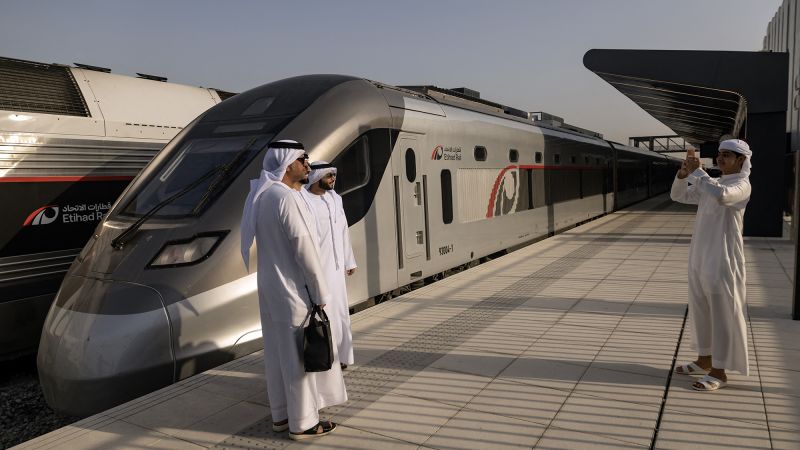
Desert express – The United Arab Emirates has made history by inaugurating its first national passenger rail service, marking a significant milestone in the country’s infrastructure development. This inaugural phase of a long-planned express train network aims to eventually link 11 cities across the Middle East, offering a transformative mode of transport for residents and visitors alike. The first train departed from Fujairah, a coastal city on the Gulf of Oman, at 5:34 a.m. local time on Tuesday, which corresponded to 9:34 p.m. ET on Monday. The journey, spanning approximately 250 kilometers (155 miles), concluded at Mohammed Bin Zayed City Station in Abu Dhabi at 7:19 a.m. (11:19 p.m. ET on Monday), taking just over an hour and 45 minutes.
Etihad Rail, the operator behind the project, announced the start of its “introductory operational phase,” with six services running on the network’s debut day. The company highlighted that over 10,000 tickets were sold before the launch, signaling strong public interest in the new service. The train’s design emphasizes modernity, featuring air-conditioned cabins, onboard Wi-Fi, power outlets, and reserved seating for passengers. For those seeking enhanced comfort, “premium class services” are available, offering additional amenities and convenience, according to Etihad Rail’s press release.
“The first departure from Fujairah this morning is the moment a national vision becomes part of everyday life,” said Azza Alsuwaidi, Etihad Rail’s chief operating officer. “This provides people with a new way to connect with one another, with opportunity, and with the places that make our country so unique. Years from now, today’s passengers will be able to say they were there at the very beginning.”
The network’s expansion plans are well underway, with key stations set to open later this year. Dubai Train Station and Al Dhaid Train Station will become operational on September 30, followed by Al Dhafra’s stations three months later. The full route, covering 900 kilometers (560 miles), is expected to be completed by the end of March next year once Sharjah station is launched. Once fully operational, the rail system will connect the Gulf of Oman to the Persian Gulf, traversing through the emirates, into Abu Dhabi’s interior, and extending to Ghuweifat, a border point with Saudi Arabia.
Fares for the service start at AED55 ($15) for Comfort Class and AED120 ($33) for Premium Class, making it an accessible option for a wide range of travelers. Currently, Etihad Rail’s fleet includes 13 trains, each capable of carrying up to 400 passengers. The initiative is part of a broader strategy to reduce the UAE’s carbon footprint and establish a sustainable transport system, aligning with the nation’s environmental goals. By integrating rail with existing road networks, the project seeks to alleviate traffic congestion and promote greener mobility options.
“Together, we have integrated passenger rail with Abu Dhabi’s wider public transport network, making it easier than ever for residents and visitors to continue their journeys using buses, taxis, and other mobility services,” stated Abdulla Hamad AlGhfeli, acting director general of the Integrated Transport Centre, the government agency overseeing transport initiatives. This collaboration underscores the UAE’s commitment to creating a cohesive and efficient transportation ecosystem.
While the launch has generated enthusiasm, challenges remain in adapting to a car-centric culture. Emiratis, historically reliant on private vehicles, will need to adjust their travel habits to make use of the new rail system effectively. The success of the network depends on seamless connectivity between train stations and urban centers, requiring strategic planning and infrastructure development. Etihad Rail has emphasized that the initial phase is just the beginning, with future expansions anticipated to enhance accessibility across the region.
The UAE’s first national rail network has the potential to reshape both domestic and regional transportation. By linking key cities, the service aims to reduce travel times and provide an alternative to air and road travel for shorter distances. This could have a ripple effect on economic activity, as improved connectivity often leads to increased trade and tourism. The long-term vision includes creating a comprehensive rail system that complements other modes of transport, fostering a more integrated and sustainable mobility landscape.
However, the impact on international tourism remains uncertain. Train travel expert Mark Smith, founder of the popular train website The Man in Seat 61, expressed cautious optimism about the service’s role in attracting global visitors. “At this stage, it doesn’t link Abu Dhabi with the outside world,” Smith noted. “I don’t hear from many people going there, and would anyone want to go where the new train goes?” His comments highlight the need for the rail network to extend beyond its current routes to fully capitalize on its potential to boost tourism.
Etihad Rail’s launch also reflects the UAE’s ambition to position itself as a regional leader in transportation innovation. The project is part of a larger initiative to modernize the country’s infrastructure and reduce reliance on fossil fuels. With the rail network’s completion, the UAE could set a precedent for other Gulf nations, demonstrating how sustainable transport solutions can coexist with rapid urbanization and economic growth. The initial phase, though limited in scope, serves as a critical step toward achieving this goal.
As the network expands, its integration with existing transport systems will be vital. The ability to switch between rail, buses, and taxis without logistical hurdles will determine its appeal to both locals and tourists. Etihad Rail’s efforts to create a unified mobility framework are expected to streamline travel experiences, particularly for those visiting multiple destinations within the UAE. The company has also emphasized the importance of user-friendly services, such as real-time updates and easy ticketing processes, to encourage widespread adoption.
The opening of the rail service has sparked discussions about its economic benefits. Analysts suggest that reduced travel times and lower costs could make the UAE a more attractive destination for business travelers and leisure seekers. Additionally, the environmental advantages of rail—such as lower emissions compared to road transport—align with the nation’s sustainability targets. By connecting major cities, the network may also facilitate better access to remote areas, supporting regional development and economic diversification.
Despite the excitement surrounding the launch, the rail system’s long-term viability hinges on continued investment and public engagement. Etihad Rail has already begun addressing concerns about connectivity by partnering with local authorities to enhance accessibility between stations and urban hubs. The first phase’s success will likely influence future funding and expansion, ensuring the network meets its ambitious goals. As the UAE moves forward, the rail service is poised to become a cornerstone of the nation’s transportation strategy, bridging distances and fostering a more interconnected society.
Tom Page of CNN contributed to this report, providing insights into the significance of the launch. The rail network’s introduction marks a new chapter in the UAE’s transportation history, blending cutting-edge technology with the country’s cultural and economic aspirations. While the initial phase may seem modest, its implications for the future are far-reaching, promising a more efficient and eco-friendly way to explore the region’s diverse landscapes and vibrant cities.
