
Every day is soccer jersey day
Every Day Is Soccer Jersey Day
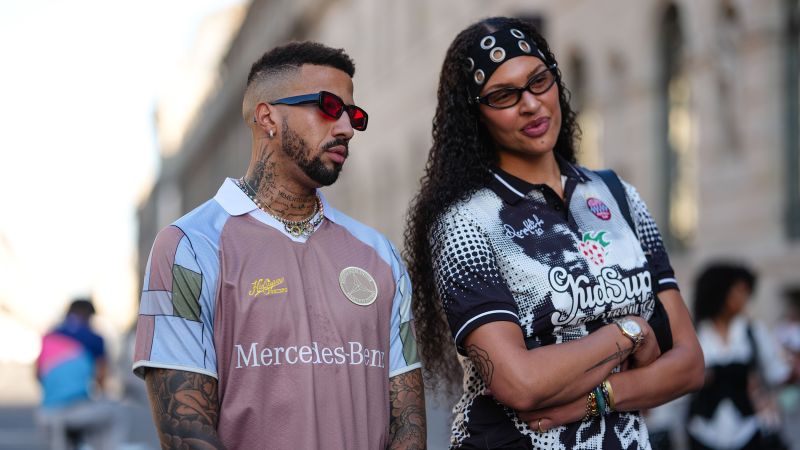
Every day is soccer jersey day – As the World Cup approaches, soccer jerseys have transcended their traditional role as sports attire to become a global fashion phenomenon. No longer confined to die-hard fans, these garments are now a staple in everyday wardrobes, blending athleticism with style in unexpected ways. From high-profile collaborations to limited-edition releases, the soccer jersey has carved a unique niche in the world of contemporary fashion, proving that its appeal extends far beyond the pitch.
The Rise of Soccer-Inspired Fashion
Brands across the fashion and sports industries have embraced the soccer jersey as a canvas for creativity. Olivia Rodrigo, the pop sensation, partnered with Spotify to release a retro FC Barcelona jersey that sold out almost immediately. The design features her signature monogram, stylized over the iconic red and blue vertical stripes, creating a nostalgic yet modern aesthetic. Meanwhile, the Gap introduced two summer collections centered around football culture, while Nike launched Latin American-themed “statement” jerseys that celebrate the cultural and emotional depth of the sport. These ventures highlight how soccer jerseys are no longer just functional wear but a symbol of identity and self-expression.
Interestingly, some of these jerseys are not meant to replicate the gear worn by professional athletes. Instead, their designs either pay homage to classic team uniforms or introduce entirely new concepts. For instance, New York City Mayor Zohran Mamdani commissioned retro-striped jerseys to honor the city’s connection to the World Cup. Originally priced affordably at $50 as part of a civic initiative, these jerseys now fetch over $1,000 on luxury resale platforms like Grailed. Unlike traditional team badges, the city’s edition features a soccer ball emblem, reflecting a playful yet purposeful reimagining of the sport’s legacy.
From Sports to Style: A Cultural Shift
The soccer jersey’s evolution mirrors the growing influence of the sport in mainstream culture. “That pink Inter Miami jersey, I feel like a cool girl might wear that on the dance floor in New York,” said fashion magazine contributor Markus Ebner, illustrating how style now supersedes allegiance. This sentiment underscores a broader trend: the jersey is being redefined as a fashion statement rather than a mere symbol of fandom. Its simplicity—a pullover with short or long sleeves and optional collars—makes it adaptable to diverse styles, contrasting with the more rigid silhouettes of baseball or basketball jerseys.
“Not because she’s an Inter Miami fan; because it’s pink and it’s cool.”
Phil Oh, a fashion photographer, noted that soccer’s rise in popularity in the U.S. has been gradual but steady. “It’s a slow acceptance,” he remarked, pointing to how stereotypes once surrounded jersey-wearing. A decade ago, hipsters dubbed the sport “footy,” a term that carried connotations of pretentiousness. However, as soccer gains traction in the U.S., its cultural footprint expands, making the jersey a more mainstream accessory. This shift is evident in the early adoption by streetwear brands like Supreme, which teamed up with Umbro in 2005 to create a soccer jersey when the sport was still a niche pursuit in America.
Even celebrities have played a role in popularizing the trend. Snoop Dogg, known for his eclectic style, incorporated soccer jerseys into his wardrobe, sometimes wearing those of rival teams. This choice drew mixed reactions from traditional fans, yet it underscored the jersey’s versatility. Drake’s 2016 pink Juventus away jersey, for example, became a standout piece, so rare for a high-profile rapper that eBay listings still categorize it as a “Juventus x Drake” collaboration. These examples show how soccer jerseys are now tools for personal branding, transcending their original purpose.
Collectors and Creatives: A New Era of Jersey Culture
The popularity of soccer jerseys has also sparked a surge in vintage and replica markets. Josh Warwick, co-founder of Cult Kits, a vintage soccer jersey retailer, observed this shift firsthand. “That was quite a good illustration of the way that football shirt culture is diversified,” he recalled, referencing a 2022 pop-up event in New York where young women purchased a neon yellow Blackburn Rovers away shirt from 1996. The piece, a relic from the team’s first-division days, represented a departure from traditional fandom, as buyers prioritized aesthetic appeal over sports allegiance.
Warwick’s insights reveal a deeper transformation in how people engage with soccer jerseys. No longer are they solely about loyalty to a team or the sport itself; they’re now coveted for their design and historical value. This trend has led to the U.S. surpassing the UK as Cult Kits’ largest market, a testament to the jersey’s growing appeal. The combination of vintage finds and newly reissued replicas—such as those from Fanatics and Nike—demonstrates a thriving ecosystem where both nostalgia and innovation converge.
Fast fashion retailers have also capitalized on this demand, joining the trend with affordable options. H&M’s collaboration with Lotto earlier this year brought soccer-inspired designs to mainstream consumers, while ASOS now offers knockoff versions of national jerseys. These brands ensure accessibility, allowing a wider audience to partake in the soccer jersey craze. Meanwhile, specialty stores like Ebbets Field continue to cater to enthusiasts by selling replicas of gear from the defunct North American Soccer League, blending retro charm with modern trends.
Global Appeal and Future Prospects
As the World Cup season unfolds, the soccer jersey’s role in fashion is set to expand further. Its vibrant colors, bold graphics, and sleek design make it a standout piece in any outfit, bridging the gap between sports and style. Whether worn by a fashion-forward individual or a soccer enthusiast, the jersey has proven its adaptability. With brands like Miaou, Nahmias, and Ksubi reimagining classic designs, the soccer jersey is no longer just a relic of the game—it’s a statement of identity, creativity, and global unity.
This evolution reflects a broader cultural shift. In a world where sports and fashion increasingly overlap, the soccer jersey stands as a symbol of this merging. From retro-styled municipal merchandise to high-fashion collaborations, it’s clear that the sport’s influence is not limited to the field. As more people embrace the jersey for its style rather than its function, the future of soccer fashion looks as dynamic and diverse as the game itself.
