
The USA takes an early lead over Australia in high-stakes World Cup showdown
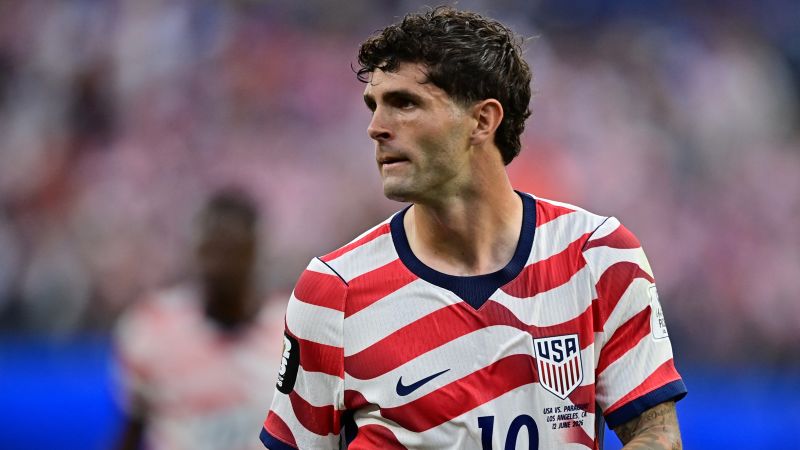
The USA Takes Early Command in Crucial World Cup Clash Against Australia
The USA takes an early lead – In a pivotal encounter of the 2026 World Cup, the U.S. men’s soccer team secured an early advantage against Australia in Seattle, capitalizing on a defensive lapse by the Socceroos. The breakthrough came in the 11th minute when Folarin Balogun, the 22-year-old forward, burst into the Australian penalty box and delivered a precise cross toward Ricardo Pepi. The ball, however, was not directed toward the 20-year-old forward but instead struck the head of Cameron Burgess, an Australian defender who failed to react in time. The goal, a result of a misjudged clearance, gave the Americans a 1-0 lead and sent the home crowd into a frenzy.
The celebrations were immediate and unbridled. Balogun, who had been substituted in the first match of Group D, was hailed as the hero of the moment. Meanwhile, the American players not involved in the scoring surge, including those on the bench, erupted from the technical area with uncontainable excitement. Their joy was palpable, as the goal not only shifted momentum but also provided a psychological edge ahead of Friday’s showdown with Australia. The victory over Paraguay in their opening game had already set the tone for a strong group campaign, and this early lead seemed to solidify their position as contenders.
Despite the momentum, the match was far from one-sided. Australia, known for their aggressive playing style, pressed hard from the outset. In the 23rd minute, they created a dangerous opportunity when a defensive error in the U.S. box led to a quick counterattack. Mohamed Touré, the Australian striker, fired a shot from the right flank, forcing American goalkeeper Matt Freese into a last-ditch save. The moment highlighted the Socceroos’ ability to threaten the U.S. despite the early setback. “They’re lucky it was a friendly,” said Chris Richards, the U.S. defender, after the game. “I was ready to go,” he added, referencing the heated exchanges during the match. “If the referee hadn’t given me a sh*t yellow in the corner, I probably would’ve killed somebody.”
The incident in October, during a warm-up match between the two teams, had already foreshadowed the intensity of their rivalry. Though the game ended 2-1 in favor of the U.S., the physicality on display left fans questioning whether the Australians would continue their aggressive tactics. Richards’ frustration was shared by many, as the U.S. squad had to weather a tense opening half before finding their rhythm. The victory, however, proved to be a confidence booster for the Americans, who had dominated the Paraguay game with a 3-0 win. This success, coupled with the early goal in Seattle, suggested the team was in a strong position to advance.
But the U.S. faced a significant challenge with the absence of Christian Pulisic, the team’s star forward. The 28-year-old suffered a calf injury during the World Cup opener against Paraguay, forcing him to sit out Friday’s match. His absence raised concerns about the team’s attacking options, but the early lead seemed to ease some of the pressure. Pulisic, who had been a central figure in the squad’s success, was seen training alone in the days leading up to the game, determined to recover in time for the crucial Group D clash.
The manager, Mauricio Pochettino, had been vocal about the need to maintain intensity against Australia. After the U.S. dominated the first half against Paraguay, he had taken a moment to remind the players of their responsibilities, even substituting Pulisic at halftime. “These guys can’t kick us around!” recalled Sebastian Berhalter, the U.S. midfielder, when reflecting on Pochettino’s halftime rant. Berhalter explained that the coach’s frustration stemmed from the Australians’ physical approach, which had tested the U.S. defense in the earlier match. “Mauricio had that outburst because they were putting in challenges,” Berhalter said. “I think he was right.”
Pochettino’s influence on the U.S. team has been a topic of discussion among players and analysts alike. Berhalter emphasized how the Argentine coach has instilled a sense of identity in the squad. “One of the things he really drilled into us is that we’re American and we don’t take sh*t,” Berhalter stated. “Even though he’s from Argentina, he’s got that mindset of what we’re about. He showed us what it means to be a team that fights for every inch.” The coach’s approach, blending tactical precision with mental toughness, has resonated with the players, particularly in high-stakes matches like this one.
For Australia, the challenge remains to adapt their style without losing their intensity. The Socceroos, who had shown resilience in their previous game, will need to be more disciplined in their defensive transitions. Their ability to create chances in the 23rd minute demonstrated their attacking potential, but the own goal in the 11th minute also exposed their vulnerabilities. The U.S. team, meanwhile, will look to build on this early lead, with Balogun and Pepi expected to play key roles in the upcoming Group D match.
The match in Seattle is set for 3 p.m. ET on Friday, with both teams eager to assert their dominance. The U.S. will need to maintain their composure, as their initial success could be short-lived if they fail to capitalize on their opportunities. Australia, on the other hand, aims to prove that their physicality and attacking flair can disrupt the Americans’ rhythm. The outcome of this game will likely shape the rest of the group stage, with implications for the tournament’s top teams.
Behind the Scenes: The Injury and the Substitution
While the final whistle in Seattle marked a victory for the U.S., the substitution of Pulisic in the first game had already sparked debate. The move, made when the Americans were leading 3-0, was seen as a calculated risk. Pulisic, who had been instrumental in the team’s attacking play, was replaced by a younger forward, signaling the coach’s confidence in his squad’s depth. However, the absence of the star player raised questions about the U.S.’s ability to sustain their form against a team like Australia, which had shown tactical awareness in their earlier match.
Pochettino’s decision to keep the pressure on his players has been a defining aspect of the U.S. campaign. His halftime address during the Paraguay game was a reminder that even in a seemingly comfortable position, the team must remain focused. The same approach is expected for Friday’s clash, where the manager will likely emphasize the need to control the tempo and limit Australia’s chances. “He showed us Americans what we’re about,” Berhalter said, highlighting the cultural impact of Pochettino’s leadership. “It’s not just about skill; it’s about heart and determination.”
As the teams prepare for their next encounter, the stakes are clear. The U.S. aims to secure a second consecutive win, while Australia hopes to challenge their rivals and demonstrate their ability to compete at the highest level. The early goal in Seattle is a promising sign, but the game will test the squad’s ability to adapt to different challenges. With the World Cup in full swing, every match carries weight, and this showdown promises to be a defining moment in Group D.
The Rivalry Continues: A Battle of Wills
The rivalry between the U.S. and Australia has deep roots, with each team historically outperforming the other in key moments. The October warm-up match had been a tense affair, with both sides trading blows and the referee’s decisions playing a critical role in the outcome. Richards’ frustration over the calls during that game has since become a rallying point for the U.S. players, who now view the Australians as a formidable opponent. “They’re not just a team; they’re a force that wants to test us,” Berhalter said, underscoring the importance of Friday’s match.
As the game approaches, the atmosphere in Seattle is electric. The U.S. will be looking to build on their early success, while Australia will need to overcome their defensive shortcomings. The players, coaches, and fans are all aware that this is more than just a match—it’s a statement of intent for the World Cup. With the tournament’s narrative still unfolding, the U.S. and Australia will both be hoping to leave their mark on the Group D standings.
The final whistle in Seattle will not only decide the match but also set the tone for the rest of the tournament. The U.S. has shown their capability to dominate, but the challenge of facing a team that plays with ferocity and flair will test their mettle. As the countdown to Friday’s kickoff begins, the anticipation is building for what promises to be a thrilling encounter between two nations with a history of fierce competition. The outcome of this game could have far-reaching implications, and both teams are determined to come out on top.
