
‘We do need to defund the police’: 2020 interviews undermine Abdul El-Sayed’s claim he never advocated for unpopular movement
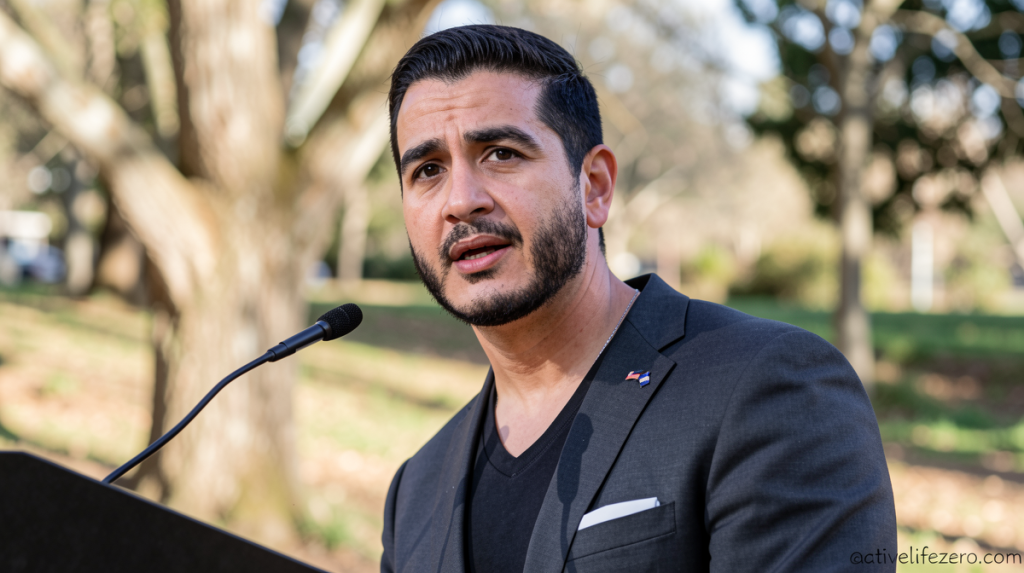
El-Sayed’s ‘Defund Police’ Claims Under Review
We do need to defund the police – Michigan’s Democratic Senate candidate Abdul El-Sayed faces fresh scrutiny over his historical position on police funding. During a recent CNN interview, El-Sayed claimed he never advocated for reducing law enforcement budgets, noting he removed older social media posts that seemed to support the movement. However, the phrase “We do need to defund the police” appears prominently in his 2020 statements, challenging his current narrative about never supporting the unpopular movement.
2020 Interviews Reveal Consistent Support
CNN’s KFile investigation uncovered multiple instances where El-Sayed endorsed reallocating police resources during 2020. In a radio appearance that year, he explicitly stated that reducing law enforcement funding was necessary. His comments went beyond rhetoric, as he discussed how the movement’s messaging could potentially weaken broader criminal justice reform initiatives.
“We do need to defund the police,” El-Sayed declared during a 2020 radio broadcast while addressing concerns about the slogan’s impact on reform efforts.
The candidate’s statements from both 2020 and 2021 indicate genuine endorsement of the movement’s core philosophy. Rather than simply repeating a popular phrase, El-Sayed championed the principle of channeling money away from police departments and toward other community services. This included mental health programs and initiatives targeting poverty. These remarks emerged during the peak popularity of the movement, which gained momentum following the death of George Floyd in May of 2020.
While the movement found strong support among progressive voters, it struggled to resonate with the general American public. El-Sayed addressed this communication challenge in June 2020, speaking on Detroit Public Radio about how modern discourse often reduces complex ideas to brief social media posts. He argued that providing thorough explanations proved more effective than relying on hashtags to convey meaning.
“We are in a moment where a lot of our public conversation gets chewed down into 280 characters or less,” El-Sayed observed in June 2020.
At that time, El-Sayed held multiple professional roles. He worked as a public health advocate, hosted a podcast, and served as Detroit’s former public health director. In his own words, he connected the concept of defunding to reducing investment in incarceration and street violence while increasing support for education and community empowerment. He emphasized that systemic racism had been allowed to worsen in numerous neighborhoods due to insufficient investment in alternative solutions.
“I believe that we do need to defund the police in so far as defunding the police is disinvesting in the means of incarcerating someone or killing them on the streets,” he explained. “And in investing more in the means of educating and empowering, engaging communities with the means of being able to take on systemic poverty.”
El-Sayed further clarified that his position meant directing fewer resources toward police departments. He posed several rhetorical questions about what communities might look like with greater investments in social services, public education, and libraries. He concluded that this dual approach—increasing funding for community services while decreasing police budgets—represented the proper direction for progress.
Roxie Richner, representing El-Sayed’s campaign, highlighted the candidate’s extensive public health background working alongside local law enforcement throughout Wayne County, Michigan. In a statement provided to CNN, Richner noted that El-Sayed’s views have evolved and become more sophisticated over time. She emphasized that a single word cannot capture the complexity of criminal legal system reform.
“One simple word has never been enough to fully explain the reforms we need for a challenge as complex as our criminal legal system,” Richner stated.
The campaign spokesperson outlined several specific policy positions that El-Sayed supports. These include improving law enforcement recruitment, retention, and retirement funding to ensure officers reflect the communities they serve. Additionally, he advocates for rejecting militarized policing approaches, passing the George Floyd Justice in Policing Act, and implementing community violence intervention programs alongside behavioral health responses and public health improvements.
El-Sayed currently leads the Democratic field in Michigan ahead of the August 4 primary election, with these historical statements potentially influencing voter perceptions of his stance on police funding reform.
