Vance says Iran conflict isn’t a ‘war,’ even as he refuses to say when it will end


Vance Says Iran Conflict Isn’t a War
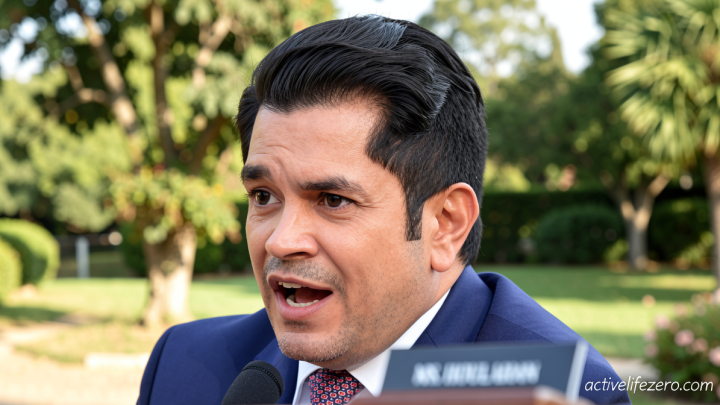
Activelifezero.com – Standing in the White House briefing room Thursday, Vice President JD Vance drew a hard line around the word “war.” Vance says Iran conflict isn t a war because, by his accounting, active combat operations concluded months ago. In the same breath, however, he declined to offer a date, a deadline, or even a rough window for when the remaining exchanges of fire will cease — leaving reporters and voters without a discernible endpoint.
The nearly hour-long session stretched well beyond the Gulf standoff, touching energy markets, domestic policy, and a range of administrative questions. But the semantic argument over whether America is technically at war with Tehran dominated the room and will dominate the news cycle heading into November.
The “No Active Shooting” Claim Collides With Tuesday
Vance’s core assertion was that no sustained combat is underway.
“Right now, there is no active shooting,” he told reporters.
That characterization sat in direct tension with events from just three days earlier, when American and Iranian forces traded strikes across and around the Strait of Hormuz — the narrow corridor through which roughly one-fifth of global oil shipments transite.
The Pentagon released an updated casualty tally the same day as Vance’s remarks: 790 U.S. service members wounded and 18 killed since coordinated American-Israeli airstrikes opened the conflict in late February. Defense officials described the ongoing pattern of strikes as akin to “mowing the grass” or playing “whack-a-mole,” a metaphor that signals continued offensive operations near the waterway rather than a wind-down. Iran, they noted, has repeatedly rebuilt its strike and mine-laying capacity after each round of bombardment, meaning no single decisive blow has yet landed.
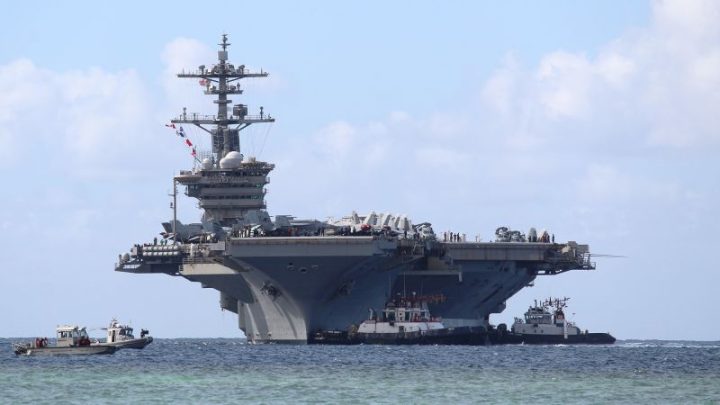
On Tuesday specifically, the United States executed a large-scale, multi-domain sweep around the strait, hitting close to 60 military installations in one operation — air-defense batteries, radar arrays, naval vessels, mine-laying platforms, and communications nodes. Warships simultaneously escorted commercial tankers through the channel, a task energy companies remain deeply nervous about even with a naval escort alongside. Officials called the operation a tactical success while conceding privately that a swift, clean resolution is not imminent.
Midterm Math and the Price at the Pump
The conflict has been unpopular with voters, and its most visible economic consequence — a sustained climb in gasoline prices — has generated quiet alarm among Republicans who must hold congressional majorities on November 3. Pump prices, which hovered near $3 per gallon before the conflict began, remain elevated. Vance was pressed on when drivers might see relief.
“I’m not going to make a promise about when it’s going to return to $3,” he said. “What I will say is that we have to remember why are we doing this? Number one, it’s so that Iran never has a nuclear weapon.”
President Trump, speaking separately this week, insisted he feels no urgency to de-escalate before ballots are cast. Yet his closest advisers and allied lawmakers concede privately that the further the conflict fades from public view in the run-up to election day, the more favorable the political environment becomes for the party in power. Vance’s insistence that the fighting is over — or nearly over — reads as an attempt to park the war in the rear-view mirror before voters weigh their ballots. Vance says Iran conflict isn t a war, and the administration appears to want voters to accept that framing before November.
From Ceasefire Broker to War Manager
The vice president’s relationship with this conflict has not been static. Earlier in the year, Vance counseled against military action against Iran. By summer he had taken the lead in negotiating a diplomatic settlement; the ceasefire he brokered held for roughly two weeks before collapsing. Both sides then slid back into a rhythm of retaliatory strikes, with Tehran determined to retain leverage over the strait’s shipping lanes.
August brought an uneasy lull. That calm shattered this week when American forces struck Iranian positions near the waterway that, per the Pentagon, were preparing to launch mines into the channel. Tehran answered by targeting U.S. military bases across the region.
Four Bodies at a Wedding
Among the most emotionally charged items on Vance’s agenda Thursday was the administration’s investigation into reports that the latest American strikes killed four people attending a wedding celebration in a village near the Strait of Hormuz. Vance declined to rule out civilian deaths while affirming a standing military principle:
“We never will do that, we never will do that.”
He stopped short of confirming the deaths, saying the investigation was ongoing.
Frequently Asked Questions
Is the United States officially at war with Iran? No formal declaration of war exists. Vance says Iran conflict isn t a war because active combat operations ended months ago, though strikes continue on a rolling basis around the Strait of Hormuz.
When will the strikes stop? No official timeline has been given. Vance refused to provide a date or estimate, and Pentagon officials described the current pattern as ongoing rather than terminal.
How many U.S. service members have been affected? As of the tally released Thursday, 790 have been wounded and 18 killed since the conflict opened in late February.
What happened to gas prices? Prices climbed from roughly $3 per gallon before the conflict to elevated levels during the standoff. Vance declined to promise a specific date for prices to return to pre-conflict levels.