USDA workers fear the worst as Trump admin threatens a reorganization

Daftar Isi
Federal Agricultural Workers Brace for Mass Departures Amid USDA Relocation Push
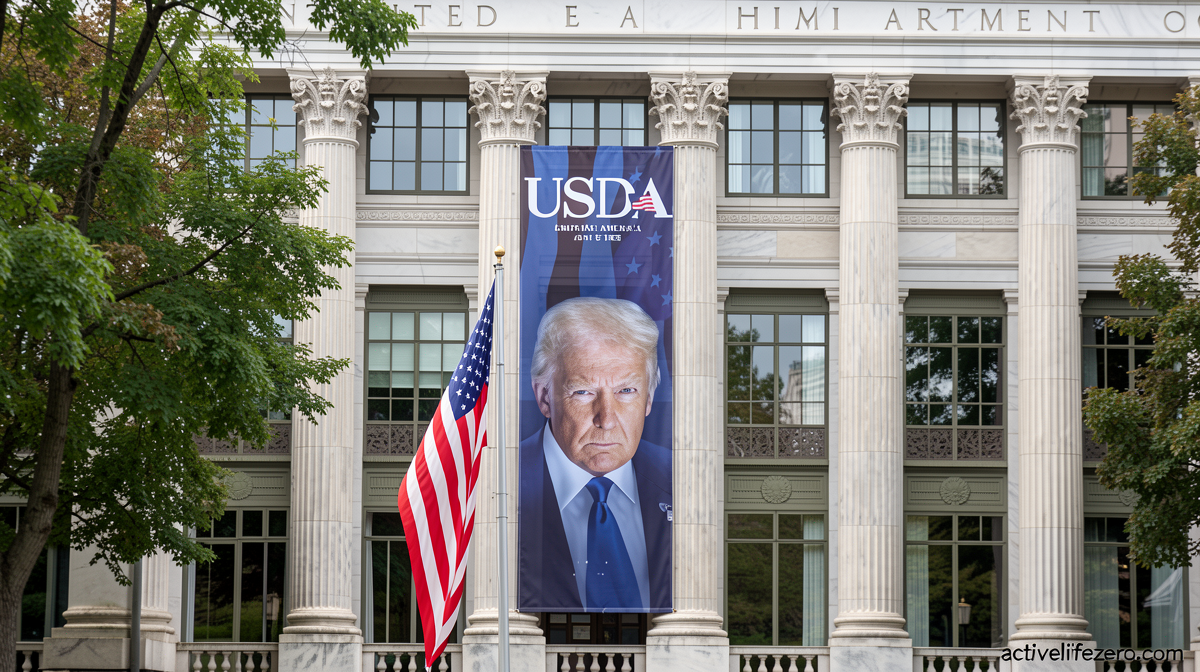
Activelifezero.com – Thousands of employees across the United States Department of Agriculture face an uncertain future as the agency moves forward with a sweeping reorganization that many view as a covert workforce reduction. The initiative, announced in mid-2025, requires hundreds of staff members to relocate hundreds of miles from their current homes, with some anticipating that up to four-fifths of affected workers will decline to move and instead seek employment elsewhere.
Laura Dodson, an agricultural economist at the Economic Research Service, received her relocation notice in late June. The directive would require her to transfer from her current location to Kansas City, Missouri—a move that mirrors a similar effort undertaken during the first Trump administration. Back in 2019, the USDA reassigned numerous employees from the ERS and another small institute to Kansas City, claiming the shift would reduce taxpayer costs and place workers nearer to agricultural stakeholders.
The outcome of that earlier experiment proved problematic. A federal watchdog report documented that many employees refused to relocate, causing both agencies to lose more than half their workforce. The exodus resulted in fewer published reports and journal articles, alongside slower grant processing times that persisted for several years. Those who stayed reported feeling demoralized while navigating a chaotic workplace environment.
A Disguised Reduction in Force
Dodson, who serves as vice president of the American Federation of Government Employees Local 3403, believes the current reorganization follows a similar pattern. Union members and staff members she has spoken with describe the effort as a reduction in force—commonly known as a RIF—wrapped in the language of relocation. This perspective has been formalized in a lawsuit filed last month by the legal advocacy group Democracy Forward, representing a coalition of unions, municipalities, and nonprofit organizations seeking to halt the initiative.
When the USDA first announced its reorganization plans in July 2025, officials stated the move would “refocus core operations to better align with its founding mission of supporting American farming, ranching and forestry.” The department simultaneously acknowledged that the effort represented another step toward reducing its workforce to ensure financial sustainability, noting that employee headcount had expanded in recent years.
“The USDA knows what happened; they know the results,” said Dodson, who received a work-related exemption granting her until January to relocate hundreds of miles. “They ran the experiment in 2019.”
Survey data collected by Local 3403 reveals the depth of employee resistance. Only six percent of those surveyed indicated they would accept relocation. Another twenty-five percent expressed uncertainty about their decision. Dodson herself is actively pursuing opportunities in the private sector while waiting to see whether her exemption will ultimately protect her position.
Legal Challenges and Congressional Concerns
The coalition’s lawsuit contends that the USDA lacks the legal authority to execute such a comprehensive reorganization and that Congress failed to approve the Trump administration’s request to fundamentally restructure the department. Court documents show the USDA maintains it possesses “broad statutory authority to reorganize its internal structure” and has notified Congress of its plans.
The reorganization arrives during a period of significant downsizing at the department since President Donald Trump took office in January 2025. Tens of thousands of employees have departed through voluntary resignations, retirements, and incentive programs designed to encourage early exits.
In a statement to reporters, the department emphasized that the reorganization centers on “aligning people, service delivery, and financial resources.” A USDA spokesperson added that “all current employees have a future with the Department if they so choose,” noting that relocation expenses would be reimbursed for those required to move.
Workers in Limbo
Not all employees have received their notices yet, creating a state of uncertainty that affects daily life and career planning. One anonymous worker, whose partner maintains stable employment in their current city and who cares for a seriously ill family member nearby, has already decided against relocating. High mortgage rates further complicate the prospect of purchasing a home in a new location.
“I planned to spend my career here and advance within the agency,” the staffer told CNN. “Now I realize it’s just a matter of time before I’m effectively laid off.”
Another employee described struggling to keep the potential relocation from overwhelming her daily existence. The prospect of moving hundreds of miles away would force her to uproot her life, yet thinking about it constantly makes work difficult.
“It’s always in the back of my head — what if the next email is my relocation notice?” said the staffer, who requested anonymity to protect her employment.
For agricultural economists, researchers, and support staff who provide essential services to farmers, scientists, and the general public, the outcome of this reorganization will shape not only their own futures but also the capacity of one of the nation’s most important agricultural agencies to fulfill its mission effectively.
Related Reading
Frequently Asked Questions
What is USDA workers fear the worst as Trump?
USDA workers fear the worst as Trump is the main topic of this guide. The article explains the context, practical details, and next steps readers should understand.
Why does USDA workers fear the worst as Trump matter?
USDA workers fear the worst as Trump matters because readers are looking for a useful answer, not just a short summary. Good content should match search intent and help them decide what to do next.