
Trump’s name removed from Kennedy Center website branding
Trump’s Name Removed from Kennedy Center Website Branding
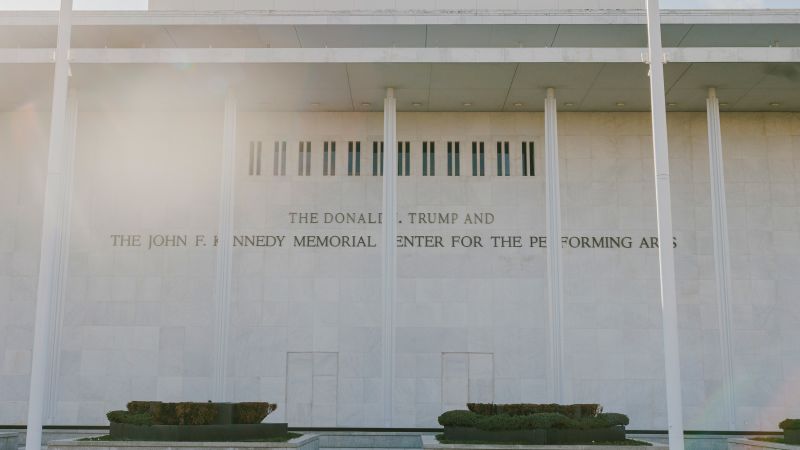
Trump s name removed from Kennedy – Following a court decision, the Kennedy Center’s digital branding has been adjusted to exclude “Trump” from its website logo. This change comes after a federal judge mandated the removal of the former president’s name from the institution’s official branding, marking a significant shift in its public identity. While the large signage on the building’s exterior still bears “Donald J. Trump,” the center’s online presence now reflects a more neutral stance. The ruling has prompted a flurry of updates across the organization, with staff tasked to ensure all materials comply with the new directive.
Compliance Deadline Set by Court Order
The Kennedy Center’s general counsel issued a memo to employees last week, outlining the steps necessary to align with the court’s requirements. According to the document, the name change must be completed by June 12, 2026, to fully adhere to the ruling. This includes modifying email signatures, letterhead, and marketing materials to remove any reference to Trump. Additionally, templates, forms, signage, brochures, and website pages are to be revised by the specified deadline.
The memo emphasized the urgency of the task, stating that “immediate action” was required for certain documents. Employees were instructed to update their personal and professional communications to reflect the new name. The general counsel’s message also highlighted the importance of the change, noting that the Kennedy Center is now officially known as “The John F. Kennedy Center for the Performing Arts” or “Kennedy Center” in all branding efforts.
Political Tensions and Leadership Changes
The name removal was a direct result of a legal challenge that began in December when Trump’s loyalist board voted to change the institution’s title. The decision sparked controversy, with the president expressing frustration over the court’s intervention. Shortly after the ruling, he posted on Truth Social, stating his intention to transfer full control of the Kennedy Center to Congress. However, he has since tempered those remarks, indicating that he will focus on the center’s ongoing renovation plans.
Trump’s remarks during a recent interview on Air Force One revealed his strategic approach to the situation. “I’m the chairman, so we’ll just keep it going. Somebody has to do it,” he said, suggesting that the name change would not halt the organization’s operations. Despite initial public statements about transferring control, he clarified that the Kennedy Center would continue under his leadership, with a renewed emphasis on its redevelopment. “Everybody, they want me to stay very badly, so we’re going to take a look at it,” he added, hinting at potential future collaborations or adjustments.
Upcoming Mark Twain Prize Event
As the name change takes effect, the Kennedy Center remains focused on its cultural programming. Later this month, the institution will host the Mark Twain Prize for American Humor, an annual event honoring comedians and public figures for their contributions to humor. The ceremony, which includes a gala performance, will feature a lineup of notable entertainers. This year’s event is expected to draw significant attention, as the center continues to uphold its reputation as a premier venue for the performing arts.
The Mark Twain Prize ceremony will showcase a diverse array of talent, including Louis C.K., Whitney Cummings, Woody Harrelson, Arianna Huffington, Jay Leno, John Mellencamp, and Stephen A. Smith. The event’s official website has provided a “first look” at the program, detailing the lineup of performers and the theme of the evening. Tickets for the performance-only segment start at $99, while more comprehensive packages range from $750 to $1,500. These prices reflect the popularity of the event and the demand for access to its prestigious gatherings.
The Kennedy Center’s decision to honor Bill Maher with the Mark Twain Prize underscores its commitment to recognizing humorists who have shaped American culture. Maher, a well-known comedian and writer, has been a frequent critic of political figures, including former President Trump. This choice of honoree may have symbolic significance, especially given the recent name change. The event will take place in a venue that has, for decades, been a hub for artistic excellence and public discourse.
The legal battle over the name change has highlighted the intersection of politics and culture. The judge’s ruling, which forced the removal of Trump’s name from the center’s branding, reflects broader debates about the role of public institutions in political representation. The Kennedy Center, founded in 1971, has long been a symbol of bipartisan support, but the name change has sparked discussions about its current alignment with political values. The general counsel’s memo serves as a clear directive to ensure that all aspects of the center’s operations reflect this new identity.
While the name change has been implemented on the website, the physical signage on the building’s facade still displays Trump’s name. This discrepancy has raised questions about the extent of the court’s order and the timeline for full compliance. The Kennedy Center’s leadership has stated that the exterior branding will be addressed in due time, but the digital presence has been adjusted immediately to meet the judge’s deadline.
The president’s public comments have reflected his desire to maintain a connection to the Kennedy Center, even as he navigates the legal and political implications of the name change. His statements on Truth Social and during the Air Force One interview suggest a blend of defiance and pragmatism, as he seeks to balance the court’s order with his vision for the center’s future. The updated branding is part of a larger effort to ensure the institution remains a focal point for cultural and political engagement.
Context and Implications
The removal of Trump’s name from the Kennedy Center’s branding is part of a broader trend of rebranding efforts in the wake of his presidency. The center, which has hosted numerous high-profile events and performances, has become a symbol of shifting political narratives. The court’s decision to enforce this change underscores the importance of neutrality in public institutions, particularly those that serve as cultural landmarks.
For the Kennedy Center, the name change represents both a legal requirement and a symbolic adjustment. The organization has historically supported a wide range of artistic and political voices, and this decision may signal a move toward greater inclusivity. The event’s planning committee has indicated that the Mark Twain Prize ceremony will proceed as scheduled, with no immediate impact from the name change. However, the event’s timing and lineup may serve as a statement about the current political climate.
The president’s frustration with the ruling highlights the emotional stakes involved in the name change. His initial plan to transfer control to Congress was a bold move, but the subsequent clarification suggests a more collaborative approach. By focusing on the center’s renovation, Trump aims to ensure its continued relevance as a cultural hub while navigating the legal and political challenges that have arisen.
As the Kennedy Center moves forward with its updated branding, the organization’s leadership has emphasized the importance of maintaining its core mission. The center remains dedicated to advancing the performing arts, and the name change is seen as a step toward reinforcing that commitment. The event honoring Bill Maher is just one example of the Kennedy Center’s ability to adapt to changing circumstances while preserving its legacy as a premier arts institution.
With the deadline for full compliance fast approaching, staff across the organization are working to implement the changes efficiently. The updated branding is expected to be fully realized by June 12, 2026, ensuring that all aspects of the Kennedy Center’s operations align with the court’s order. The name change has been met with mixed reactions, but the organization’s focus remains on its role as a platform for artistic expression and public dialogue.
Ultimately, the decision to remove Trump’s name from the Kennedy Center’s branding marks a pivotal moment in its history. It reflects the ongoing interplay between politics and culture, as well as the adaptability of institutions in the face of legal and societal pressures. As the center continues to honor its mission, the updated name serves as a reminder of the evolving landscape of public perception and political engagement.
