Trump officials are losing the troll war, too

Daftar Isi
Trade Stalemate Meets Social-Media Spat: Ottawa and Washington Trade Barbs Instead of Bargaining Chips
Activelifezero.com – Five weeks after Canadian Prime Minister Mark Carney walked out of bilateral trade negotiations in Washington, citing what he described as American intransigence, the two governments remain locked in a tariff standoff that shows no sign of de-escalation. Carney indicated on Tuesday that he would welcome a return to the negotiating table, but only once his counterparts put down their phones and pick up the phone. The 50 percent tariffs Washington slapped onto a broad swath of Canadian imports — matched dollar-for-dollar by retaliatory duties from Ottawa — continue to bleed through supply chains on both sides of the border, yet the diplomatic channel between the two countries has effectively gone quiet.
The reason, Carney suggested, is that the American side has turned the trade dispute into a content-creation exercise.
“When the Americans stop doing memes, stop throwing shade, stop trying to be tough and start being serious about having those discussions, we can have those discussions,” Carney said. “It’s not constructive. But that’s their democracy.”
The remark landed with particular force because the past several weeks have produced an almost daily stream of jabs aimed at Canada from senior figures in the Trump administration — jabs that range from the merely dismissive to the outright inaccurate.
The Goose, the Eagle, and the Lake
The White House social-media account has repeatedly posted an image of a bald eagle appearing to pin down a Canada goose. Canadians quickly circulated photographs showing the same goose winning the scuffle, turning the administration’s own visual into a rebuttal. The episode became a small viral moment, but it set the tone for what followed.
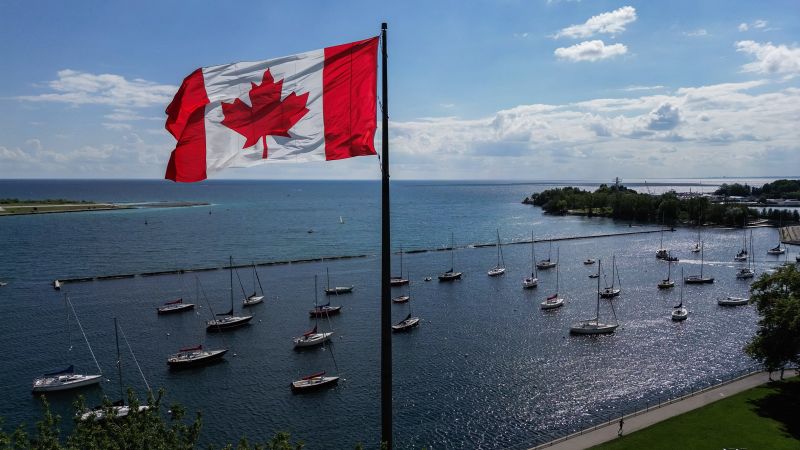
Then came the lake. After Trump announced a renaming of Lake Ontario, he reportedly phoned Apple to confirm the new name would appear on digital maps. In the United States, it does. In Canada, it does not. The episode triggered a spike in downloads of Mapquest in American app stores after that service declined to alter the lake’s name for US users, giving the whole affair an absurdly bureaucratic afterlife.
Ontario Premier Doug Ford, meanwhile, has been trolling Trump back, and at least one Canadian municipal council is weighing a proposal to rename a street currently bearing the former president’s name with a deliberately mocking alternative. The back-and-forth has given the trade dispute a tabloid energy that neither side’s negotiators appear to want.
“A Country That Doesn’t Have a Military”
The mockery escalated beyond geography when Transportation Secretary Sean Duffy described Canada as “a country that doesn’t have a military.” The statement is, of course, plainly false. Canadian forces have fought and died alongside American troops in two world wars, in Korea, in Afghanistan, and in numerous peacekeeping operations. The remark drew immediate pushback from Ottawa and from veterans’ groups, who noted that the Royal Canadian Air Force, Navy, and Army collectively number more than 68,000 regulars plus tens of thousands of reservists.
Treasury Secretary Scott Bessent, who lacks the reality-television or cable-news background that seems to arm his colleagues with a ready supply of put-downs, nonetheless attempted his own dig. Speaking Monday on CNBC ahead of a G20 finance meeting he is hosting in Asheville, North Carolina, Bessent quipped:
“I mean, we’re not at war with Canada. How are we going to be at war with Canada? They’re going to take their two set submarines from the Edmonton Mall and sic them on us.”
The joke referenced a now-defunct submarine ride that once operated inside a shopping mall in Edmonton, Alberta. It landed flatly, but it underscored a pattern: senior US officials treating their closest military ally as a punchline rather than a partner.
The Cadet Photo and the Cost of Trolling
The most pointed incident came from Pete Hegseth, who prefers the title “secretary of war” over “defense secretary.” On Monday he posted a photograph of two women in Canadian military uniforms to X, appended a Canadian-flag emoji, and captioned it “(this is real).” The implication was that the Canadian armed forces were a novelty, perhaps a costume department. At least one of the women in the image appears to have been participating in a cadet program for young Canadians — a pipeline into public service that the United States itself relies on for its own recruiting.
Canadians remain full NATO allies. They committed troops to the coalition campaign after the September 11, 2001 attacks, and they continue to share intelligence, rotate forces through joint exercises, and coordinate on Arctic security. Mocking a young cadet in uniform is, at minimum, poor form for a cabinet-level official.
Hegseth is no stranger to being the target of online ridicule. Workout clips he posts regularly — pull-ups, bench presses — have drawn sustained mockery from commentators who note that a man in his late forties capable of multiple pull-ups deserves credit, not derision. Yet the trolling cuts both ways, and it does nothing to advance the policy objectives his department is supposed to serve.
The same week Hegseth posted the cadet photo, Army Secretary Dan Driscoll resigned. Just before departing, Driscoll reportedly went to the White House and told Trump that Hegseth’s tenure had left the Army with key leadership positions vacant. Several of Hegseth’s nominees for top general officer posts lack the bipartisan Senate support needed for confirmation, meaning the command structure could remain skeletal well into next year.
The broader stakes are not trivial. The US has met its annual recruiting targets over the past two years in part because of pre-enlistment fitness programs designed to prepare American candidates for entry-level physical tests. Hegseth’s public posture — belittling allied cadets while his own force struggles to fill billets — undercuts the very pipeline those programs feed. Meanwhile, the war in Iran, which has run months longer than Trump initially projected, has warped global energy markets and strained the world economy at precisely the moment North American trade flows are already under tariff pressure.
For Carney and his cabinet, the calculus is simple: tariffs cost Canadian exporters billions each quarter, and every week of diplomatic silence deepens the damage. The trolling, however entertaining it may be to a domestic audience, does not lower a single duty rate. Until Washington treats Ottawa as a negotiating partner rather than a punchline, the trade war will persist — and the memes will keep coming.
Related Reading
Frequently Asked Questions
What is Trump officials are losing the troll?
Trump officials are losing the troll is the main topic of this guide. The article explains the context, practical details, and next steps readers should understand.
Why does Trump officials are losing the troll matter?
Trump officials are losing the troll matters because readers are looking for a useful answer, not just a short summary. Good content should match search intent and help them decide what to do next.