
Reflecting Pool woes: Trump administration turns to hydrogen peroxide in latest bid to beat back algae
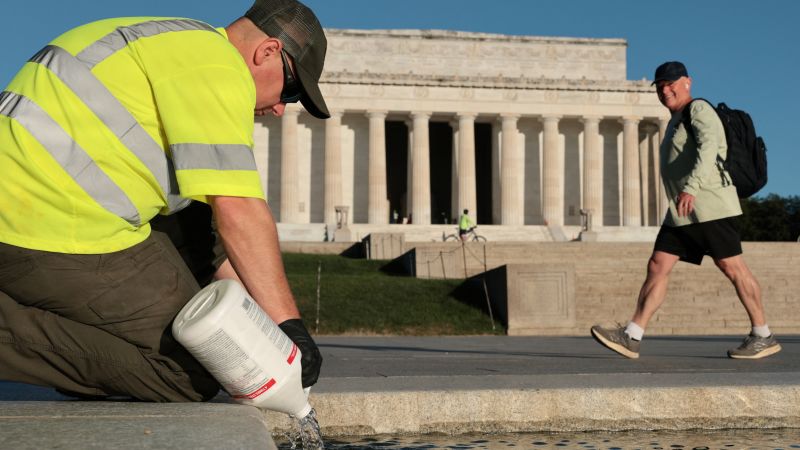
Lincoln Reflecting Pool Algae Crisis: Trump Team’s Hydrogen Peroxide Efforts
Reflecting Pool woes – Amid concerns about the Lincoln Reflecting Pool’s condition, the Trump administration has turned to hydrogen peroxide as part of its strategy to address the growing algae problem. The pool, a focal point of Washington, D.C.’s iconic landmarks, recently underwent a $14.2 million renovation and was refilled with 6.5 million gallons of water. However, the pool now appears green due to algae growth, raising questions about the effectiveness of the latest measures to combat this longstanding issue.
Algae Growth and Reactive Measures
The algae problem has persisted despite the administration’s efforts. Crews have been seen manually removing the green growth, while hydrogen peroxide has been added to the water in a bid to neutralize the issue. The Department of the Interior explained that the algae’s reappearance was anticipated, calling it a natural result of the pool’s restoration. Yet, the visible impact has led to mixed reactions from the public, with some viewing it as a minor setback and others as a major flaw in the project.
The Trump team’s approach has been criticized for its lack of long-term solutions. While hydrogen peroxide is used as a temporary fix, it may not address the root causes of algae proliferation. The pool’s recent transformation into a murky green has sparked debates about the balance between immediate action and sustainable methods. For instance, the algae problem has been a recurring issue in similar projects, suggesting that the current response might not be sufficient to resolve the problem permanently.
Technological Claims and Industry Involvement
One of the key elements of the administration’s plan is the installation of a new filtration system. The “ozone nanobubbler” was introduced as a state-of-the-art solution to destroy algae blooms. The Interior Department claimed this technology, along with hydrogen peroxide, would ensure a cleaner pool. However, the effectiveness of these measures remains uncertain, as the algae issue has not been fully resolved.
Industry representatives, such as Eddie Wood from Atlantic Industrial Coatings, clarified that their role was limited to waterproofing the pool’s structure, not managing its water quality. While they expressed pride in their contribution, they acknowledged that algae growth was beyond their control. The filtration system, installed by an Ohio-based firm, Greenwater Services, was touted as a breakthrough in water purification, yet it has not yet prevented the green tint from appearing in the Reflecting Pool.
Public reactions to the algae issue highlight the divide in opinions about the renovation’s success. Some visitors reported that the pool still looked the same, while others noticed improvements. This discrepancy underscores the challenge of addressing both the technical and aesthetic aspects of the problem. The algae crisis, therefore, remains a central concern for those who believe the pool’s condition reflects broader issues with the administration’s approach.
Reflecting Pool Woes and Public Perception
As the algae problem continues, the Lincoln Reflecting Pool faces growing scrutiny. Critics argue that the latest efforts have done little to improve its appearance, with the green tint becoming a symbol of the administration’s struggles. The pool’s condition has drawn attention from tourists and locals, who are now debating whether the investment was worthwhile. For many, the algae issue represents a failure to achieve the goal of a “clean and beautiful” landmark.
“It looks like it’s back to the same old problem,” said a local visitor. “Even after all the money spent, the algae is still there. I’m not sure what the real solution is.” Their comments reflect a broader sentiment that the Reflecting Pool woes are not new, but rather a recurring challenge that demands more innovative solutions.
Meanwhile, some supporters remain optimistic, believing that the algae issue is a temporary hurdle. They argue that the administration’s measures, while imperfect, represent progress. The Reflecting Pool woes, however, continue to be a topic of discussion, with experts and the public alike calling for a more comprehensive strategy to ensure
