
Judge rejects bid to stop UFC fight at White House
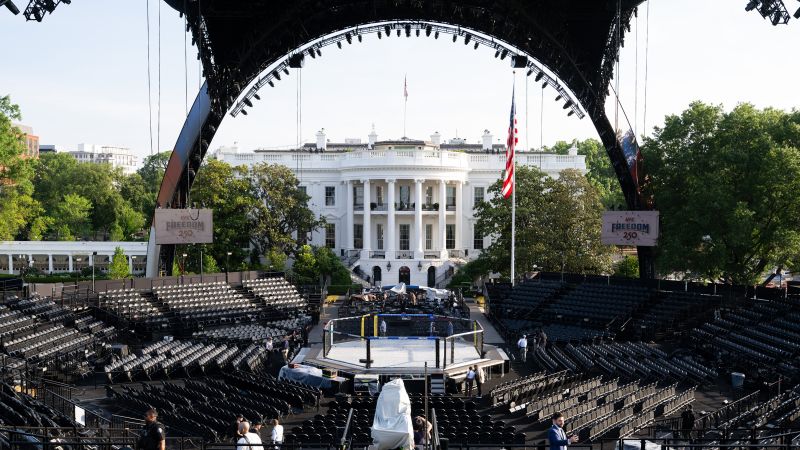
Judge Rejects Bid to Block UFC Fight at White House
Judge rejects bid to stop UFC fight – A federal judge has dismissed a petition filed by two Virginia residents seeking to halt President Donald Trump’s plan to host a UFC event at the White House this weekend. The decision, issued Friday afternoon by US District Judge Amit P. Mehta, cleared the way for the fight to proceed despite legal challenges raised by the plaintiffs. The case, which was brought last weekend, centered on the argument that the privately organized event could not lawfully occur on the White House’s South Lawn or the Lincoln Memorial, where it is expected to take place before the main event on Sunday.
Plaintiffs’ Legal Argument and Judicial Response
The plaintiffs, a political activist and a Vietnam War veteran, claimed the event violated federal permitting rules because it was not held in honor of America’s 250th anniversary but rather as a tribute to Trump’s birthday. They argued that the administration’s use of federal spaces for the UFC fight bypassed standard regulatory procedures, such as environmental assessments. However, Judge Mehta ruled that the plaintiffs lacked the legal standing required to challenge the event, a concept central to judicial review. His decision meant the case did not reach a final determination on the fight’s legality, but he acknowledged the administration’s assertion that halting the event would cause significant harm.
“The potential loss of those dollars resulting from a last-minute, court-ordered stoppage cannot be ignored,” the judge wrote in his ruling.
Mehta emphasized the economic impact of the event, noting that the UFC and its affiliated organizations had spent over $60 million on production, labor, construction, and promotion. He cited the risk of financial loss if the event were abruptly canceled, a concern shared by the organizers and the spectators expected to attend. The administration, through its sworn declaration, highlighted that the federal government would provide emergency services, including law enforcement and medical care, to support the event. However, the cost of these services to taxpayers remains uncertain.
Exemption and Event Context
The plaintiffs had contended that the White House was utilizing a federal rule to exempt events tied to the nation’s 250th birthday from routine permitting requirements. They argued this exemption allowed the administration to host the UFC fight without proper oversight, despite the event’s location on the South Lawn and the Lincoln Memorial. According to their legal filings, the fight was not a celebration of American independence but rather a commercial venture benefiting Trump, who reportedly holds stock in the parent company of the UFC.
The UFC event, they claimed, was designed to coincide with Trump’s birthday, which also falls on the day of the main event. This timing, they suggested, undermined the event’s status as a patriotic commemoration and shifted its purpose to personal gain. The plaintiffs’ lawyers stressed that the event was privately managed and not “official” in nature, which they believed made it ineligible for the 250th-anniversary exemption. “The event is neither ‘for the celebration of the 250th anniversary of American Independence’ nor, crucially, being ‘planned, organized, and executed’ by the federal government,” the legal team wrote in court documents.
Administration’s Defense and Legal Justification
Justice Department lawyers defending the event argued that the administration was not circumventing federal laws but following existing guidelines. They stated that temporary structures on White House grounds, such as the “claw” used for the UFC event, are common and do not require congressional approval. “Temporary structures are ubiquitous on the White House grounds, erected for nearly every special event, yet nobody has ever before suggested that Congress needs to pass legislation for every concert tent or Easter egg roll kiosk,” the DOJ contended in its filings.
The administration also highlighted the logistical efforts involved in the event, including the setup of facilities for the anticipated 4,000 South Lawn guests and over 120,000 Ellipse attendees. Federal services, such as first aid and security, were provided to ensure the event’s success, though the financial burden on public funds remains a point of debate. The plaintiffs had requested temporary intervention to delay the event, arguing that the administration’s actions could set a precedent for future events. However, the DOJ countered that such a ruling would unfairly burden multiple stakeholders, including the UFC and Trump, without sufficient grounds.
Implications for Future Events
The judge’s ruling has broader implications for how the federal government can use its properties for private events. By upholding the administration’s claim of necessity, the decision reinforces the idea that large-scale activities, even those involving high-profile figures, can proceed under existing exemptions. This outcome may embolden future organizers to host events on federal land without stringent permitting, provided they align with recognized national celebrations or have sufficient justification.
Meanwhile, the case underscores the tension between political interests and regulatory compliance. The plaintiffs’ argument hinges on the assumption that the event’s primary purpose was to honor Trump rather than the 250th anniversary of American independence. This interpretation, however, has been challenged by the administration, which maintains that the event is part of a broader commemorative effort. The ruling also raises questions about the balance between public resources and private profit, particularly given Trump’s reported financial stake in the UFC’s parent company.
Next Steps and Public Reaction
The White House has stated that workers will begin dismantling the temporary structure, known as the “claw,” starting Monday. This move signals the event’s imminent launch, despite the ongoing legal dispute. While the judge did not address the core legality of the fight, his decision has provided clarity on the administration’s ability to proceed. The plaintiffs, however, remain undeterred, emphasizing that the fight’s connection to Trump’s birthday could be a key point in future legal challenges.
The case has sparked mixed reactions among the public. Some critics argue that the event represents an overreach of executive power, while supporters defend it as a legitimate use of public space for a high-profile, economically beneficial occasion. The outcome may influence similar cases where private entities seek to leverage federal properties for events that blend political and commercial objectives. As the UFC fight approaches, the focus shifts to whether the judge’s ruling will serve as a precedent or a temporary setback in the broader debate over government use of public resources.
In the meantime, the administration continues to assert its authority, with Trump’s team emphasizing the event’s role in celebrating the nation’s heritage and its economic value. The $60 million investment, they argue, is a testament to the event’s significance and the effort required to make it a reality. The judge’s decision, therefore, not only clears the path for the fight but also sets a legal standard for future events that may intersect with public and private interests.
