
Exclusive: Downed US pilot reported seeing Iranian drones swarm in ‘jellyfish’ formation
Exclusive: Downed US pilot reported seeing Iranian drones swarm in ‘jellyfish’ formation
Exclusive – In a dramatic incident over Iran earlier this year, a US Air Force pilot who was rescued by special forces after being shot down described witnessing an unprecedented aerial display. According to four sources with knowledge of the event, the pilot observed a coordinated swarm of Iranian drones forming a pattern resembling a jellyfish before ejecting from his F-15 jet. This account, which has not been publicly disclosed, emerged during a debriefing with intelligence officials and has ignited a debate within the US military’s analytical circles.
The pilot’s testimony details a moment of confusion and awe. “Multiple drones interconnected and moving as one with smaller drones below the bigger drones like legs,” one of the sources said, capturing the pilot’s words. The description left intelligence analysts scrambling to interpret its significance. “Real alien sh*t,” added another source, reflecting the pilot’s disbelief at the sight. Such a formation suggests advanced coordination among unmanned systems, raising questions about Iran’s evolving drone warfare capabilities.
“Multiple drones interconnected and moving as one with smaller drones below the bigger drones like legs,” one of the sources said, capturing the pilot’s words.
While the exact cause of the F-15’s downing remains under investigation, initial theories point to the possibility that the drone swarm played a role. Two sources indicated that the formation might have disrupted the jet’s systems or created a tactical advantage for Iran. The pilot’s report, however, is still being scrutinized for accuracy, particularly given his concussed state after the crash. This injury has prompted some officials to question whether he could clearly recall the event.
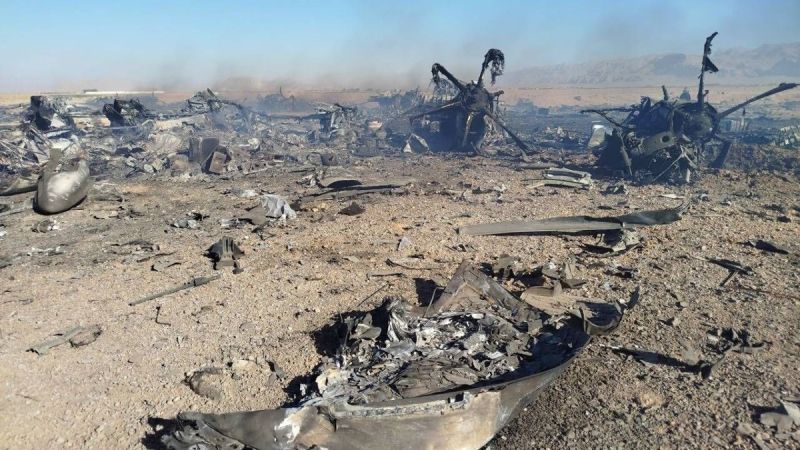
The incident marks the first time a US aircraft has been shot down over Iran during the current conflict. The F-15, piloted by an experienced airman, had a crew of two: the pilot and a weapons system officer. US forces initiated a swift search and rescue operation, with the pilot safely retrieved hours after ejecting. Meanwhile, the weapons systems officer managed to evade capture for over a day before being rescued from the mountains. It is unclear if the officer also observed the drone formation, though his account may add critical context to the pilot’s testimony.
The pilot’s experience is not his first. As revealed by two sources, he was previously involved in a friendly fire incident early in the conflict when Kuwaiti forces mistakenly targeted his aircraft. This history raises concerns about the pilot’s ability to distinguish between real events and potential perceptual distortions. The current incident, however, has introduced a new layer of complexity. The jellyfish-like formation, if confirmed, would represent a significant leap in Iran’s ability to deploy drones in a synchronized, networked manner.
Experts are divided on the implications of the report. Some argue that the formation could be a demonstration of Iran’s growing technological prowess, while others suggest it might have been an optical illusion or a staged display. “Are you sure you saw what you are saying you saw?” one intelligence official remarked, echoing the skepticism within the community. The US Air Force has directed inquiries to Central Command, which has not yet provided a definitive response to CNN’s questions. The Office of the Director of National Intelligence, too, has remained silent on the matter.
Meshed Networking: A New Frontier in Drone Warfare
The technical term for the capability described by the pilot is “one-to-many meshed networking,” according to sources. This system allows a single operator to control multiple drones in real time, creating a unified aerial network. Such technology is already in use by Russia and China, but its presence in Iran could signal a shift in the balance of power in the region. If the pilot’s account is accurate, it would indicate that Iran has achieved a level of sophistication previously thought to be out of reach.
Meshed networking is not limited to combat applications. A US official noted that the technology could also be used for civilian purposes, such as providing internet connectivity in remote areas. However, the potential for military use is far more alarming. The coordinated drone swarm observed by the pilot suggests that Iran could now launch attacks with precision and scale, potentially overwhelming enemy defenses. This capability would pose a serious threat to US forces and their allies, who are increasingly reliant on air superiority to maintain control in the region.
The pilot’s report has been placed in the context of ongoing negotiations between the US and Iran to end the conflict. A 60-day ceasefire window was recently established, and talks are expected to focus on Iran’s nuclear program. Yet, the drone incident has brought attention to other pressing issues, including the nation’s expanding arsenal of attack drones. As the US and its allies prepare for potential future threats, the jellyfish formation serves as a chilling reminder of Iran’s growing military adaptability.
China and Russia have been instrumental in Iran’s drone development, according to sources. These partnerships have enabled Tehran to refine its unmanned systems, integrating advanced technologies into its military operations. The current incident may be a culmination of this collaboration, showcasing Iran’s ability to leverage foreign expertise. If the formation was indeed a real tactical maneuver, it could mean that Iran has moved beyond using drones as simple reconnaissance tools to deploying them as coordinated weapons of mass disruption.
Emma Bates, a drone warfare expert and founder of Cachai, highlighted the strategic implications of the report. “We will spend huge, huge dollars, like a lot of blood and treasure, protecting ourselves from something that can coordinate like that,” she told CNN, referring to the potential threat posed by meshed networking. Her words underscore the urgency for US forces to reassess their defenses and adapt to a new era of aerial warfare. The pilot’s account, though unverified, has already sparked a reevaluation of Iran’s capabilities and the future of the conflict.
As the ceasefire talks progress, the question remains: did the pilot witness a genuine advancement in drone technology, or was it an anomaly? The answer could determine the trajectory of the war and the effectiveness of diplomatic efforts to de-escalate tensions. Regardless of the outcome, the jellyfish formation has become a symbol of Iran’s growing influence and the evolving nature of modern warfare.
