
Election denier Tina Peters released from prison
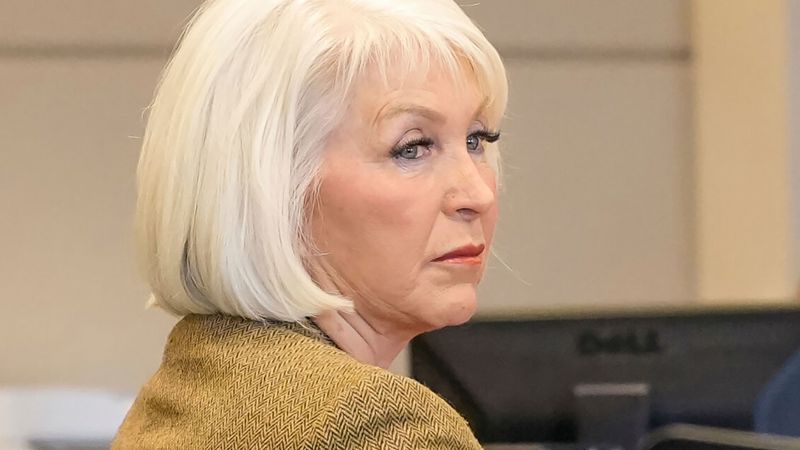
Election Denier Tina Peters Released from Prison
Election denier Tina Peters released – On Monday, Tina Peters, a former county clerk in Mesa County, Colorado, walked out of the La Vista Correctional Facility in Pueblo after being freed from state custody. This release came weeks following a controversial decision by Colorado’s Democratic governor, Jared Polis, to commute her sentence, effectively halving the time she was originally sentenced to serve. Peters, who had been incarcerated since her conviction in 2024, now faces criticism from election officials and political figures who argue her early release undermines the integrity of the 2020 election process.
Background on the Case
Peters was convicted of state felonies for her role in a conspiracy to disrupt voting systems in her county. The scheme, aimed at supporting claims of widespread fraud in the 2020 presidential election, involved breaching secure equipment to gather evidence allegedly proving President Donald Trump’s assertions that the outcome was illegitimate. Her sentence initially totaled nearly nine years, but Polis’s commutation reduced it to four and a half years. This adjustment allowed Peters to serve approximately one year and eight months before her release, a timeline influenced by Colorado’s parole and sentencing policies.
Justification for the Commutation
Polis cited the recent ruling of a Colorado appeals court as the primary basis for his decision. The court found that the trial judge had violated Peters’ First Amendment rights by penalizing her for speech related to the 2020 election. However, the governor also defended his action by referencing a series of statements that critics argue were misleading or untrue. In a Substack post published on Sunday, Polis described his decision as “straightforward,” stating that after reviewing the facts and the appeals court’s decision, he concluded her sentence was “simply too long.” This rationale has sparked debate among legal experts and political analysts.
“After reviewing the facts and reading the Appeals Court decision, I concluded that her sentence was simply too long,” Polis wrote.
While Polis emphasized the legal grounds for his commutation, opponents have pointed to the broader implications of the decision. They argue that the governor’s justification for reducing Peters’ sentence is not fully aligned with the evidence, suggesting it was politically motivated. The commutation, they claim, sends a message that election-related misconduct can be forgiven if it aligns with the interests of a sitting administration.
Reactions to the Decision
The move has drawn sharp criticism from a range of voices, including election officials, state prosecutors, and lawmakers. A bipartisan group has condemned Polis for setting a precedent that could embolden future election deniers. The Colorado Democratic Party even censured the governor, calling the commutation “dangerous and disappointing.” These reactions underscore the polarizing nature of Peters’ case, which has become a symbol of the ongoing efforts by Trump allies to challenge the legitimacy of the 2020 election results.
Peters’ Post-Release Statements
Shortly after her release, Peters appeared on a podcast hosted by Steve Bannon, a close associate of former President Donald Trump. During the interview, she reiterated her belief in the 2020 election being manipulated. “I know that the Democrats are going to cheat, and no one’s really addressing the problem that I spent my time in prison as retribution for,” she stated. “That was exposing the election machines that allow the votes to be flipped.” Peters’ remarks reference the widely debunked claim that Dominion Voting Systems’ equipment could flip votes systematically, a central argument in the conspiracy theories that have driven much of the political discourse surrounding the 2020 election.
“I spent my time in prison as retribution for exposing the election machines that allow the votes to be flipped,” Peters said.
Peters has maintained her innocence throughout the legal process. In a clemency application she submitted to Polis, she acknowledged a “mistake” in allowing an individual to access her county’s voting equipment. However, her lawyer, Peter Ticktin, has since cast doubt on the sincerity of this admission. “I don’t think she indicated that she was feeling contrition and remorse,” Ticktin told CNN. “She basically was admitting to the fact that she could have done it better.” This distinction highlights the ongoing debate over whether Peters’ actions were driven by a genuine desire to uncover fraud or a political agenda.
Broader Implications of the Release
Peters’ early release marks a significant victory for the election denier movement, which has been actively challenging the 2020 election’s legitimacy. Her case has also been a focal point in the broader struggle between Trump and Colorado, where the state has long been a key battleground in the fight over election procedures. Despite Polis’ claims that his decision was not influenced by Trump’s actions, critics note that the governor’s choice to commute Peters’ sentence aligns with the political pressure exerted by the former president.
Peters’ release has been accompanied by a continued push to spread her version of the narrative. Throughout her incarceration, she remained active on social media, using allies to amplify her arguments about the 2020 election. Even after her release, she has not wavered in her claims, insisting that her time in prison was a result of her efforts to expose the systems she believes were used to cheat voters. This persistence has fueled her position as a central figure in the conspiracy movement, despite the fact that her claims have been thoroughly examined and refuted by experts.
Legal and Political Context
The controversy surrounding Peters’ case has highlighted the tension between legal accountability and political influence. While the appeals court found that her First Amendment rights were violated, the broader implications of the commutation have been scrutinized. Critics argue that Polis’s decision to reduce her sentence was more about aligning with Trump’s campaign than about justice. They point to the governor’s statements during the commutation, where he expressed confidence in Peters’ “contrition” and her willingness to take responsibility for her actions.
“Peters’ statement demonstrates taking responsibility for your crimes,” Polis said in a letter granting her clemency.
Yet, her lawyer has challenged this interpretation, suggesting that Peters’ admission was more about mitigating her legal risk than expressing true remorse. “It’s very hard to be someone who has real contrition,” Ticktin remarked. “There’s a difference between regret and contrition.” This nuance has intensified the debate over whether Peters’ release was justified or a strategic move to support the political narrative of election fraud.
The case has also underscored the role of state-level politics in shaping the outcomes of high-profile election-related trials. As Polis’s term comes to an end, the decision to commute Peters’ sentence has been seen as a legacy project, one that aligns with his administration’s broader efforts to address claims of partisan bias. However, the move has also been criticized for undermining public confidence in the legal system’s ability to punish election-related misconduct fairly.
With Peters now free, her presence in the public eye continues to generate attention. Her release is not just a personal milestone but a symbol of the broader ideological conflict over the 2020 election. As she seeks to clear her name through ongoing appeals, her case remains a flashpoint in the national conversation about the balance between free speech and electoral integrity.
