
There’s a new sheriff in town at the Fed. Markets are still learning his rules
There’s a New Sheriff in Town at the Fed. Markets Are Still Learning His Rules
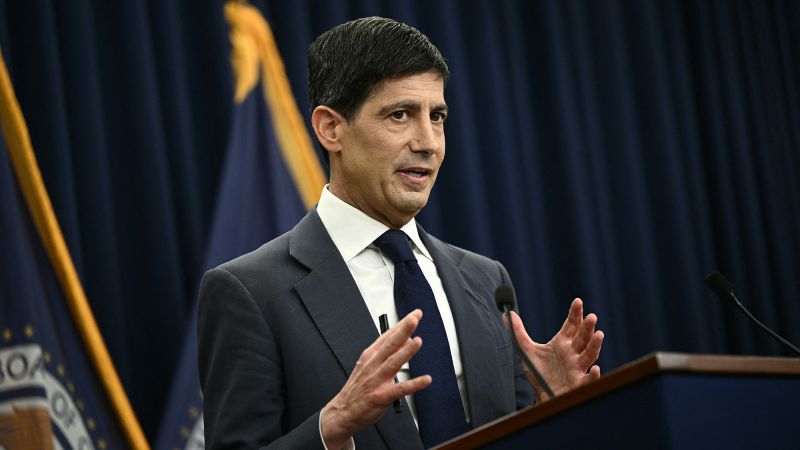
There s a new sheriff in town – Kevin Warsh has swiftly implemented a fresh approach to the Federal Reserve’s operational strategy since assuming the role of chairman. During his first policy meeting, the central bank unveiled a streamlined interest-rate statement, diverging from the detailed forecasts typically included in the so-called dot plot. Warsh also bypassed the tradition of publishing individual projections, opting instead to introduce five new task forces aimed at redefining the Fed’s outreach to the broader economy. These moves signal a deliberate shift in how the institution communicates with markets, marking a departure from its more recent practices.
Changing the Communication Landscape
Warsh’s decisions have sparked debate among financial analysts, who view them as a significant evolution in the Fed’s public messaging. “Chair Warsh is charting a different course than what Wall Street has become accustomed to over the last eight years,” noted Bret Kenwell, a US investment strategist at eToro. “The transition may not be smooth, but markets will eventually adjust.” This reorientation focuses on reducing the frequency of detailed forward guidance, prioritizing data-driven responses over preemptive statements. “Financial markets operate most effectively when reacting to real-time information rather than speculating about future policy,” Warsh emphasized. “The current uncertainty reflects a natural adjustment period as investors recalibrate to this new framework.”
The new task forces, including one dedicated to communication strategies, are designed to enhance the Fed’s operational efficiency. By outsourcing specific policy discussions to specialized groups, the central bank aims to streamline decision-making and improve transparency. This model contrasts with the previous approach, which often relied on centralized forecasts and broader economic commentary. The impact of these changes is already visible in market behavior, with stocks experiencing a decline and short-term bond yields rising sharply after the meeting. The US dollar also saw a notable strengthening, indicating heightened confidence in the Fed’s monetary stance.
The Ripple Effect on Markets
Two-year US Treasury yields reached their highest point in over a year, driven by nine Fed officials signaling the necessity of a rate hike by the end of 2026. This forecast underscores the central bank’s focus on curbing inflation, which has been a persistent challenge. Despite the recent upswing in yields, the overall market context remains complex, with stocks hovering near record highs and a labor market showing signs of stabilization. “The market’s mixed signals highlight the ongoing adaptation required to align with the new Fed’s priorities,” said Brett Ryan, a senior US economist at Deutsche Bank. “The transition is testing the limits of both policymakers and investors.”
Warsh’s strategy of minimal communication has already influenced market expectations. Before taking office, he hinted at a preference for data over speculation, a philosophy that now dominates the Fed’s approach. This shift has led to increased scrutiny of every policy detail, as traders and analysts seek to interpret the implications of his decisions. “The new sheriff in town has markets on high alert,” Ryan observed. “Every statement feels like a pivotal moment, and every silence is scrutinized for meaning.”
Analyst Insights on the Transition
Financial experts have noted that the transition to Warsh’s leadership may bring short-term volatility. “Markets will need time to internalize the Fed’s new direction,” Krishna Guha, vice chairman at Evercore ISI, remarked in a recent analysis. “The current adjustments could create choppy conditions as traders navigate this unfamiliar terrain.” The focus on data-driven decisions may reduce the influence of forward-looking guidance, which has historically shaped market sentiment. “This could lead to a more reactive market environment, where traders respond to real-time economic indicators rather than anticipate Fed actions,” Guha added.
Michael Feroli, chief US economist at JPMorgan Chase, raised questions about the purpose of the task forces. “Are these commissions intended to initiate a major shift in monetary policy, or are they simply a way to revisit established debates?” he asked. “We’ll gain clarity in the coming weeks as the Fed’s plans unfold.” The task forces are expected to address key areas such as inflation control, economic forecasting, and the role of communication in shaping market expectations. Their work may ultimately redefine how the Fed interacts with financial markets, potentially altering the trajectory of interest rates and economic growth.
Warsh’s leadership has introduced a new dynamic in the Fed’s approach to policy-making. While his team has emphasized the importance of data over speculation, the market’s mixed response suggests a period of adjustment. The decline in stocks, the surge in bond yields, and the dollar’s strength all reflect the uncertainty surrounding the Fed’s new priorities. “The market’s reaction is a clear indicator of how much the shift in communication has affected investor behavior,” Kenwell explained. “This is not just a change in tone—it’s a transformation in strategy.”
The broader economic environment has also shaped the Fed’s current stance. Rising oil prices and inflationary pressures have contributed to higher Treasury yields, which are now above pre-Iran war levels. In April, the Fed’s preferred inflation gauge hit its highest mark since 2023, prompting renewed focus on tightening monetary policy. “The task forces’ success will depend on their ability to address these inflationary risks effectively,” Feroli noted. “Warsh’s team has set the stage for a more pragmatic approach, but the road ahead remains uncertain.”
As the Fed transitions into this new era, investors are keenly observing the outcomes of these changes. The interplay between the central bank’s communication strategy and market dynamics will be critical in determining the path forward. “The coming weeks will reveal whether Warsh’s vision for the Fed can stabilize inflation without triggering further market turbulence,” Guha concluded. “This is a pivotal moment for both the institution and the global economy.”
