
The United States men exit the World Cup knowing they inspired a nation to believe they could win it all one day
The United States Men’s Soccer Team Leaves the World Cup with a Legacy of National Pride
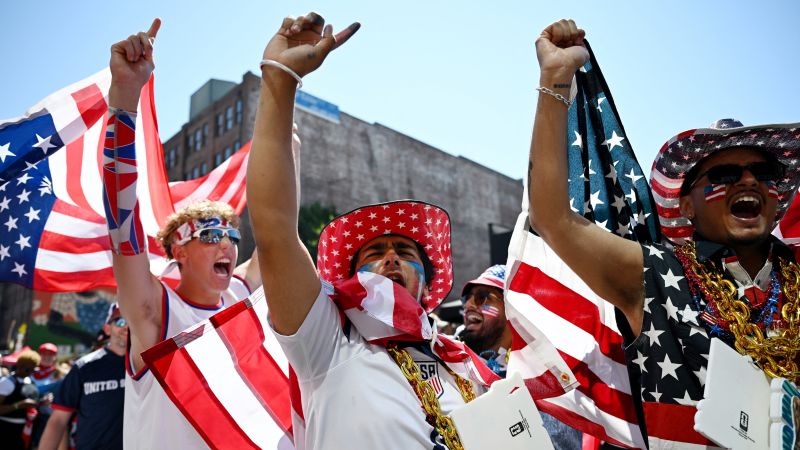
The United States men exit the World – Despite a 4-1 defeat to Belgium in the Round of 16, the U.S. men’s national team (USMNT) left a lasting impression on fans worldwide. The loss, which occurred on July 7, 2026, at Lumen Field in Seattle, did little to dampen the enthusiasm of supporters who had rallied behind the squad throughout the tournament. One fan, dressed in a red, white, and blue outfit with a stars-and-stripes hairpiece, celebrated her team’s performance with unshakable optimism. “Our spirits are winners!” she exclaimed as she danced down Stadium Place Street, her joy undiminished by the outcome.
A Coach’s Vision Beyond the Pitch
From the moment the team arrived in the United States for the home World Cup, their journey was marked by a unique blend of national pride and football ambition. Coach Mauricio Pochettino, who had previously identified strongly with his Argentine heritage, embraced the challenge of leading a squad that embodied the country’s cultural diversity. His role as a motivational figure became central to the team’s identity, as he pushed players to think beyond their current performance and envision greater success.
“We are always talking to the players. Why not us? I think it’s really important to believe,” Pochettino said in a May press conference, emphasizing the team’s potential to achieve historic feats. His words resonated deeply with fans, who saw in the USMNT a reflection of their own hopes and aspirations.
Pochettino’s coaching style, characterized by fiery halftime speeches and memorable catchphrases, helped bridge the gap between the team and their supporters. Even after the loss to Belgium, his unwavering belief in the squad’s capabilities remained evident. “I feel very proud. It was an amazing journey together and we make proud the whole country,” he told Fox Sports following the match, his tone buoyant despite the setback.
The Players’ Perspective on Resilience and Relatability
Tyler Adams, the team’s defensive midfielder, emerged as a symbol of perseverance. The 25-year-old, who played 72 minutes in the decisive game and participated in four of the five matches, spoke candidly about the team’s efforts. “I think that was the goal was to inspire people,” he explained to Coy Wire of CNN Sports. “Even though we lost, the support we received was incredible. Our initial reaction was that we let them down, but I think the nation connected with us because we’re a team that represents the country’s spirit.”
Adams’ words echoed the sentiment of many fans, who found inspiration in the players’ determination. The USMNT’s diverse roster, composed of athletes from various ethnic and cultural backgrounds, became a source of pride for a nation that celebrates unity through sport. As the team navigated the tournament, their identity as a collective rather than an individualistic group resonated with supporters, fostering a sense of shared purpose.
“For me, actually being proud to be an American for the first time in a while,” said a fan carrying two US flags, her voice filled with emotion. “This team showed us what it means to believe in the possibilities of our country.”
Tim Ream, the team captain, embodied this spirit even in defeat. Known for his leadership on and off the field, Ream entered the media area with a composed demeanor, reflecting on the journey that had brought the USMNT to this stage. “There are boys and girls who were watching and being inspired, and [they] should be,” he noted. “This group has made the entire country proud, especially during a time when we were celebrating our independence.”
A Unique Opportunity for Homegrown Unity
The World Cup held in the United States provided an unparalleled backdrop for the team’s campaign. With the country’s Independence Day festivities in full swing, the tournament became a symbol of national identity. The USMNT’s presence in Seattle, where fans had gathered to cheer on their home team, created a sense of community that extended beyond the stadium. Even in moments of tension, such as the loss to Belgium, supporters remained steadfast in their support, embodying the resilience of the American spirit.
Before the match against Belgium, the team had spent days in a relaxed, almost carefree atmosphere at their training facility on the University of Washington campus. Dogs and puppies were part of the scene, a reminder of the lighthearted moments that accompanied the serious business of international competition. This contrast between the team’s comradery and their eventual challenge highlighted the emotional highs and lows of the tournament.
The Road Ahead: A New Chapter for the USMNT
As the World Cup concluded, questions lingered about the future of Pochettino’s tenure. The 54-year-old coach, who had previously won three World Cups, had become a beloved figure among fans. His ability to balance the traditional Argentine mindset with the American dream was a key factor in the team’s success, both on and off the pitch. While the loss to Belgium marked the end of their campaign, it also opened the door to new opportunities.
Despite the defeat, the USMNT’s performance underscored the team’s potential. Their three-group-stage wins and a knockout victory set the stage for the Round of 16 clash, a moment that had captivated audiences. Pochettino’s emphasis on “touching the moon” – a metaphor for achieving the unthinkable – became a rallying cry for supporters who believed in the team’s ability to break new ground. Even as Belgium outplayed them, the USMNT’s effort sparked a wave of optimism that transcended the loss.
For the fans who had followed the team’s progress, the experience was more than just a game. It was a celebration of unity, perseverance, and the unyielding belief that the United States could compete at the highest level. “This team brought the world together,” one supporter remarked, highlighting the global impact of the USMNT’s journey. Their presence in the World Cup, even in a short-lived run, had ignited a passion that would carry forward into future competitions.
As the final whistle blew at Lumen Field, the memory of the USMNT’s efforts would remain etched in the hearts of fans. They had proven that belief and effort could create a moment of collective triumph, even in the face of defeat. The 26 players who had represented their country with heart and courage would leave the tournament with the knowledge that they had inspired a nation, proving that the dream of World Cup glory is always within reach.
