
How roasted meats went spinning all the way around the world
How Roasted Meats Went Spinning Across the Globe
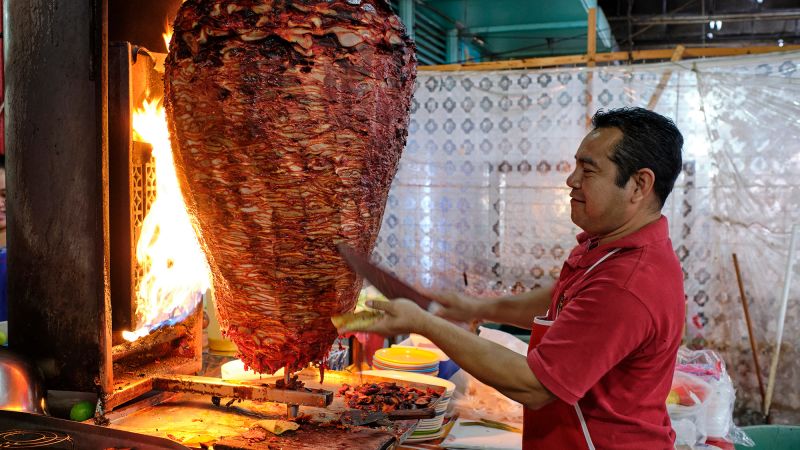
How roasted meats went spinning all – The art of cooking meat on a rotating spit has deep historical roots, transcending borders and centuries to become a staple in global cuisine. Raul Morales, a third-generation taco maker at Taqueria Vista Hermosa in Los Angeles, has inadvertently become a modern symbol of this tradition. While waiting in line at Universal Studios Hollywood, he was recognized by fans who shouted, “Chef Al Pastor!” Morales, who hails from Mexico City, explained the nickname stems from his family’s decades-long dedication to the craft. His al pastor tacos, filled with tender, spice-laden pork shaved from a vertical spit, are more than a street food offering—they are a cultural artifact that bridges ancient methods and contemporary tastes.
The Origins of a Timeless Technique
Roasting meat over a spit or skewer may trace back to some of humanity’s earliest culinary practices. According to food historian Ken Albala, a professor at the University of the Pacific, this method is among the oldest known. Evidence of such techniques dates to the Aegean region as early as the 10th century BCE, where iron spits were found in tombs associated with male warriors. Susan Sherratt, an emeritus professor of East Mediterranean archaeology at the University of Sheffield, notes that spit-roasted meats were central to ancient feasts, as seen in the Homeric epics *The Iliad* and *The Odyssey*. These texts suggest that roasting was not just a practical way to prepare food but also a communal activity tied to masculinity and celebration.
Albala highlights that roasting meat is more than simply exposing it to fire. The process involves cooking the meat beside the heat source, allowing for the development of complex flavors through the Maillard reaction and smoke. “Any place you have a pointy stick or a sword, people are going to figure out very quickly … if you cook with it off to the side of the fire, it’s going to taste much more interesting,” Albala remarked. This method, he argues, was likely developed to enhance the richness of the dish, a technique that would later evolve into the more refined practices seen in the Ottoman Empire.
The Ottoman Empire and the Birth of a Specialized Dish
The Middle East saw a transformation in spit-roasting techniques centuries after the ancient traditions took root. In the Ottoman Empire, cooks began layering thin slices of raw meat onto a spit, creating a dense, tapered stack that could spin continuously during the roasting process. This innovation allowed for more even cooking and the creation of a dish that would become a global phenomenon. Mary Işın, author of *Bountiful Empire: A History of Ottoman Cuisine*, points to a 1620 manuscript commissioned by Ottoman statesman Hafız Ahmed Paşa. Miniature paintings within the manuscript depict chefs slicing meat from rotating spits, suggesting that this method was once reserved for elite gatherings.
Işın notes that the paintings imply these spits were used for elegant outdoor meals, possibly royal picnics. “In those miniatures, you can see it’s an upper-class thing,” she said. While the artwork doesn’t specify the dish’s name, Işın discovered 15th-century Ottoman texts that refer to it as *çevirme kebabı*, or “turned kebabs.” This term, which conveys the motion of the meat spinning, became the foundation for modern variations like shawarma and döner. However, the name *çevirme* eventually gave way to the Turkish word *döner*, which emerged in the late 19th century. Despite its later appearance in print, Işın believes *döner* was already widely in use by that time.
The evolution of the dish reflects its adaptability and the cultural exchanges that shaped it. As *çevirme kebabı* spread across the Ottoman Empire, which at its peak spanned central Europe to North Africa and the Arabian Peninsula, it incorporated elements from different regions. The term *shawarma* entered Arabic and English, becoming a household name in the Middle East and beyond. Yet, the core of the dish remained rooted in its spinning method, a process that ensures the meat is evenly cooked and infused with aromatic flavors.
From Elite Feasts to Global Popularity
The transition from royal indulgence to everyday enjoyment is a testament to the dish’s versatility. By the early 1800s, *döner* had become a favorite among travelers in Istanbul. François Pouqueville, a French explorer who visited the city in 1800, praised it as “the most delicious in the country,” a sentiment that underscores its appeal across cultures. As migrants carried the dish to new continents, they adapted it to local tastes, adding ingredients like lamb, chicken, or even beef to the rotating spits.
This cross-cultural journey has turned spit-roasted meats into a symbol of global connectivity. In Mexico, the tradition of al pastor traces back to Lebanese immigrants who brought shawarma techniques to the country in the 19th century. Morales’ tacos, which blend indigenous ingredients with the spinning method, are a modern echo of this synthesis. “My recipe is very special, and very old,” Morales said, emphasizing the fusion of heritage and innovation in his work. The same can be said for the dishes that emerged in Turkey, the Levant, and the Balkans, each evolving while retaining the essence of the original practice.
Despite its widespread popularity, the history of spit-roasting remains a subject of fascination for scholars. Albala suggests that the method’s association with hunting and warfare gave it a symbolic weight, linking it to themes of strength and unity. “When you celebrated a victory, you would go out and sacrifice an animal to the gods, which would basically be like a big barbecue,” he explained. This ritualistic aspect, combined with its practicality, ensured its survival through the ages.
Today, the spinning spit is a ubiquitous feature in kitchens and street stalls worldwide. Whether it’s al pastor tacos in Los Angeles, shawarma wraps in Istanbul, or döner kebabs in Berlin, the technique continues to evolve while honoring its ancient origins. The simplicity of the method—using a rotating spit to cook meat—has allowed it to transcend time and geography, proving that some culinary practices are as enduring as they are adaptable. As Morales’ story shows, the legacy of this tradition lives on in the hands of those who carry it forward, ensuring its place in the world’s shared food culture.
