
The addictive 8 seconds where ‘nothing else in the world matters’
The addictive 8 seconds where ‘nothing else in the world matters’
The addictive 8 seconds where nothing – At the edge of a sprawling Queensland cattle station, a young rider named Johnathon Carlo bolts into the rodeo arena atop a miniature bull, his right hand flailing in the air before he tumbles into the dirt. The crowd erupts in applause as the 14-year-old returns to the chutes, his left wrist—a key grip point for the bull rope—bearing the marks of the ride. “You hurt?” a spectator asks. “Nah,” he replies, his voice steady despite the bruising fall. For bull riders, the sensation of pain is secondary to the adrenaline of the moment. The clock ticks down to eight seconds, and all that matters is staying atop the bull long enough to earn a score.
A Road to the World Finals
Australia’s rodeo scene, though distinct from its American counterparts, shares the same core ambition: to compete on the global stage. This summer, nine young Australian riders will travel to Texas for the Youth Bull Riders World Finals, a high-stakes event where the eight-second challenge becomes a lifeline to international recognition. Among them is Bella Brinner, a 12-year-old who insists she’s “showing the boys who’s boss,” and Jake Washband, a 13-year-old who knew his calling as a rider before he could even read. EJ Morris and Kobi Evans, also 13, are focused on one day claiming world titles in the US, a dream that feels as distant as it is enticing.
Behind these young athletes stands a network of passionate parents, many of whom are part of the Red Dirt Australian Rodeo, a non-profit organization dedicated to funding their journey. Clint Morris, a father and mentor, describes the experience as transformative. “They get over there and they’re messing with the world,” he says, emphasizing the cultural and personal growth the trip offers. Yet, the path to the US is fraught with challenges. Traveling to rodeos across Queensland—a state larger than Texas—requires both time and resources, with no assurance that the effort will pay off in the form of fame or fortune. For Troy Dunn, Australia’s sole PBR World Champion, the eight-second ride once earned him millions, but for others, the rewards may come closer to home.
The Heart of the Culture
Australia’s cowboy culture, though shaped by its own unique history, echoes the traditions of North and South America. The term “stockmen” replaces “cowboys,” while “jackaroos” and “jillaroos” describe young male and female trainees. These nuances reflect a blend of heritage and adaptation, with the sport thriving in rural areas where folk music, cowboy hats, and trucks are as common as they are in the Midwest. Yet, this cultural tapestry is interwoven with a legacy of displacement.
Johnathon’s hometown of Cherbourg, a former Aboriginal mission, is a microcosm of that history. His ancestors were segregated under colonial policies, forced from their traditional lands to live on government reserves. For decades, from 1900 to the early 1970s, dozens of Aboriginal tribal groups endured this upheaval, yet they found ways to preserve their connection to the land. Some became stockmen, mastering the skills of horseback riding and cattle mustering while navigating a system that often excluded them from broader society. Damien Bond, a third-generation bull rider from Cherbourg, reflects on this legacy. “The cattle industry, it was built off the backs of my people,” he says, highlighting the deep roots of the sport in Indigenous communities.
Today, bull riding is more than a hobby—it’s a way of life for many in these regions. Damien and his brother Charlie Bond, both accomplished riders, mentor the next generation, including Johnathon, who began his training at Charlie’s home. Now, every weekend, the boy and his five siblings pile into their mother’s car, braving long drives to compete at local rodeos. Elizabeth Davidson, Johnathon’s mother, admits she’s always anxious as her son steps into the arena. “Then I get really excited when he rides,” she says, her voice trembling with pride. “The way he just looks for his family, and he gives us a wave.”
Indigenous Resilience and Rodeo Identity
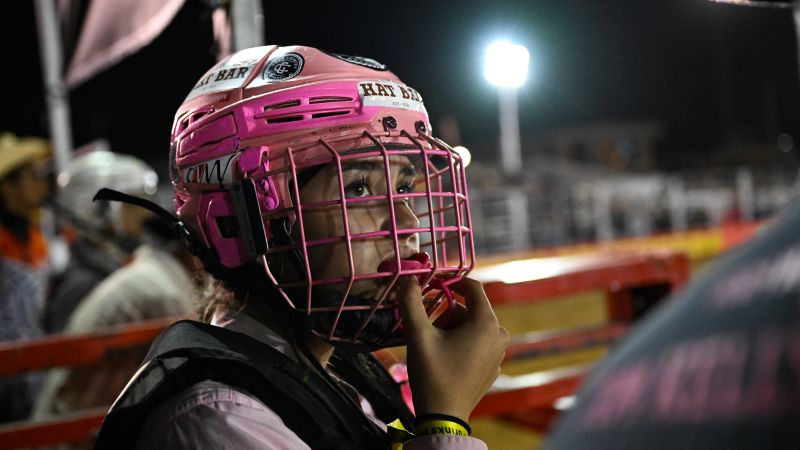
Bella Brinner, whose favorite bulls are named Ice Cube, Monkey, and Flopp, represents a new generation of riders who are redefining the sport’s boundaries. She wears a pink helmet and chaps, a bold statement in a field often dominated by traditional gear. Her story is part of a broader narrative: while Australia’s rodeo community competes with more popular sports like football and netball, it has carved out a space for Indigenous and rural voices to thrive. The sport’s physical demands and risk of injury are often overlooked in favor of its cultural significance.
For many, bull riding is a bridge between past and present. The cattle stations that stretch across Australia’s vast landscapes are not just economic powerhouses—they are living testaments to the resilience of Indigenous people. Despite historical marginalization, these communities have maintained a profound bond with the land and the animals they care for. The bull, a symbol of both challenge and connection, becomes a partner in this ongoing story. As the sport evolves, it carries with it the memories of those who shaped its beginnings, from stockmen to modern-day champions.
The Youth Bull Riders World Finals in Texas may seem like the ultimate goal, but for some, success is measured in the small victories of local competitions. Johnathon’s journey, though untested on the international stage, is already a testament to the strength of his community. His mother’s nervous anticipation, his brother’s mentorship, and the pride of his ancestors all converge in the moment he steps onto the bull. It’s a reminder that even in a nation where sports like rugby and cricket dominate, the spirit of the rodeo endures—a blend of grit, tradition, and the unyielding pursuit of eight seconds of glory.
Australia’s rodeo culture is a patchwork of influences, blending Indigenous heritage with European traditions. The sport’s popularity in remote areas is a quiet rebellion against the urban-centric priorities of the country. While the Australian branch of Professional Bull Riders Inc. works tirelessly to attract new talent, it faces competition from sports with greater visibility. Yet, the determination of riders like Johnathon and Bella suggests that the eight-second ride may hold more than just competition—it may hold the promise of a future where the stories of the past and the aspirations of the present collide.
