
July 4, 1776: The day Thomas Jefferson went shopping
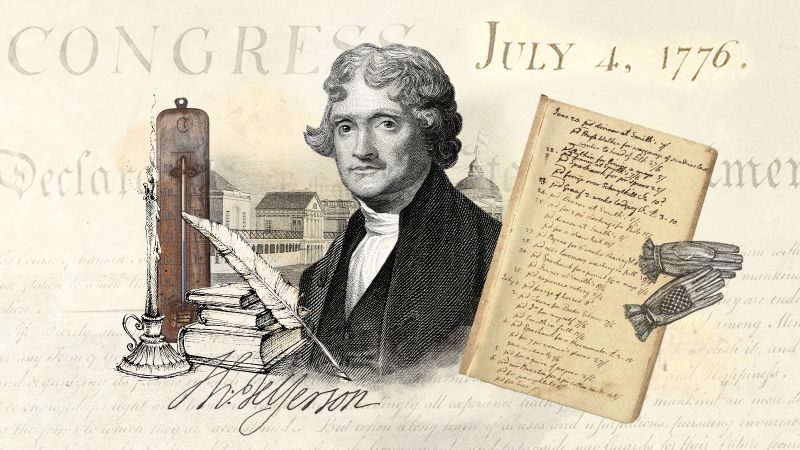
July 4, 1776: A Day of Dual Significance for Thomas Jefferson
The Historical Context of a Revolutionary Milestone
July 4 1776 – July 4, 1776, is widely recognized as a pivotal moment in American history, marking the formal adoption of the Declaration of Independence. However, the day’s narrative takes an unexpected turn when examining the personal activities of its primary author, Thomas Jefferson. While the Continental Congress was finalizing the document that would sever ties with British rule, Jefferson’s attention shifted to something seemingly trivial: tracking the weather. This detail, buried in his meticulous records, offers a unique lens into the man behind the historic text.
The summer of 1776 in Philadelphia was marked by steady temperatures, though the exact readings on July 4 reveal a nuanced picture of the day’s climate. Morning temperatures hovered around 68 degrees, rising to 72.25 by 9 a.m., then peaking at 76 degrees by 1 p.m. before settling slightly to 73.5 degrees by 9 p.m. These measurements, recorded by Jefferson, were not mere observations but part of a broader routine that underscored his analytical mindset. Yet, in the context of the nation’s birth, they highlight a personal side often overlooked in historical accounts.
The Unusual Day of Purchases and Practicality
Jefferson’s July 4 activities included more than just weather tracking. According to his personal expenditure logs, he made a notable purchase: a thermometer from John Sparhawk, an apothecary and bookseller on Second Street. This acquisition, costing three pounds and 15 shillings, was part of a broader shopping spree that also saw him buying seven pairs of women’s gloves for 17 shillings. Additionally, he allocated one shilling and six pence to charity, demonstrating a blend of practicality and civic responsibility.
Historians have long debated the significance of July 4, 1776, in relation to the broader revolutionary movement. While the declaration of independence was officially approved on July 2, the act of ratifying it on July 4 became the day Americans would commemorate for generations. For the revolutionaries gathered in Independence Hall, the date was not inherently dramatic, but Jefferson’s actions that day provide an intriguing counterpoint to the grandeur of the event. His ability to balance monumental political work with everyday errands suggests a complex interplay between personal habits and historical momentum.
The Role of Daily Life in Civic Foundations
Andrew Davenport, vice president of research at Monticello, the estate of Thomas Jefferson, offered a compelling perspective on the day’s duality. “It’s a mundane day, except it’s a revolutionary one,” he remarked. “It reminds us that even during the most intense periods of our history, ordinary tasks like managing household needs remain essential. These routines are the building blocks of civic life, and civic life is what shapes the nation.” Davenport’s insight underscores how the personal and the political coexist, even in times of upheaval.
Jefferson’s routine on July 4 also sheds light on his responsibilities as a delegate. Arriving in Philadelphia for the Second Continental Congress in May, he was joined by Robert Hemmings, an enslaved teenager who assisted with his daily needs. The Congress had already formed a committee to draft the Declaration of Independence on June 11, with Jefferson as the lead author. By June 28, the document was submitted to the full assembly, leaving the July 4 proceedings to focus on final approvals and preparations.
James P. McClure, general editor of the *Papers of Thomas Jefferson* project and a historian at Princeton University, noted that the actual adoption of the Declaration on July 4 was likely a streamlined process. “Historical records suggest the document was approved and ordered for printing in the morning,” he explained. “By that point, much of the foundational work had already been completed, reducing the need for prolonged deliberation.” This perspective challenges the notion that July 4 was a day of dramatic political action, instead framing it as a culmination of months of effort.
Debating the Legacy of a “Consequential” Day
Cara Rogers Stevens, a Jeffersonian scholar at Ashland University, proposed an alternative explanation for Jefferson’s shopping habits. “It’s possible that Jefferson wasn’t as deeply involved in the Congress’s committees as some of his peers,” she suggested. “While figures like John Adams were engaged in extensive debates, Jefferson may have had more flexibility in his schedule.” This theory adds nuance to the idea that the day’s significance was not solely tied to its political events but also to Jefferson’s personal role within the Congress.
John Adams, in a letter to his wife Abigail on July 3, had already predicted the future reverence for July 4. “The Second Day of July 1776, will be the most memorable Epocha, in the History of America,” he wrote. “It ought to be commemorated, as the Day of Deliverance by solemn Acts of Devotion to God Almighty.” Adams’ vision of a grand celebration, complete with parades and fireworks, highlights how the day’s importance was shaped by hindsight rather than its immediate circumstances.
Jefferson’s July 4 activities, therefore, serve as a reminder of the human element behind historical milestones. While he was responsible for drafting the Declaration, his attention to domestic matters reflects a broader truth: the revolutionaries were not only shaping a new nation but also navigating the complexities of everyday life. The juxtaposition of his meticulous temperature records and the purchase of gloves reveals a man who was both a visionary and a pragmatist, driven by the same determination that fueled the nation’s independence.
For the people of Philadelphia, July 4 was just another day in the ongoing struggle for sovereignty. The Continental Congress had spent over a year debating independence, with factions divided on the best path forward. By the time the final document was ratified, the movement had gained enough momentum to justify the nation’s break from Britain. Yet, Jefferson’s actions that day remind us that even in the heat of revolution, there was time for routine, and that routine was crucial to the revolution’s survival.
Reassessing the Narrative of a Revolutionary Day
While July 4, 1776, is now celebrated as a symbol of freedom, its original significance was more about the completion of a task than the creation of a new era. The decision to adopt the Declaration was a pragmatic step, not a dramatic turning point. Jefferson’s ability to manage both the intellectual and logistical aspects of the revolution—whether through drafting documents or shopping for gloves—demonstrates his multifaceted contributions to American history.
Jefferson’s thermometer purchase, in particular, raises questions about the intersection of science and politics during the revolutionary period. The instrument, which he acquired from Sparhawk, was not just a tool for measurement but a symbol of his commitment to precision and progress. This detail, combined with his charitable donations, suggests that Jefferson viewed his role as a delegate as part of a larger civic duty, one that extended beyond the drafting of a single document.
As we reflect on this day, it becomes clear that the events of July 4 were as much about the mechanics of governance as they were about the ideals of liberty. Jefferson’s actions that day—whether recording temperatures, purchasing goods, or engaging with his community—mirror the efforts of countless individuals who sustained the revolution’s momentum. The day’s legacy, then, is not just in the words of the Declaration but in the quiet persistence of everyday tasks that underpinned the nation’s birth.
In the end, July 4, 1776, remains a testament to the idea that history is not always written in the grandest of gestures. Sometimes, it is shaped by the small, consistent actions of those who are both leaders and participants in the unfolding story of a nation. Jefferson’s shopping spree on that day, far from being a distraction, offers a glimpse into the humanity of a man who helped define a new era for America.
