
Special Agent in Charge of FBI Chicago field office pushed to retire
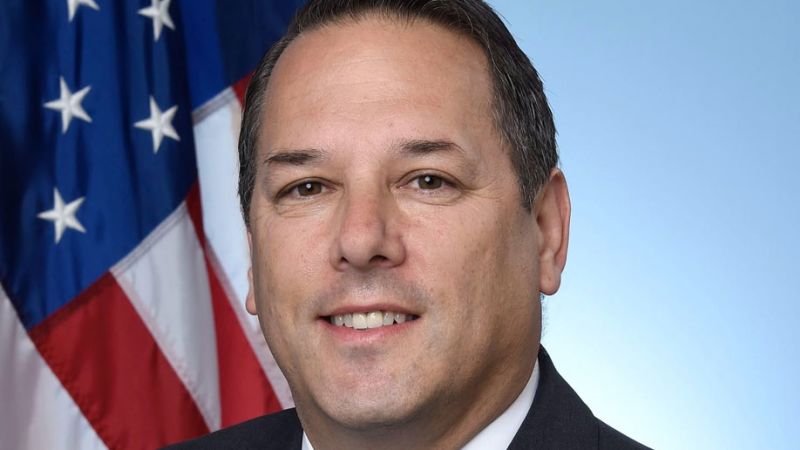
Special Agent in Charge of FBI Chicago Field Office Pushed to Retire
Special Agent in Charge of FBI Chicago – Recent tensions within the U.S. Department of Justice have led to the retirement of Douglas S. DePodesta, the head of the FBI’s Chicago field office, sources indicate. According to two individuals close to the situation, DePodesta’s departure was the result of accumulated disagreements with Andrew Boutros, the local U.S. Attorney. While some believed a single conflict might have sparked the decision, others emphasized that a pattern of disputes over time contributed to the outcome. One insider shared that DePodesta was set to begin vacating his office on Wednesday, signaling the culmination of a prolonged internal struggle.
DePodesta, a seasoned law enforcement official, has spent over two decades in federal service. His appointment to the Chicago role in 2024 followed his tenure as interim special agent in charge of the Memphis Field Office in Tennessee. Prior to that, he joined the FBI in 2002, building a reputation for handling high-profile investigations. The timing of his retirement has raised questions about the relationship between the FBI and the U.S. Attorney’s office, particularly as Boutros has taken a more prominent role in recent months.
Boutros Under National Scrutiny
Andrew Boutros, who was appointed as U.S. Attorney for the Northern District of Illinois by former President Donald Trump, has been thrust into the spotlight. His office has recently made headlines for its actions in several cases, including the decision to drop three criminal charges. These cases, which involved allegations of pandemic-related fraud, arson incidents dating back years, and politically motivated prosecutions of ICE protesters, were reportedly affected by issues in the presentation of grand jury materials.
“We reviewed the transcripts and found that the evidence didn’t hold up,” Boutros stated in a recent interview. “The work of one lower-level prosecutor made a significant difference in how the cases were perceived.”
The U.S. attorney’s office has since launched a comprehensive review of more than 100 confidential grand jury transcripts, focusing on cases charged in the past year. This move has drawn attention to the scrutiny surrounding the handling of evidence and the potential for prosecutorial bias. The actions have not only impacted the cases in question but also raised concerns about the consistency and fairness of the U.S. Attorney’s office in its operations.
Justice Department Investigations
DePodesta’s retirement coincides with an ongoing Justice Department investigation into E. Jean Carroll’s lawsuits against former President Donald Trump. The probe centers on whether Carroll committed perjury during her testimonies and examines the financial support provided by billionaire Reid Hoffman to the litigation. These inquiries have added another layer of complexity to the dynamics within the department, as they intersect with the broader scrutiny of the U.S. Attorney’s office.
While the FBI has not officially commented on DePodesta’s departure, the Justice Department has taken the lead in addressing the situation. A spokesperson for the department directed inquiries to the FBI, which has yet to provide further details. CNN attempted to contact DePodesta for his perspective but has not received a response. This silence has left room for speculation about the reasons behind his retirement and the role of internal politics in the decision.
DePodesta’s tenure as head of the Chicago field office has been marked by a focus on counterterrorism and organized crime. His leadership was praised for its strategic approach and efficiency in managing complex cases. However, the recent disagreements with Boutros suggest that his priorities may have clashed with those of the U.S. Attorney’s office. This tension has been amplified by Boutros’ efforts to reexamine past decisions and assert greater control over the investigative process.
Legacy and Future Implications
DePodesta’s career at the FBI has been defined by his ability to navigate challenging cases and maintain operational independence. His role in the Chicago office has been critical in addressing local crime and supporting federal initiatives. The decision to retire, however, appears to reflect a shift in the balance of power within the Justice Department. With Boutros now at the center of multiple investigations, the U.S. Attorney’s office has gained more influence over FBI operations, potentially altering the agency’s approach to certain cases.
Experts suggest that DePodesta’s retirement could signal a broader realignment of priorities within the federal law enforcement community. His departure may pave the way for a new leader to take charge of the Chicago field office, bringing fresh perspectives to the agency’s work. This transition comes at a time when the FBI is under increased scrutiny for its handling of politically sensitive cases, particularly those involving high-profile individuals and organizations.
Meanwhile, the investigation into E. Jean Carroll’s lawsuits continues to unfold, with key figures like Reid Hoffman under examination. The case has drawn significant public interest, highlighting the intersection of personal accountability and corporate influence in legal matters. As the Justice Department delves deeper into these cases, the implications for the FBI and its relationship with the U.S. Attorney’s office will likely remain a topic of discussion.
DePodesta’s retirement also underscores the importance of internal communication and alignment within the Justice Department. While the FBI has historically operated with a degree of autonomy, recent events demonstrate how interagency dynamics can shape leadership decisions. This development may influence future appointments and the overall direction of FBI operations in Chicago, which have long been a focal point for national security and criminal justice initiatives.
The situation remains fluid, with the story expected to evolve as more information becomes available. As the FBI continues to navigate its role in the broader Justice Department framework, the retirement of DePodesta serves as a reminder of the intricate balance between independence and coordination in federal law enforcement. The agency’s response to these challenges will be closely watched, not only for its impact on the Chicago field office but also for its implications for the FBI’s credibility and effectiveness in the years to come.
