
Pope Leo faces first major crisis of papacy from rebel Catholic group
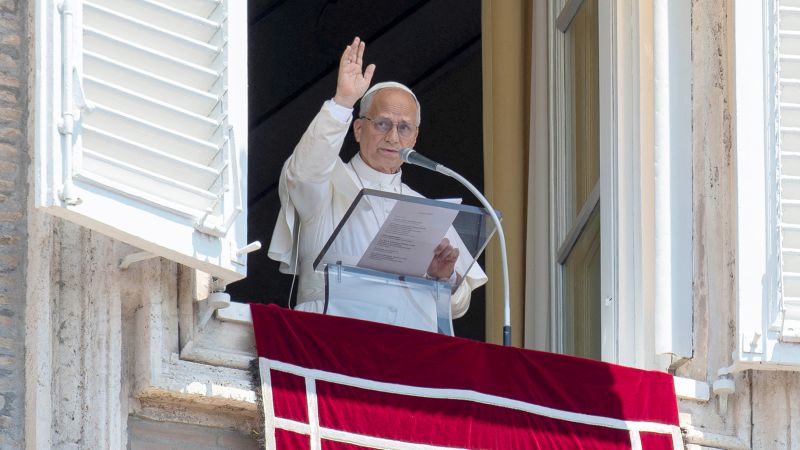
Pope Leo XIV Confronts Breakaway Catholic Group in Crucial Test of Authority
Pope Leo faces first major crisis – Less than a year into his papacy, Pope Leo XIV is confronting what could be his most significant challenge yet from a traditionalist faction within the Catholic Church. The Society of Saint Pius X (SSPX), a group long at odds with modern church reforms, has announced plans to ordain four bishops on Wednesday at its Écône seminary in Switzerland. The pope has issued a heartfelt appeal, warning the group that their actions would constitute a “sin of extreme gravity,” potentially leading to excommunication for the newly appointed clergy.
The SSPX, known for its staunch opposition to Vatican II-era changes, has been a thorn in the side of papal authority for decades. Founded in 1970 by Archbishop Marcel Lefebvre, the group rejects the Catholic Church’s embrace of contemporary practices such as Masses in languages other than Latin. Despite being officially suppressed in 1975 by the Bishop of Fribourg, the SSPX has persisted, maintaining a network of priests and followers across the globe. Its presence in the United States includes a headquarters in Missouri and a seminary in Dillwyn, Virginia, where Father Michael Goldade serves as leader.
In an 11th-hour letter to the SSPX, Pope Leo XIV emphasized the gravity of the situation, urging the group to reconsider their plans. “I plead with you and ask you with all my heart: please turn back!” he wrote. “I pray for you, because to tear the seamless garment of Christ is a sin of extreme gravity. May the Lord enlighten your consciences and awaken your hearts.” The pope’s message underscores the importance of episcopal communion, a fundamental pillar of the Church’s unity, as outlined in Catholic doctrine. He has made fostering this unity a priority since his election, yet the SSPX’s upcoming consecration of bishops without papal approval threatens to fracture the ecclesial structure.
“If they make that choice, I am sorry, but we must move forward,” Pope Leo XIV said in remarks to journalists on June 16. This statement highlights his willingness to engage in dialogue while remaining firm on the Church’s doctrinal boundaries. The upcoming ordinations, he argues, will establish a parallel hierarchy, undermining the central authority of the papacy.
The SSPX’s decision to ordain bishops independently is rooted in its belief that the Catholic Church has strayed from its traditional foundations. The group views the reforms introduced at the Second Vatican Council as a departure from divine truth, particularly its teachings on religious freedom, ecumenism, and the liturgical language of Mass. One of the council’s most notable decrees was a condemnation of antisemitism, a stance the SSPX has not fully embraced.
Cardinal Blase Cupich, a close ally of Pope Leo XIV and Archbishop of Chicago, has voiced support for the pontiff’s stance. “The danger is the setting up of a parallel structure within the ecclesial body of the church,” he explained to CNN. The cardinal noted that Leo has made repeated efforts to reconcile with the SSPX, including multiple invitations to reconsider their actions. “They are a small group, however they do misuse the rites of the church when it comes to having bishops ordained,” he added, emphasizing the pope’s seriousness about preserving the Church’s unity.
The SSPX’s current actions echo a similar event in 1988, when the group consecrated four bishops without papal consent. At the time, this act led to their excommunication, a penalty still in effect for some members. Among those bishops was Richard Williamson, who later faced legal consequences for falsely claiming that Nazis did not use gas chambers during the Holocaust. Williamson was subsequently expelled from the SSPX, illustrating the group’s internal divisions and the risks of defying papal authority.
While the SSPX claims a modest following—around 700 priests and 600,000 adherents globally—their influence is amplified by their steadfast commitment to traditional practices. Their recent 28-page “profession of Catholic faith” aims to counter what they perceive as modernist errors, framing their actions as a necessary defense of the faith. The group has also organized a four-day event leading up to the ordinations, featuring a souvenir box priced at 75 Swiss Francs that includes four bottles of wine. Such efforts reflect their determination to assert their position and attract new followers.
The conflict between Pope Leo XIV and the SSPX is not merely a bureaucratic dispute but a theological battle over the Church’s direction. The pope’s appeal to the group is part of a broader strategy to reaffirm the papacy’s role as the unifying force within the Catholic communion. Historically, successive popes have attempted to bridge the gap with the SSPX, including Pope Benedict XVI, who in 2009 lifted the excommunications of the four bishops ordained in 1988. However, this reconciliation was conditional, as the group’s leaders were expected to align with the Church’s updated teachings.
Leo’s current crisis reveals the enduring tension between tradition and modernization within the Catholic Church. The SSPX’s adherence to Latin Mass and its rejection of contemporary ecumenical efforts have positioned it as a vocal opponent of progressive reforms. Yet, their actions also highlight the group’s belief in the urgency of their mission. They argue that the Church is in a “state of emergency” due to the infiltration of liberal ideas, which they claim dilute the faith’s core principles.
Despite the pope’s appeals, the SSPX appears well-prepared to proceed with its ordinations. The group’s leaders have framed their decision as a sacred duty to protect the purity of Catholic doctrine. “The salvation of souls is paramount,” they assert, justifying their actions as a necessary response to the Church’s perceived modernization. This rhetoric has resonated with some members, who feel the Vatican has compromised its traditions in pursuit of inclusivity.
The SSPX’s situation also reflects the broader challenge of maintaining unity in an evolving Church. While their numbers may be small compared to the global Catholic population of 1.4 billion, their ideological resolve poses a symbolic threat to the papacy’s authority. For Pope Leo XIV, this moment represents a critical test of his leadership, as he balances the need for dialogue with the imperative to uphold doctrinal consistency. The outcome of this crisis could shape the future of Catholic unity and redefine the relationship between the papacy and traditionalist factions.
