
Supreme Court agrees to review ban on AR-style semi-automatic rifles in major Second Amendment case
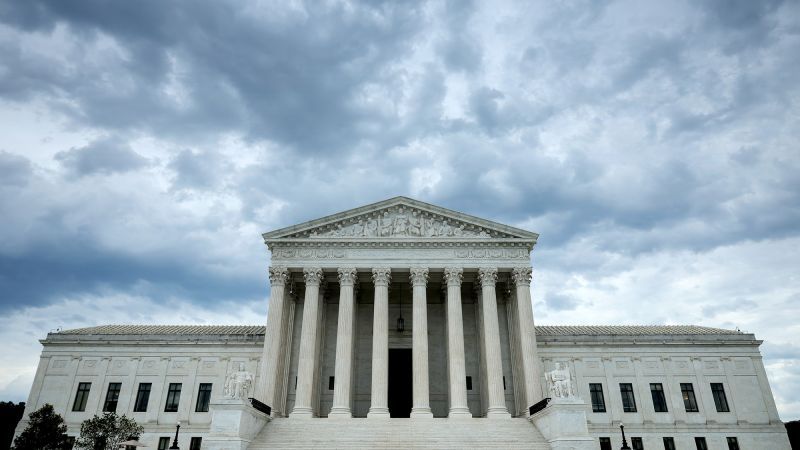
Supreme Court Agrees to Review Ban on AR-15 Style Rifles in Major Second Amendment Case
Supreme Court agrees to review ban – The U.S. Supreme Court has taken a significant step in addressing a contentious issue surrounding firearm rights by agreeing to evaluate whether city and state governments can legally restrict ownership of AR-15-style semi-automatic rifles. This decision marks a pivotal moment in the ongoing debate over the Second Amendment, as it brings the court’s attention to a challenge that has long been considered a complex legal question. The case, which involves multiple states and residents, is expected to test the boundaries of what constitutes a lawful weapon under the Constitution’s protections.
Illinois Residents Challenge Cook County Ordinance
At the heart of the dispute is a 2021 lawsuit filed by two residents of Cook County, Illinois, who argue that the county’s ban on certain semi-automatic rifles violates their right to bear arms. The ordinance, which prohibits the sale or possession of “assault weapons” and “large capacity magazines,” explicitly lists dozens of models, including the AR-15. These plaintiffs, Cutberto Viramontes and Christopher Khaya, claim that the rifle is essential for self-defense and recreational use, yet their ability to own it has been curtailed by local laws. Their appeal has gained traction as part of a broader effort to challenge state-level restrictions on firearms.
“From the founding of this country, the rifle has been a paradigmatic American arm, facilitating the struggle for independence from the British and serving as ‘the companion’ and ‘tutelary protector’ of the westward pioneers,” the groups told the Supreme Court in their appeal.
Viramontes, for instance, testified that he intends to use the AR-15 for home protection, while Khaya highlighted its utility in target shooting. Both individuals are supported by the Firearms Policy Coalition and the Second Amendment Foundation, organizations that have long advocated for expanded access to firearms. Their arguments hinge on the idea that the AR-15 is not only a common tool in everyday life but also a historically significant weapon, tracing its lineage back to the muskets used in the American Revolution.
Connecticut and Other States Join the Legal Battle
The case has drawn participation from multiple states, including Connecticut, where several residents are challenging their own restrictions on similar weapons. These individuals, like their Illinois counterparts, assert that the AR-15 and its variants are widely used for lawful purposes and should not be classified as inherently dangerous. According to Everytown for Gun Safety, a gun control advocacy group, ten states have implemented similar bans, citing public safety concerns. However, the Supreme Court’s decision to revisit the issue suggests a growing recognition of the need to clarify these regulations at the federal level.
While the court has historically been reluctant to intervene in such disputes, recent indications suggest a shift in its approach. In a 2022 case involving Maryland’s ban, conservative Justice Brett Kavanaugh hinted at the potential for the Court to re-examine the topic. His short opinion, which noted that most states do not prohibit AR-15 rifles, characterized the bans as “something of an outlier.” This statement has been interpreted as a signal that the justices may be moving toward a more expansive interpretation of the Second Amendment.
“This court should and presumably will address the AR–15 issue soon,” Justice Kavanaugh wrote, underscoring the importance of the question for future rulings.
Legal Precedents and the Bruen Decision
The current case builds on the Supreme Court’s 2022 landmark ruling in New York State Rifle & Pistol Association v. Bruen, which overturned a long-standing requirement for residents to demonstrate a specific need for carrying a firearm. That 6-3 decision, led by a conservative majority, emphasized the importance of aligning modern gun laws with the “historical tradition of firearm regulation.” It established a new standard for evaluating restrictions, requiring them to have a reasonable connection to the Constitution’s protections.
Gun rights advocates argue that the AR-15, despite its modern design, embodies the same principles of utility and tradition that have historically supported its use. They point to the rifle’s role in American history, describing it as a symbol of individual liberty and a tool that has served both military and civilian purposes. Conversely, opponents of the ban, such as Cook County officials, have highlighted its association with mass shootings. In their brief opposing the appeal, they listed incidents like the 2022 Highland Park parade shooting, which left seven people dead, and the 2022 Buffalo supermarket massacre, which claimed ten lives.
“Their inherent lethality makes them an alluring choice for mass murder, compared to less lethal weapons like knives or handguns,” Cook County officials wrote, emphasizing the rifle’s effectiveness in combat scenarios.
These examples are used to argue that AR-15s are uniquely suited for large-scale violence. The county’s brief, which spans over three pages, details how the weapon’s high capacity and rapid fire capability contribute to its lethality. By contrast, the plaintiffs contend that the AR-15 is a versatile and accessible firearm, one that has been embraced by millions of Americans for decades.
Historical Context and Legal Interpretations
Justice Elena Kagan’s recent unanimous decision in a separate case has provided further support for the AR-15’s status as a common and lawful weapon. In that ruling, she described the rifle as “the most popular rifle in the country” and noted its widespread availability among ordinary consumers. This perspective aligns with the Court’s broader precedent, which has held that weapons frequently used for lawful activities—such as hunting, sport, and self-defense—are protected under the Second Amendment. By extension, the AR-15, which is used by both civilians and law enforcement, fits this category.
The legal battle over AR-15s has been shaped by the tension between historical traditions and contemporary concerns. While the Court has historically acknowledged the role of firearms in American society, it has also grappled with how to define “common use” in modern contexts. The current case presents an opportunity to reconcile these perspectives, as the justices weigh whether the AR-15’s design and function justify its classification as an “assault weapon” or if it should be seen as a constitutional staple.
Impact on Future Gun Laws
The outcome of this case could have far-reaching implications for gun regulations across the country. If the Supreme Court rules in favor of the plaintiffs, it may signal a more lenient stance toward semi-automatic rifles, potentially undermining state and local efforts to impose restrictions. On the other hand, a decision upholding the bans could reinforce the argument that such weapons pose a unique threat to public safety, warranting special regulation.
As the case moves forward, it will likely draw attention to the broader debate over gun control. The AR-15, with its popularity and adaptability, serves as a focal point for discussions about the balance between individual rights and collective security. The Court’s ruling will not only affect the specific ordinances in question but also set a precedent for how similar laws are interpreted in the future.
With the legal arguments centered on the rifle’s historical and practical significance, the Supreme Court’s decision will be scrutinized for its impact on the interpretation of the Second Amendment. The case underscores the evolving nature of gun law in the United States, where the line between tradition and innovation continues to blur. As the justices deliberate, the outcome promises to shape the future of firearm ownership and regulation for years to come.
