
Russia is still inching forward in eastern Ukraine, but experts say claims of progress are exaggerated
Russia’s Slow Advance in Eastern Ukraine: Claims Exaggerated?
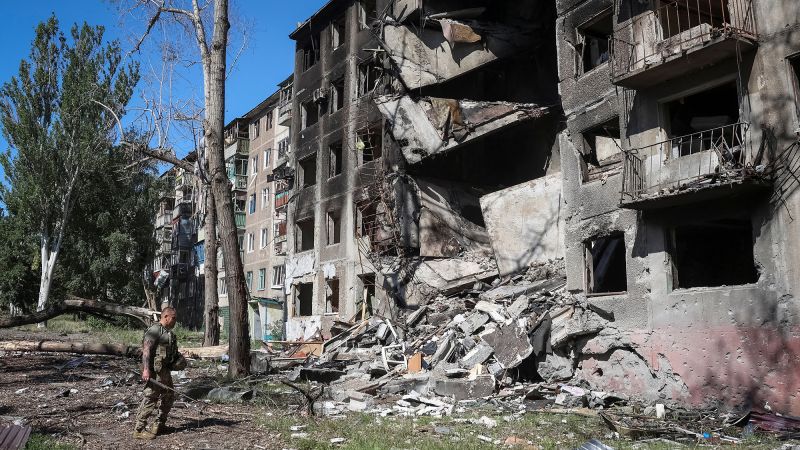
Russia is still inching forward in eastern Ukraine, but analysts and military experts suggest that the progress reported by Moscow may not reflect significant territorial gains. Recent operations in the Donetsk region have been met with mixed assessments, as Ukrainian forces and international observers argue that the pace of Russian advances is measured and not as decisive as claimed. The conflict in Kostyantynivka and surrounding areas has become a focal point of this debate, with reports of small-scale troop movements and strategic positioning raising questions about the true scope of Russia’s momentum.
Gray Zones and Tactical Infiltrations
The Donetsk region remains a contested gray zone, where Russian troops have gradually extended their presence but have yet to fully consolidate control. While Moscow claims to be securing key cities like Kostyantynivka and Lyman, the Institute for the Study of War (ISW) highlights that these advances are often limited to localized infiltrations. “These are not major offensives, but rather calculated insertions of small units into strategic positions,” said Kateryna Stepanenko, a Russia analyst at ISW. “The battlefield is fragmented, and Russia is using this to project a narrative of steady forward movement.”
“Russia’s methods are slow and methodical, relying on stealth and patience rather than rapid breakthroughs,” Stepanenko added. “The goal is to establish a foothold in the Donbas, not to declare outright victory.”
Experts emphasize that Russia’s current strategy prioritizes gradual control over swift conquest, a tactic that has allowed them to maintain pressure without committing large forces. This approach, while effective in disrupting Ukrainian logistics, has not yet led to substantial shifts in the region’s dynamics. According to Stepanenko, the key challenge lies in transitioning these infiltrations into sustained territorial dominance, a process that requires time and resources.
Ukrainian Resistance and Counterstrikes
Despite the perceived slow progress, Ukrainian forces continue to resist Russian advances with tactical precision. Kostiantyn Melnykov, a press officer for Ukraine’s 24th Mechanized Brigade, noted that the enemy is intensifying its efforts in Kostyantynivka but has not achieved decisive breakthroughs. “The enemy is increasing airstrikes and assaults, but our defenses are holding strong,” Melnykov stated. “We’re not just repelling attacks—we’re disrupting their operations and reducing their capabilities.”
Ukrainian units have successfully countered Russian movements by targeting supply lines and critical infrastructure. Melnykov highlighted that even though Russia is inching forward in certain areas, their larger numbers are being neutralized through coordinated strikes and defensive tactics. “Our forces are managing to slow their momentum, even as they try to gain ground in the northeast,” he said, underscoring the resilience of Ukrainian resistance.
Strategic Goals and Historical Context
Russia’s focus on the Donbas region is driven by its long-term objective of securing Ukraine’s industrial and logistical heartland. Kostyantynivka, situated as a key logistics hub, is central to this effort. However, analysts argue that the current emphasis on infiltration reflects a shift in Moscow’s strategy, moving away from large-scale offensives toward a more prolonged campaign. This tactic mirrors the approach used during the capture of Pokrovsk in early 2026, where repeated claims of victory preceded actual consolidation of control.
Yuriy Madyar, acting deputy commander of Ukraine’s 19th Army Corps, confirmed that Russian activity in Lyman is intensifying, particularly in the northern sectors. “We’re seeing Russian troops advance in small groups, but they’re not yet able to maintain a stronghold,” Madyar explained. “This slow movement is part of their broader plan to wear down our defenses over time.”
Informational Campaigns and AI-Driven Propaganda
Russia is leveraging its informational operations to amplify the perception of progress in eastern Ukraine. The ISW has noted that Moscow is increasingly using AI-enhanced footage to illustrate gains in the Donbas. A recent example includes a video released by the Russian Ministry of Defense showing troops raising a flag in Lyman, a claim that has yet to be independently verified. “These videos are designed to create the illusion of momentum,” said Stepanenko. “They show limited movements as full-scale victories.”
Such tactics are part of a broader strategy to counter Ukraine’s narrative of resilience. By emphasizing Russia’s inching forward in the Donbas, the Kremlin aims to shift public perception and justify its military actions. However, Ukrainian forces and independent analysts maintain that these claims, while strategically significant, do not equate to major territorial victories. The ongoing debate underscores the importance of distinguishing between tactical movements and actual strategic progress in the conflict.
