
Some butterflies live 25 times longer than their relatives. Scientists are unlocking their secrets
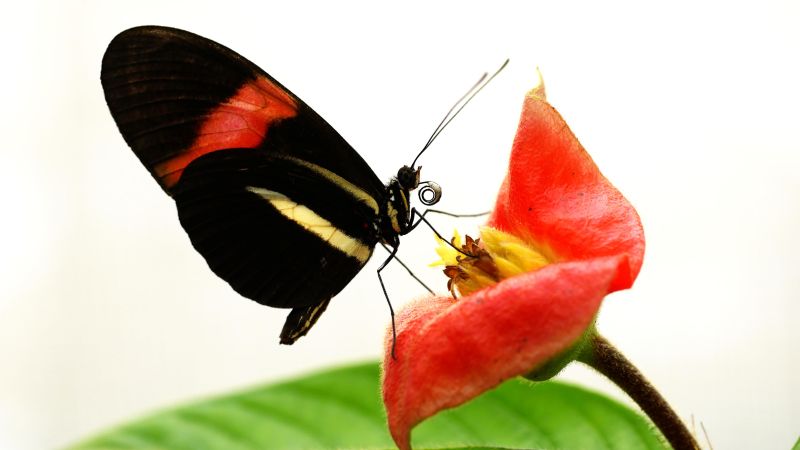
Heliconius Butterflies Live 25 Times Longer Than Relatives
Some butterflies live 25 times longer – In the intricate world of insects, where many species have short lifespans, a surprising discovery has emerged about certain tropical butterflies. These remarkable creatures, part of the Heliconius genus, are living up to 25 times longer than their shorter-lived relatives. Researchers are now investigating why this group of butterflies defies typical longevity patterns, offering insights that could reshape how we understand aging in both animals and humans.
Why Some Butterflies Outlive Others
The study, featured in Nature Communications, highlights that Heliconius species exhibit a spectrum of lifespans, from a mere 14 days to over 300 days. This dramatic variation has sparked curiosity among scientists, who are now exploring the factors behind such differences. For example, the Dione juno butterfly lives just 14 days, while Heliconius hewitsoni can survive for 348 days — more than 25 times longer. Other species within the genus have lifespans ranging from 106 to 277 days, according to the findings.
“Heliconius butterflies are like nature’s extreme agers,” noted Dr. Jessica Foley, the study’s lead author. “They challenge the idea that small insects must have short lives. If we can understand their secrets, it might help us unlock longer, healthier lives for humans as well.”
Foley, a postdoctoral scholar at Tufts University, was inspired to study this phenomenon after observing the contrast in lifespans within the Heliconius family. While some species thrive for months, others live only a few weeks. The research team focused on analyzing diet, behavior, and biological traits to uncover the reasons behind this disparity. Their findings suggest that Heliconius butterflies may have evolved unique mechanisms to prolong their lives, even in comparison to their non-pollen-feeding relatives.
What Sets These Butterflies Apart
Most adult butterflies depend on nectar for energy, but Heliconius species have adapted to consume pollen as well. This dietary shift appears to provide significant benefits. Pollen contains lipids and amino acids, which not only boost energy levels but also support immune function. The researchers hypothesize that these nutrients might play a key role in extending the butterflies’ lifespans, unlike their counterparts that rely solely on nectar.
“Heliconius butterflies seem to have a strategy that allows them to delay the decline of their physical abilities,” Foley explained. “Even when deprived of pollen, they still outlive non-pollen-feeding species, which hints at genetic or physiological adaptations at work. This could be a breakthrough in understanding how longevity is achieved in the animal kingdom.”
To study this, the team used a combination of methods, including mark-release-recapture experiments and controlled observations. They even developed a tool called “The Pullinator” to measure how butterfly strength diminishes with age. By analyzing grip strength and movement, they found that Heliconius species maintain better physical performance as they age, contributing to their extended survival.
Lessons for Human Aging
The longevity secrets of Heliconius butterflies may hold valuable lessons for human health. These insects live much longer than their relatives, and their ability to sustain energy and immune function could inform strategies for delaying aging in humans. Scientists are particularly interested in how Heliconius species manage to thrive for months, as this challenges assumptions about the relationship between size and lifespan.
By studying the Heliconius genus, researchers hope to identify genetic or metabolic pathways that enable such prolonged survival. If these mechanisms can be translated to humans, they might lead to new approaches in combating age-related diseases. The findings also emphasize the importance of diet in longevity, suggesting that nutrient diversity could be a critical factor in extending life spans across species.
