
Knicks’ Game 5 victory set an NBA ratings record dating back to the 1990s
The Knicks’ Historic Game 5 Win Sets NBA Finals Viewership Benchmark
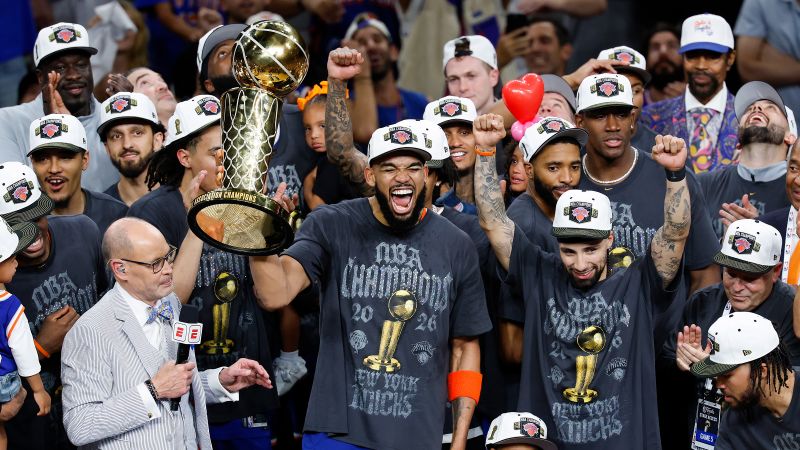
Knicks Game 5 victory set an NBA – The New York Knicks’ Game 5 triumph, their first title-winning game in over five decades, shattered a long-standing NBA Finals viewership record dating back to the 1990s. Nielsen ratings, unveiled Tuesday, revealed the broadcast averaged 24.5 million viewers, surpassing all previous Game 5s since the 1998 series. This surge in audience numbers has reignited discussions about the league’s ability to captivate fans, even as television ratings for major sporting events have trended downward in recent years.
The Legacy of the 1998 Bulls
While the 1998 NBA Finals remain a milestone, the context of Saturday’s Game 5 highlights how media consumption has evolved. In the ’90s, the broadcast landscape was far less fragmented, with limited channels and platforms vying for attention. That year’s series, featuring Michael Jordan and the Chicago Bulls, was a cultural touchstone, drawing record crowds and fostering a sense of shared excitement across the nation. Yet, the era’s dominance has waned, as the league now contends with a more competitive media environment and shifting viewer habits.
The decline in ratings has been a recurring theme for the NBA. Last year’s Game 5, played between the Indiana Pacers and Oklahoma City Thunder, averaged just 9.5 million viewers, a stark contrast to the 24.5 million for this year’s clinching match. The difference in numbers reflects not only the Knicks’ dramatic narrative but also the broader challenges the league faces in maintaining television interest. With the rise of streaming services, social media, and a fragmented media landscape, traditional sports broadcasts must work harder to capture attention, especially for games that don’t feature star-studded lineups or high-profile rivalries.
The Power of Narrative and Comeback Stories
One reason this year’s Game 5 resonated so strongly is the Knicks’ ability to weave a compelling story through their relentless comebacks. The team’s journey to the championship was marked by moments of near-misses and dramatic reversals, which kept fans on the edge of their seats. In the final minutes of the fourth quarter, as the Knicks clawed their way to victory, the audience swelled to 33 million, a testament to the emotional payoff of a team overcoming adversity. This narrative arc, combined with the cultural weight of a New York Knicks title, created a unique blend of nostalgia and contemporary energy that defined the series.
ESPN and ABC, the primary broadcasters of the NBA Finals, saw their combined audience numbers climb to 20.6 million across the five-game series. This figure not only doubled last year’s seven-game finals but also signaled a return to the league’s former glory. The Knicks’ success has, in turn, validated the value of their media rights deals, which have been scrutinized for their high cost. Despite critics’ claims that the NBA has overpaid for broadcasting access, the spike in ratings suggests that the league’s investment may have paid off, especially for a team that embodies the heart of the sport.
A Cultural Phenomenon Beyond the Ratings
While Nielsen ratings offer a quantitative measure of success, they may not fully capture the cultural impact of the Knicks’ win. The city of New York, known for its deep-rooted basketball traditions, erupted in celebration as the team secured their first championship since 1973. Streets were filled with fans, and the iconic roar of the Madison Square Garden crowd became a symbol of collective triumph. Nielsen’s out-of-home viewing metrics, however, struggle to quantify such scenes, as they rely on data collected from households rather than the communal enthusiasm that defines moments like this.
Michael McCarthy of Front Office Sports noted that the Knicks’ victory has reinvigorated the NBA’s image as a competitive and entertaining league. “For years, many of the prevailing media narratives about the $14.3 billion league have been negative,” he observed. “The NBA can’t draw TV ratings compared to the mighty NFL. The league is too ‘woke’ politically. ESPN, NBC Sports, and Amazon Prime Video foolishly overpaid for league media rights with their $76 billion, 11-year agreements.” McCarthy’s critique underscores the skepticism surrounding the NBA’s ability to maintain relevance, but the success of this year’s Finals challenges those assumptions.
“For years, many of the prevailing media narratives about the $14.3 billion league have been negative,” he observed. “The NBA can’t draw TV ratings compared to the mighty NFL. The league is too ‘woke’ politically. ESPN, NBC Sports, and Amazon Prime Video foolishly overpaid for league media rights with their $76 billion, 11-year agreements.” But the Knicks versus the Spurs, he wrote, made the NBA look “like a
