
On the brink: Black lawmakers could lose decades of gains in one year
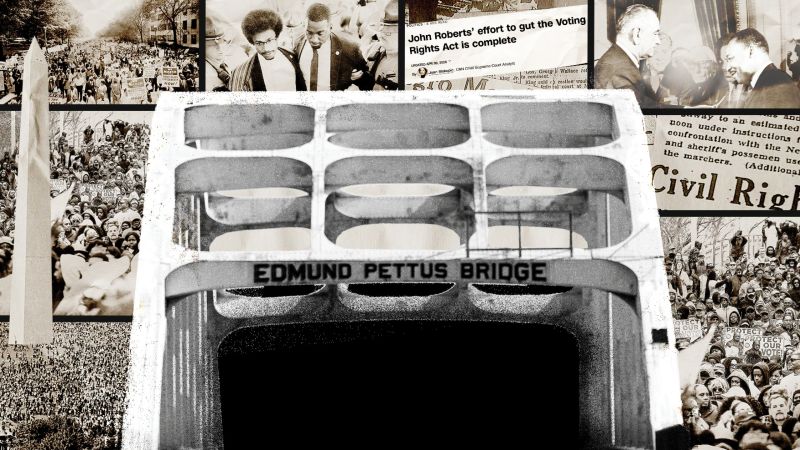
At Risk of Largest Decline in Black Congressional Representation Since Voting Rights Act Era
On the brink – Less than a year into the new congressional cycle, the United States faces its most severe threat to Black political power in Congress since the Voting Rights Act was passed in 1965. With the midterms approaching, House Democrats are poised to lose six Black members, marking a potential rollback of decades of progress in racial representation. This shift stems from a coordinated redistricting effort that gained momentum after the Supreme Court’s 2022 decision weakened the Voting Rights Act’s ability to combat racial discrimination in voting. Two current Black representatives in redrawn districts will not seek re-election, while four others face uphill battles to retain their seats. Adding to this challenge, Republican Rep. Burgess Owens of Utah is departing the House following a judicial ruling that invalidated a map favoring his party. The contest for control of House districts has become a battleground for both major parties, with the goal of securing electoral victories, not merely preserving diversity.
The Battle Over Redistricting
Redistricting, the process of redrawing electoral boundaries, has intensified across the nation as a strategic tool to reshape political outcomes. This year’s cycle has seen an unprecedented focus on diluting Black voting strength, particularly in Southern states where the majority of Black Americans reside. The Supreme Court’s 2022 ruling, which narrowed the scope of the Voting Rights Act, emboldened states to adopt maps that could reduce the influence of minority voters. Critics argue that these maps are designed to fragment Black communities, making it harder for their candidates to win majority support in key districts. The effort is not limited to one party; Republicans and Democrats have both engaged in aggressive redistricting, with the latter responding to GOP initiatives by launching their own campaign to protect minority representation.
Historically, the Voting Rights Act has been a cornerstone of Black political empowerment. Enacted in 1965, it was a direct response to decades of systemic voter suppression that barred Black Americans from exercising their right to vote. The act’s passage followed the violent confrontation on Selma’s Edmund Pettus Bridge, where Alabama state troopers assaulted peaceful demonstrators, including civil rights icon John Lewis. Five months later, President Lyndon B. Johnson signed the legislation, which became a catalyst for expanding minority representation in Congress. Since then, the law has enabled Black Americans to gain political influence, with figures like Jim Clyburn becoming prominent leaders in the House. Yet, the current redistricting push threatens to undo this progress, as maps are crafted to minimize the impact of Black voters in critical elections.
A Legacy of Struggle and Triumph
Before the Voting Rights Act, Black Americans endured centuries of exclusion from the political process. From the time of the nation’s founding, they were denied suffrage, and even after the Civil War, many struggled to secure the right to vote. The act of allowing Black citizens to vote was a condition for Southern states to rejoin the Union, and federal troops stationed in the region ensured that this right was exercised. However, as troops withdrew, states began implementing laws to suppress Black votes, often through violence and intimidation. This pattern culminated in the end of Reconstruction, when Black representation in Congress dwindled to just 20 members between 1870 and 1901.
Jim Clyburn, a South Carolina Democrat, has emerged as a symbol of Black political resurgence. First elected in 1992, he became the ninth Black representative from his state, a milestone that followed the end of Reconstruction. His journey reflects a broader narrative of Black Americans reclaiming power in the South, where Jim Crow laws once enforced racial segregation. Over 17 terms, Clyburn has amassed significant influence, serving as the third-ranking member of the Democratic Party in the House and becoming the highest-ranking African American in Congress during his tenure. His political acumen was pivotal in South Carolina’s 2008 Democratic primary, where he endorsed Barack Obama, helping the candidate win the support of Black voters and demonstrate his viability as a presidential contender. Clyburn’s endorsement also proved crucial in 2020, when he backed Joe Biden’s campaign, which ultimately secured his nomination as the first Black president.
Clyburn’s rise has been a direct result of the Voting Rights Act’s protections. The law ensured that Black voters could elect representatives who would advocate for their interests, a role Clyburn has played throughout his career. However, the current redistricting strategies aim to disrupt this dynamic. A plan targeting Clyburn’s district was recently defeated in South Carolina’s state Senate, but some Republicans remain determined to revise the map ahead of the 2028 elections. This persistence has surprised even long-time residents of the state, who recognize Clyburn’s contributions to both local and national politics. Political scientist Claire Wofford of the College of Charleston notes that Clyburn has been a driving force behind federal investments in South Carolina, from infrastructure to support for historically Black colleges and universities. “The guy’s like a living legend,” she remarked, highlighting the gravity of the situation.
Supreme Court’s Role in Eroding Voting Rights
Derrick Johnson, president of the NAACP, has condemned the Supreme Court’s recent actions, calling them a return to discriminatory practices that plagued the political system during Reconstruction. “What the Supreme Court has done is sanction discrimination against African Americans in the political process,” he told CNN. “The only time in history we’ve seen this is after Reconstruction.” Johnson’s warning underscores the fear that the current redistricting efforts could mirror the systemic efforts to disenfranchise Black voters in the late 19th century. The Voting Rights Act, once a shield against such tactics, is now under scrutiny, with its provisions weakened by judicial decisions that prioritize state autonomy over federal oversight.
For decades, the law helped counteract gerrymandering and other tactics that diluted Black voting power. It ensured that Southern states, which had historically suppressed Black voters, could not enact discriminatory laws without federal intervention. However, the Supreme Court’s 2022 ruling has opened the door for states to redraw districts without the same level of scrutiny. This has allowed lawmakers to create maps that split Black communities into less competitive districts, reducing their ability to elect representatives who reflect their demographics. The result is a potential loss of political clout that could reshape the balance of power in Congress.
While the focus is on House races, the implications extend beyond individual seats. The erosion of Black representation in Congress threatens to diminish the voices of a community that has long been pivotal in shaping civil rights legislation and advancing equity in American politics. Clyburn’s own fears echo this concern, as he warns that the current redistricting strategies could set the stage for a new era of racial segregation. “This Supreme Court is resegregating this country,” he stated, emphasizing the urgency of the moment. With the midterms fast approaching, the fight over representation has entered a new phase, one that could redefine the political landscape for years to come.
As states finalize their maps, the stakes have never been higher. The balance of power in Congress hinges on the ability of Black voters to maintain their influence, a challenge that will test the resilience of both parties and the effectiveness of the Voting Rights Act. For many, the current redistricting effort represents a direct attack on the progress made since the 1960s, when the law became a tool for empowerment. If the trend continues, the gains of Black lawmakers could be erased in a single election cycle, reverting the nation to a political climate that favors majority rule over minority representation. The fight for equitable representation, therefore, remains as critical as ever, with the outcome of the midterms poised to determine the future of Black political power in the United States.
