
Rubio compares the founding of the UFC to landing a man on the moon
Rubio compares the founding of the UFC to landing a man on the moon
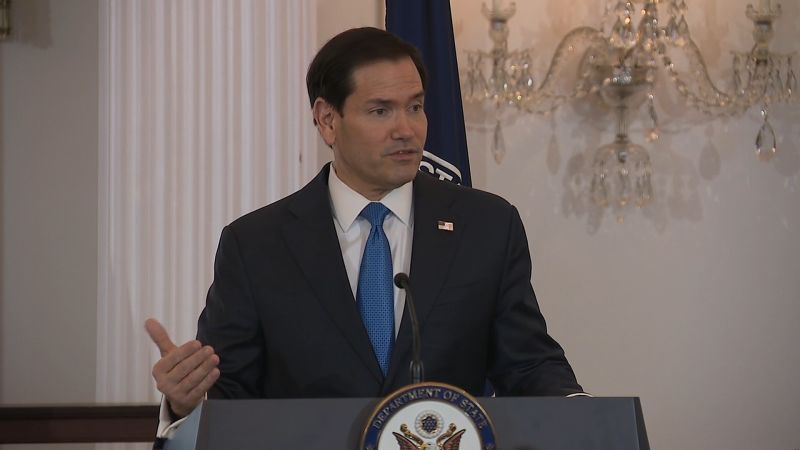
Rubio compares the founding of the UFC – US Secretary of State Marco Rubio has drawn a striking analogy between the birth of the Ultimate Fighting Championship (UFC) and the Apollo moon mission, framing the sport as a symbol of American ingenuity and ambition. During a recent address at the State Department, Rubio emphasized how the UFC’s emergence reflects the nation’s tradition of tackling bold, unprecedented challenges. His remarks, which carried the cadence of a political pitch, positioned mixed martial arts as a unifying force that transcends cultural and regional boundaries. This perspective was underscored by his praise for an upcoming UFC event at the White House, which he called “a defining moment for the United States.”
America’s audacity in action
Rubio’s speech on Thursday highlighted the concept of American progress, linking it to pivotal historical achievements. “When President Kennedy declared our goal to land a man on the moon and bring him back safely, many doubted it could be done,” he said, before endorsing the UFC as a tool for diplomatic outreach. “Yet we achieved it, just as this organization has redefined the world of combat sports.” The analogy served to underscore his belief in the UFC’s role as a platform for global engagement, describing it as a bridge between nations through shared athletic passion. “This company embodies the essence of what America stands for,” Rubio added, noting its ability to inspire unity and foster cross-cultural understanding.
“We are a nation built on pushing boundaries and proving the impossible,” Rubio stated. “That’s exactly what the UFC has done—created a structure where people from every corner of the world can come together under one banner.”
His comments echoed broader themes of American exceptionalism, with Rubio suggesting that the UFC’s success mirrors the nation’s pioneering spirit. He argued that the sport’s global reach is a testament to the United States’ capacity to lead and innovate, even in unexpected arenas. “The UFC’s influence extends far beyond the octagon,” he said. “It’s a reflection of our ability to connect with others through shared values and aspirations.”
White House event and diplomatic outreach
The upcoming UFC fight at the White House is set to coincide with two major milestones: the 250th anniversary of American independence and President Donald Trump’s 80th birthday. Rubio framed the event as a celebration of national resilience and a showcase of American excellence. “This moment will allow the world to witness how our country’s spirit of courage and creativity translates into real-world impact,” he said. The event, he claimed, would feature the best athletes globally, drawing audiences from across continents to witness a blend of athleticism and cultural exchange.
Rubio further positioned the UFC as an international ambassador for American ideals, dubbing it “the United Nations of fighting.” He asserted that the sport’s events serve as educational tools, exposing audiences to diverse cultures and societal norms. “These fights aren’t just about competition—they’re about storytelling, about sharing the rich tapestry of human experience,” he noted. This vision aligns with the State Department’s latest initiative, which pairs the UFC with diplomatic efforts to promote teamwork and leadership through grassroots programs.
“The UFC is a lens through which we can view America’s capacity to expand its influence and inspire collaboration worldwide,” Rubio explained. “It’s a reminder that what once seemed unthinkable can become reality.”
Lawsuit challenges White House hosting
While Rubio celebrated the event as a historic opportunity, not everyone shares his enthusiasm. Two Virginia residents have filed a lawsuit to block the use of the White House grounds for the UFC fight, arguing that it transforms a public space into a platform for private profit. They contend that the event’s commercial value, including promotional tie-ins and branding deals, will directly benefit UFC CEO Dana White and President Trump, who reportedly invested $50,000 in the company’s parent organization earlier this year.
The lawsuit highlights concerns about the event’s implications for American diplomacy. “Allowing a for-profit sports spectacle to take place in the White House raises questions about the prioritization of entertainment over public service,” one of the plaintiffs stated. Despite these objections, the State Department remains steadfast in its support of the partnership, framing the UFC as a natural extension of the nation’s global outreach. “This collaboration will amplify our message and demonstrate how sports can be a powerful instrument of diplomacy,” a spokesperson noted.
“A billion people will watch as America honors its legacy through this event,” Rubio said. “It’s a chance to highlight how our values resonate beyond borders.”
Expanding the impact of MMA
Under the newly signed memorandum of understanding, the State Department and UFC will collaborate on initiatives designed to leverage the sport’s global appeal. These include training programs for youth in foreign countries, where athletes and coaches will serve as mentors and cultural emissaries. “The goal is to use MMA as a vehicle for promoting teamwork and leadership,” the spokesperson said. Additionally, the partnership will focus on creating educational materials that integrate combat sports with English language instruction, furthering the United States’ soft power.
Rubio’s remarks also touched on the broader implications of the UFC’s role in international relations. He suggested that the sport’s ability to convene people from different backgrounds is a rare and valuable trait in today’s divided world. “In a time when we’re often at odds, the UFC reminds us of what we can achieve when we come together with a common purpose,” he said. The event, he argued, will not only celebrate American history but also project a message of optimism and capability on the global stage.
As the 2028 presidential race gains momentum, Rubio’s growing public profile suggests that his political ambitions may be intertwined with his support for the UFC. While he has downplayed these ties, the sport’s visibility in Washington and its alignment with national interests have positioned it as a potential asset in his campaign. Whether this partnership strengthens his candidacy or merely amplifies his rhetorical reach remains to be seen, but one thing is clear: the UFC is no longer just a sporting event—it’s a stage for America’s global narrative.
