
NASA reveals Artemis III crew that will take the next big step on its journey back to the moon
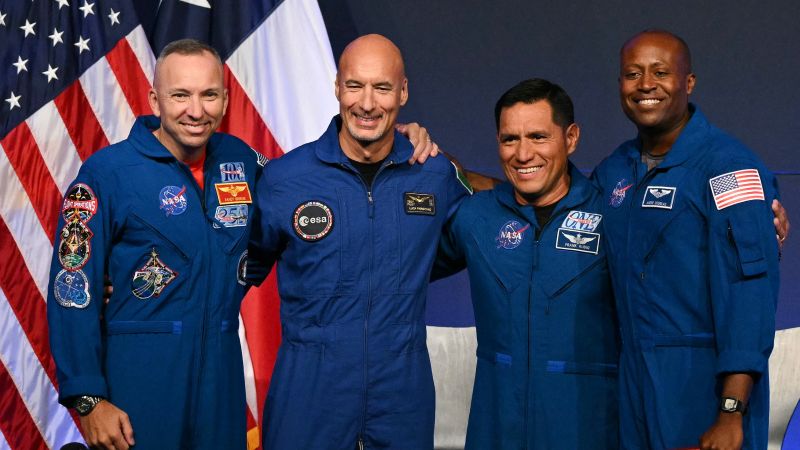
NASA Announces Artemis III Crew for Moon Mission
NASA reveals Artemis III crew that – NASA has officially unveiled the Artemis III crew, a pivotal team set to embark on a mission that will advance the agency’s plan to return humans to the lunar surface. The selection of four astronauts marks a major milestone in the program, with the goal of testing essential technologies for the first moon landing in over 50 years. The crew, scheduled for launch in late 2027, includes three NASA astronauts and one European Space Agency (ESA) representative, underscoring the international cooperation driving this endeavor. Among the chosen is Andre Douglas, a first-time space traveler, alongside Frank Rubio, who holds the record for the longest single spaceflight, and Randy Bresnik, a veteran test pilot with deep aerospace expertise. The team also features Luca Parmitano, an Italian ESA astronaut renowned for his experience in extravehicular activities.
Key Objectives for Artemis III
The Artemis III mission is designed to validate the integration of the Orion spacecraft with a lunar lander, a critical step toward establishing a sustainable presence on the moon. This two-week journey will simulate docking procedures in low-Earth orbit, allowing NASA to refine systems without the risks of deep-space travel. The agency has emphasized that these tests will help reduce technical uncertainties before the planned 2028 moon landing. By focusing on orbital operations, NASA aims to ensure the reliability of spacecraft components and mission protocols, paving the way for more complex lunar activities in the future.
Orion, which successfully completed the Artemis II flyby in April, will serve as the crew’s primary vehicle for Artemis III. The spacecraft will remain in Earth’s orbit, while a separate lunar lander—likely SpaceX’s Starship or Blue Origin’s Blue Moon—will be launched independently. NASA has not finalized the lander choice, but the mission will test both options, providing a comprehensive evaluation of their capabilities. This dual-approach could enhance redundancy and preparedness for the moon landing, which is a cornerstone of the agency’s long-term exploration goals.
Challenges in Lander Development
Despite the mission’s strategic importance, the development of lunar landers has encountered delays and technical hurdles. SpaceX and Blue Origin are both vying to supply NASA with reliable lander systems, but challenges such as engineering setbacks and launch schedule conflicts have stretched timelines. Last month, Blue Origin faced a significant setback when a New Glenn rocket exploded during a ground test, affecting its Blue Moon lander’s readiness. However, the company has since resumed testing, and NASA remains committed to exploring multiple options for the mission. These challenges highlight the complexity of space exploration but also the resilience of the teams involved.
As NASA prepares for the Artemis III launch, the Space Launch System (SLS) rocket undergoes critical testing, including a wet dress rehearsal set for the end of the year. This milestone is essential for confirming the SLS’s ability to support deep-space missions. The agency’s administrator, Jared Isaacman, reiterated the importance of testing both lander designs, stating, “We need to ensure all systems are ready to carry the mission forward.” This flexibility in lander selection reflects NASA’s cautious yet ambitious approach to achieving its lunar objectives.
“The Artemis III crew will serve as the foundation for future missions, and their expertise will be vital in overcoming the challenges ahead,” said Isaacman. This statement underscores the significance of the current team in shaping the next phase of NASA’s lunar exploration strategy. While the crew is male-dominated, the agency plans to diversify future missions, with Bresnik noting that “female astronauts will play a key role in the follow-on missions.” The focus keyword “NASA reveals Artemis III crew” is woven naturally into the content to align with SEO best practices without overuse.
