
World Cup beginner’s guide: What you need to know for the biggest sporting event in the world
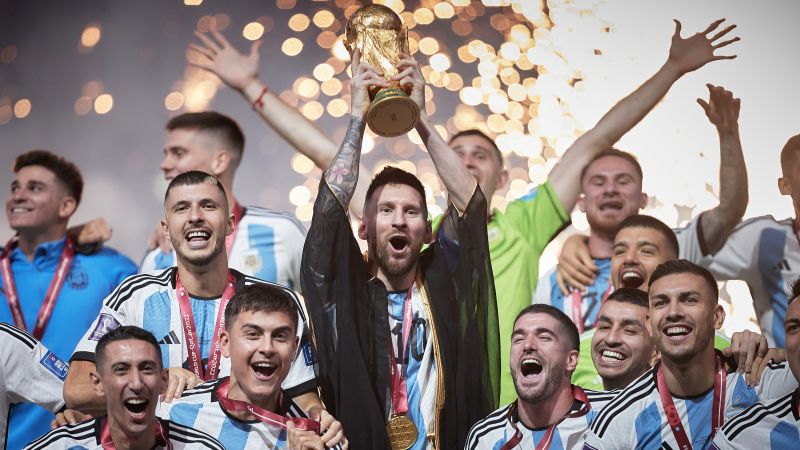
World Cup Primer: Essential Insights for the Global Sporting Spectacle
World Cup beginner s guide – As the World Cup looms on the horizon, fans across the globe are gearing up for a season packed with high-stakes action and legendary moments. Whether you’re a die-hard enthusiast or a newcomer eager to dive into the excitement, this guide will break down the fundamentals of the tournament, its evolving format, and the narratives that make it a cultural phenomenon. Let’s explore what to anticipate, how the competition unfolds, and why this event continues to captivate audiences worldwide.
Understanding the Game: Rules and Structure
Soccer, or football as it’s known in most countries, is the sport that unites nations through its simplicity and intensity. Each match features two teams of 11 players, with managers allowed up to five substitutions during the 90-minute game. These substitutions serve to refresh lineups, adjust strategies, or introduce new talents. The 90 minutes are divided into two 45-minute halves, creating a rhythm of tension and relief that keeps spectators on the edge of their seats.
Scoring and standings are straightforward. A victory grants three points, a draw awards one point, and a loss yields none. This system ensures that every match carries weight, whether it’s a high-profile clash or a gritty underdog story. With the 2026 edition set to feature 48 teams—a record high—the tournament has expanded its scope, offering a broader platform for global representation and competition.
The 48 teams are organized into 12 groups of four, a format that emphasizes regional diversity and balanced matchups. Each group acts as a mini-league, where teams face off against their rivals once, resulting in a minimum of three games per nation. Rankings within these groups are determined by the total points accumulated, with the top two teams from every group advancing to the knockout stages. Additionally, eight of the best third-placed teams will also qualify, making the transition to the next phase both competitive and unpredictable.
The Knockout Stages: A Bracket of Thrills
Once the group phase concludes, the tournament shifts to its more dramatic knockout format. This stage mirrors the structure of other sports brackets, with teams progressing through successive rounds: Round of 32, Round of 16, quarterfinals, semifinals, and the final. A third-place match is also held, pitting the losers of the semifinals against each other for the bronze trophy.
This year’s World Cup introduces a new milestone: the Round of 32. Due to the increased number of teams, only 16 nations will exit the group stage, while the remaining 32 will compete in the knockout rounds. The structure ensures that every match has the potential to reshape the tournament’s trajectory, as even the smallest underdog could upend established powerhouses.
In knockout matches, draws are not an option. If teams are tied after regulation time, 30 minutes of extra time is played—split into two 15-minute halves with a brief interval between them. If no goal is scored during this period, the tie is decided by a penalty shootout. Each team takes five penalties, and the one with the most successful kicks claims victory. In the rare case where all 10 attempts result in goals or no one misses, the shootout continues until a winner emerges.
History and Legacy: How Soccer Became a Global Phenomenon
While the 2026 tournament is a modern marvel, its roots stretch back centuries. Soccer’s origins are shrouded in debate, with evidence suggesting it has been played in ancient civilizations such as Egypt, China, and Greece. However, the modern version of the game began to take shape in the 19th century, particularly in England, where standardized rules were established in the mid-1800s.
“There are forms of ball games that exist in lots of ancient societies,” said Matthew Taylor, a soccer historian. “I suppose the most well-known one recent.”
The World Cup itself was born in 1930, with the first edition hosted by Uruguay. Over time, the tournament has grown from a modest competition to a global spectacle, drawing billions of viewers and uniting nations in a shared passion. Its evolution reflects the sport’s ability to adapt and thrive, from its early days to the current format that includes 48 teams and high-tech officiating.
Despite its complexity, soccer remains accessible, blending simplicity with strategic depth. The 2026 World Cup promises to highlight this duality, featuring both seasoned powerhouses and emerging talents. While traditional favorites like France, Spain, Argentina, Brazil, England, and Portugal are often seen as strong contenders, the tournament’s history is filled with surprises. From underdog victories to unexpected upsets, the World Cup has always been a stage where the improbable becomes possible.
Anticipation and Prediction: What to Watch For
As teams prepare for the 2026 World Cup, fans are naturally curious about the competition’s dynamics. With 48 nations vying for glory, the group stage will set the tone for the tournament, as teams battle to secure a spot in the knockout rounds. The early rounds will be crucial for favorites to showcase their strength and for underdogs to demonstrate resilience.
CNN’s Ultimate World Cup Quiz offers an engaging way to test your knowledge of the game, while the bracket provided by the network allows fans to make predictions and follow the action with a personal touch. Whether you’re forecasting the final winner or cheering for a team’s unexpected rise, the tournament’s narrative will be shaped by its unpredictable nature. Even the most dominant teams can falter, and the smallest nations can spark Cinderella stories that resonate long after the final whistle.
Ultimately, the World Cup is more than a competition—it’s a celebration of sport’s ability to transcend borders and bring people together. Its structure, while intricate, ensures that every match matters, every moment is memorable, and every fan, regardless of their level of expertise, can find something to admire. As the 2026 edition unfolds, one thing is certain: the world’s game will continue to captivate, challenge, and inspire, proving time and again why it remains the pinnacle of international sports.
