
Sagrada Família’s 144-year journey nears its end with the Tower of Jesus Christ
Sagrada Família’s 144-Year Journey Nears Completion with the Tower of Jesus Christ
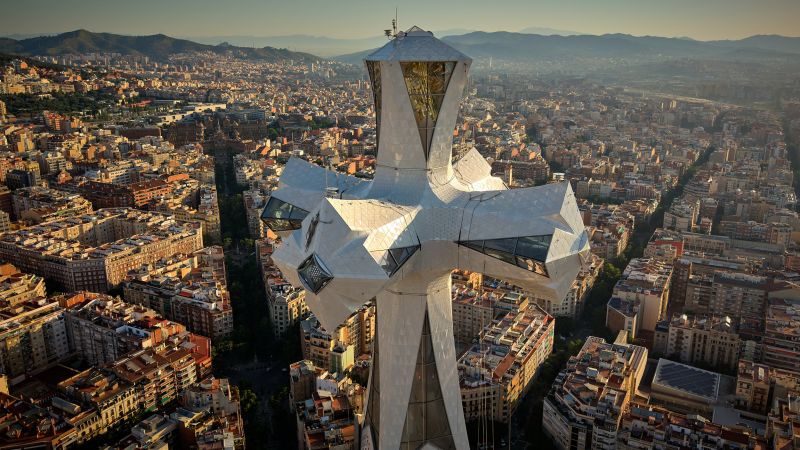
Sagrada Família s 144 year journey – Barcelona’s iconic Sagrada Família, a towering yet incomplete silhouette against the city’s skyline, has finally reached its full height. After more than 144 years of construction, the final architectural element—a cross crowning the central Tower of Jesus Christ—was installed in February, marking the completion of the basilica’s main structure at 566 feet. This milestone, long awaited by architects, historians, and locals, signifies the culmination of a monumental effort spanning generations. The inauguration of the tower will take place on Wednesday, with Pope Leo XIV leading a Solemn Mass and ceremonial blessing to celebrate the achievement.
A Century of Legacy and Delays
The Sagrada Família’s completion coincides with the 100th anniversary of the death of its visionary architect, Antoni Gaudí. His designs, a fusion of organic forms and geometric precision, have captivated the world, yet the basilica’s construction has faced countless interruptions. Wars, political shifts, and financial constraints have all played a role in slowing progress, but the project has persisted, guided by a steadfast commitment to Gaudí’s original vision. The final tower, a symbol of the church’s spiritual and architectural triumph, is the result of decades of meticulous planning and engineering.
Gaudí’s plans, once seen as impossibly complex, have been reinterpreted over the years by successive generations of designers. The basilica’s intricate facades, which tell biblical narratives in stone, and its soaring towers, inspired by nature’s patterns, required a blend of traditional craftsmanship and modern technology. As the last major structural piece was placed, the completed towers now stand as a testament to the enduring legacy of Gaudí’s genius and the collective perseverance of those who brought his dream to life.
The Cross That Shines on the Skyline
The Tower of Jesus Christ, the tallest among the 18 spires, features a cross that is as tall as a five-story building and weighs nearly 100 tons. Its installation, a months-long process, involved lifting 14 prefabricated sections from Germany to Spain. These components, made of concrete and stainless steel, were chosen for their strength and lightness—qualities that Gaudí might not have anticipated but that proved essential for the structure’s stability. The cross, designed to reflect the Spanish sun during the day and illuminate the skyline at night, is a modern interpretation of Gaudí’s original concept.
Once in Barcelona, the cross’s pieces were transported to a workshop located 200 feet above ground, directly atop the basilica’s central nave. There, artisans meticulously finished the sections with stone interiors, enameled white ceramic cladding, and windows crafted from locally sourced glass. The final assembly and raising of the cross into place required precise coordination, blending historical reverence with contemporary engineering. The result is a structure that seamlessly merges the past and present, honoring Gaudí’s vision while adapting to modern demands.
“The times have changed—technology has evolved, as have the regulations,” said Mauricio Cortés, the architect overseeing the installation. Yet he remains confident that the basilica stays true to its roots. “We believe we’re pretty close to his plans for the exterior, for sure,” Cortés noted. “With the interior, as he didn’t define it in detail, there’s more room for interpretation.” This balance between fidelity to Gaudí’s designs and creative adaptation has been central to the project’s evolution, reflecting the challenges of translating a 19th-century master plan into a 21st-century reality.
From Vision to Reality: A Journey Through Time
When Gaudí took over the project from Francesc de Paula Villar, who had resigned over a disagreement with the developer, he understood that his lifetime would not see its completion. The scale and intricacy of his design made it clear that the basilica would outlive him, relying on the dedication of future generations to fulfill his dream. Gaudí once famously remarked, “My client is not in a hurry,” a statement that underscores his belief in divine timing. While the developer and the faithful may have pressed for progress, Gaudí’s focus remained on perfection, trusting that the basilica’s completion would be guided by the will of God.
Today, the cross atop the central tower stands as a culmination of that journey, symbolizing both the end of an era and the beginning of new possibilities. The basilica, with its vibrant color palette and intricate details, is more than a place of worship—it is a monument to Gaudí’s reverence for nature and his ability to merge art with engineering. Its completion represents not only a milestone in Barcelona’s architectural history but also a celebration of the human spirit’s capacity to overcome obstacles and create beauty over time.
The installation of the cross has also sparked renewed interest in the basilica’s future. While the main structure is now finished, there remains a wealth of non-structural work to be completed, including the final touches to the interior and the continued refinement of its exterior. The 2026 inauguration, though marked as a de facto grand opening, is just the start of a broader vision for the basilica’s full realization. Visitors and scholars alike will continue to marvel at its unfinished aspects, which offer a glimpse into the creative process that shaped one of the world’s most remarkable religious structures.
From the elevated workshop, which overlooks the entire city, the view is nothing short of breathtaking. The roof of the central nave, adorned with colorful gables and intricate ceramic designs, contrasts sharply with the bell towers that rise above the Nativity and Passion facades. These towers, carved with biblical scenes in ornate detail, are crowned with pinnacles made of Venetian glass, creating a shimmering effect that captures the essence of Gaudí’s organic style. The completed cross, with its reflective surface, is a crowning achievement that ties the entire structure together, offering a sense of closure to a project that has spanned over a century.
Despite the many challenges, the Sagrada Família now stands as a beacon of resilience and innovation. Its completion is a tribute to the countless designers, engineers, and craftsmen who have dedicated their lives to interpreting Gaudí’s legacy. As the basilica’s final tower is unveiled, it invites reflection on the journey that brought it to this moment—a journey that began with a single vision and grew into a global icon of faith and art. The cross, now in place, serves as a reminder that even the most ambitious projects can find their completion through patience, creativity, and unwavering dedication.
“We believe we’re pretty close to (his plans for) the exterior, for sure,” said Cortés, touring CNN through the basilica ahead of the inauguration. “With the interior, as he didn’t define it in detail, there’s more room for interpretation.”
As Barcelona prepares to welcome the Pope and thousands of visitors to the basilica’s grand opening, the structure’s significance extends beyond its physical form. It is a symbol of cultural pride, a nod to the city’s rich architectural heritage, and a testament to the power of vision and perseverance. The Sagrada Família’s completion marks not an end, but a new chapter in its storied history—one that continues to inspire awe and admiration for the work of its creator and the generations that followed.
