
5 things to know about the Ebola outbreak
5 Key Insights Into the Current Ebola Crisis
5 things to know about the Ebola – The recent Ebola outbreak in the Democratic Republic of Congo (DRC) has sparked global concern, but the situation remains contained within regional boundaries. While the virus is spreading rapidly in local communities, experts emphasize that the risk of a global pandemic is minimal. This analysis outlines critical developments, from the origins of the outbreak to the strategies being deployed to curb its spread.
The Timing of the Outbreak
On May 17, the World Health Organization (WHO) classified the Ebola outbreak as a public health emergency of international concern. This decision came two weeks after the agency first detected a high-mortality illness in the Ituri Province of the DRC. However, recent findings suggest the virus may have been circulating far earlier than officially recorded. Health officials now agree the outbreak likely began in February, with the mayor of Mongbwalu, a remote mining town, indicating the first cases emerged around that time.
“In an outbreak, time lost is transmission gained,” said the WHO regional director for Africa, highlighting the urgency of early detection. The initial delay in identifying the strain may have allowed the virus to spread unnoticed for weeks.
Local leaders in Mongbwalu initially suspected tuberculosis as the cause of widespread deaths. They also conducted tests for Ebola, but those results were negative because they were targeting the more common Zaire strain. The Bundibugyo strain, which is now responsible for the current outbreak, was overlooked in these early screenings. This misdiagnosis underscores the challenges of recognizing emerging variants in the absence of clear symptoms or diagnostic tools.
Modeling the Spread
Recent models from the Centers for Disease Control and Prevention (CDC) indicate that the DRC outbreak could surpass the 2014-2016 West African epidemic if containment efforts lag. The 2014-2016 outbreak claimed over 28,000 cases and more than 11,000 lives, making it the deadliest in history. As of now, the current outbreak has resulted in at least 60 confirmed deaths, but projections suggest the number could rise significantly if the spread is not controlled.
According to the CDC’s analysis, the virus’s trajectory depends heavily on how quickly cases are identified and isolated. While Ebola is not as contagious as measles or even COVID-19, it becomes highly transmissible once a patient reaches a critical stage of infection. At that point, a single drop of bodily fluid can lead to a new case, making healthcare workers and family caregivers particularly vulnerable.
The Human Toll
Understanding the demographics of the outbreak provides insight into its impact. Most patients affected by the Bundibugyo strain are women between the ages of 20 and 39, a trend observed in previous outbreaks. This may be linked to social dynamics, such as caregiving roles or exposure patterns, though the exact causes are still under investigation. The outbreak has placed immense pressure on local healthcare systems, with hospitals struggling to manage the influx of patients.
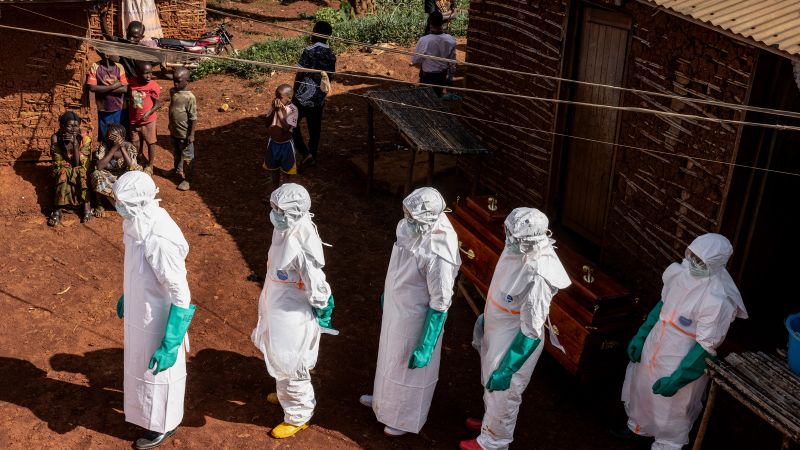
Despite these challenges, international aid has been critical in improving conditions. Aid organizations have delivered essential resources, including personal protective equipment (PPE) and medical supplies, to support frontline workers. However, the remote location of the DRC’s affected regions has complicated logistics, leaving healthcare facilities under-equipped and overwhelmed. In some cases, caregivers have had to rely on makeshift solutions to protect themselves from infection.
Global Response and Prevention Strategies
While the WHO has maintained that the risk to the global community remains low, the outbreak’s potential for growth has prompted swift action. At a CNN All Access Subscriber Series event, Dr. Jay Bhattacharya, director of the US National Institutes of Health and acting CDC director, discussed the US’s role in coordinating a response. He noted that the key to limiting the outbreak’s scale is rapid identification of cases, followed by immediate isolation to prevent further transmission.
Dr. Sanjay Gupta, the host of the event, emphasized the importance of community engagement in controlling the spread. “The most effective strategy is not just about treating patients but about stopping the chain of infection before it can expand,” he explained. This involves tracing the contacts of each confirmed case, a process that requires meticulous coordination between local and international teams.
Historical experiences, such as the 2014 outbreak in Guinea, offer valuable lessons. During that time, Dr. Gupta witnessed firsthand the difficulty of managing the disease in resource-limited settings. “Even small lapses in PPE can lead to infections, especially when dealing with high-risk patients,” he recalled. These insights have informed current protocols, which prioritize both medical care and preventive measures.
Why a Pandemic Is Unlikely
Despite the outbreak’s severity, several factors reduce the likelihood of it becoming a global pandemic. First, Ebola’s transmission rate is lower compared to other infectious diseases, requiring close contact with bodily fluids for infection to occur. Second, the virus primarily spreads in specific regions, and travel restrictions have helped contain its movement. Third, advancements in medical technology, such as rapid diagnostic tests and experimental treatments, have improved response capabilities.
Additionally, the outbreak is occurring in a region with established public health infrastructure. While conditions have been dire, the arrival of international partners has provided a lifeline. Dr. Bhattacharya highlighted the importance of these efforts, stating, “Without global support, local health systems would struggle to handle the scale of this crisis.” The combination of these elements gives hope that the outbreak can be managed before it escalates further.
As the situation evolves, continuous monitoring and adaptive strategies will be essential. The WHO is working to refine the timeline of the outbreak, which is key to predicting its future course. If the initial cases were missed due to the strain’s rarity, the lessons learned from this event will help improve preparedness for future epidemics. With a coordinated global effort and swift local action, the path to containment remains viable.
The current outbreak serves as a reminder of the virus’s dual nature: both deadly and manageable. While the human cost is significant, the measures being taken—such as contact tracing, PPE distribution, and community education—offer a blueprint for success. As long as the response remains proactive, the DRC’s outbreak is unlikely to disrupt global health beyond regional boundaries.
