
Did the Iran war force peak oil?
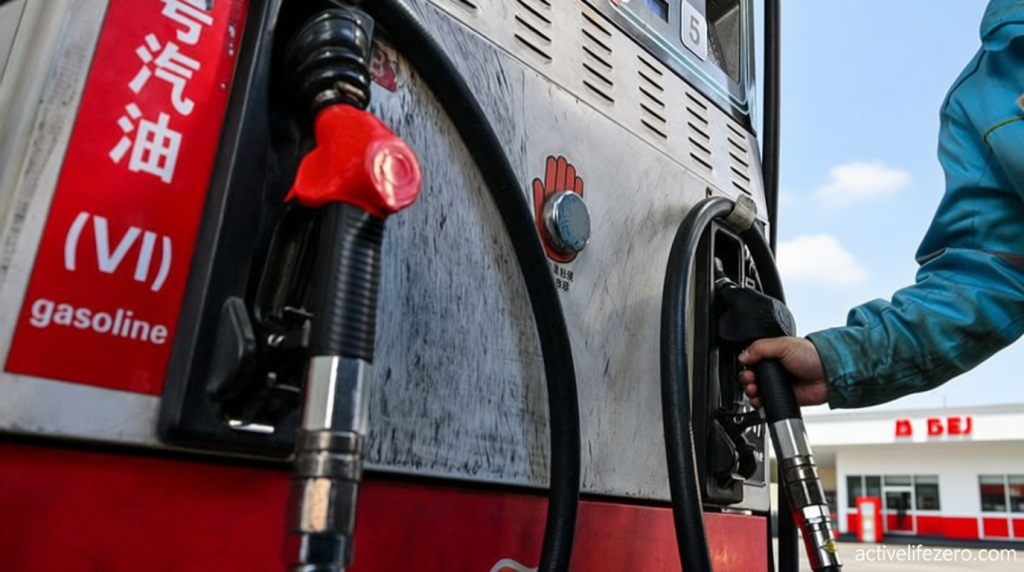
Did the Iran War Force Peak Oil?
Did the Iran war force peak – A surprising shift is occurring in China’s energy landscape. According to JPMorgan, the nation’s oil demand dropped by 9% compared to pre-Iran war levels. This marks a significant decline, even surpassing the 2% reduction seen during the 2008 financial crisis, which was a major global economic downturn. Yet, China’s economy remains stable, indicating that this drop is not merely a temporary setback but a sign of a broader transformation.
Unlike the 2008 crisis, which saw government-led conservation efforts, China’s adjustment has been driven by rapid changes in consumer habits. With over 70% of its oil imported, the country has managed to cushion itself from supply disruptions by leveraging its massive crude stockpiles. These strategic reserves, accumulated well before the conflict began, have allowed China to maintain energy security without imposing strict fuel rationing. However, the true story lies in the choices made by individuals.
Chinese consumers have increasingly favored electric vehicles (EVs) and public transportation over gas-guzzling cars and long-distance travel. During the May Day holiday, for instance, EV charging demand on China’s highways surged by 55.6% compared to the prior year. Over the course of the holiday, nearly a quarter of vehicles on the roads were EVs, a 33% rise from the previous year. Meanwhile, international travel declined by 5.7%, though regional flights saw a modest 3.5% increase. Rail travel, on the other hand, rose by 4.6%, reflecting a shift in mobility preferences.
Similar trends are emerging in Europe, where new car registrations hit a seven-year high. Hybrid vehicles, in particular, have driven this growth, as noted by JPMorgan. The affordability of EVs has improved due to falling electricity prices, a result of decades of investment in wind and solar energy. This affordability has made electric alternatives more attractive to consumers, even in the absence of strong government incentives.
Yet, the United States remains an outlier. EV sales there have not seen meaningful growth after congressional Republicans, aligned with President Donald Trump, rolled back subsidies and tax credits. This suggests that the shift to electric vehicles is not uniform across the globe, with political and economic factors playing a critical role in shaping adoption rates.
Historical Precedents of Energy Transition
China’s current behavior mirrors patterns observed during past energy crises. The 1973 oil embargo, for example, led to permanent changes in global energy consumption. Countries formed the International Energy Agency, which coordinated efforts to reduce oil dependence. Over the following decade, nuclear power plants expanded, public transit systems grew, and efficiency standards for vehicles and home insulation were introduced. The U.S., in particular, took drastic measures, including lowering the national speed limit to 55 miles per hour and creating the Department of Energy to manage energy policy.
“The 1970s marked the largest reduction in fossil fuel demand in U.S. history,” said Jason Bordoff, founding director of the Center on Global Energy Policy at Columbia University. This crisis acted as a collective shock, compelling policymakers to prioritize energy independence. The same dynamic may be at play today, as consumers worldwide reconsider their reliance on traditional fuels.
Other crises have also catalyzed lasting changes. The pandemic, for example, normalized remote work, reducing the need for daily commutes and shrinking overall energy consumption. Similarly, Russia’s 2022 invasion of Ukraine prompted the European Union to implement regulations that sharply cut dependence on natural gas, favoring renewable energy sources. These examples highlight how disruptions can accelerate transitions toward sustainable alternatives.
China’s recent actions are not just about survival. They reflect a deeper shift in consumer attitudes. Rising gas prices, combined with growing environmental awareness, have encouraged people to adopt greener options. This behavior has led to permanent adjustments in energy demand, even when the Strait of Hormuz reopens. “History suggests that past oil shocks often left lasting declines in gasoline demand, and this episode may prove no different,” said Natasha Kaneva, head of commodities strategy at JPMorgan.
The Path to Peak Oil?
While the Iran war has not yet triggered a full-scale peak oil scenario, its impact is undeniable. Global demand for oil has plummeted by 2.8 million barrels per day in March, 4.3 million in April, and 5.6 million in May. These figures, though lower than the pandemic’s 10 million-barrel-per-day loss, signal a critical turning point. Analysts argue that sustained declines in key sectors could permanently alter demand trajectories.
“We may have already hit peak oil—the point at which the world starts to wean itself off crude, never to return to previous highs,” Kaneva emphasized. The implications are significant. If the current trends continue, global oil consumption could stabilize or decline, even in the absence of ongoing geopolitical tensions. This would mark a departure from historical patterns where demand rebounded after temporary shocks.
The transition is not without challenges. While strategic reserves have provided temporary relief, long-term solutions depend on continued adoption of EVs and other alternatives. In China, the rapid uptake of electric vehicles is supported by a combination of factors: lower energy costs, government infrastructure investments, and a cultural shift toward sustainability. Public transportation, in particular, has become a preferred choice, reducing the need for personal vehicles in urban areas.
As the world adapts, the role of oil is evolving. The pandemic, for example, made remote work and digital services the norm, reducing energy needs. Similarly, the Iran war has accelerated a move toward energy efficiency and renewable sources. These changes, while not immediate, are reshaping the global energy market in ways that could persist for years.
For China, the shift is both a response to crisis and an opportunity. By embracing electric mobility and regional travel, the country has demonstrated resilience and innovation. This adaptability may serve as a model for other nations facing similar challenges. As the data shows, even in the face of a massive supply shock, the demand for oil is not as inelastic as once believed.
The question remains: Is this the beginning of a permanent decline in oil consumption? With global demand now dropping at rates not seen since the 1970s, the answer may lie in the choices made by individuals and the policies shaping those choices. Whether the Iran war is the catalyst or just one of many, the evidence suggests that the world is moving toward a future where oil plays a diminished role. This could redefine the concept of peak oil, not as a theoretical event but as an ongoing reality.
