
Think you know who’s going to win the World Cup? So does Goldman Sachs
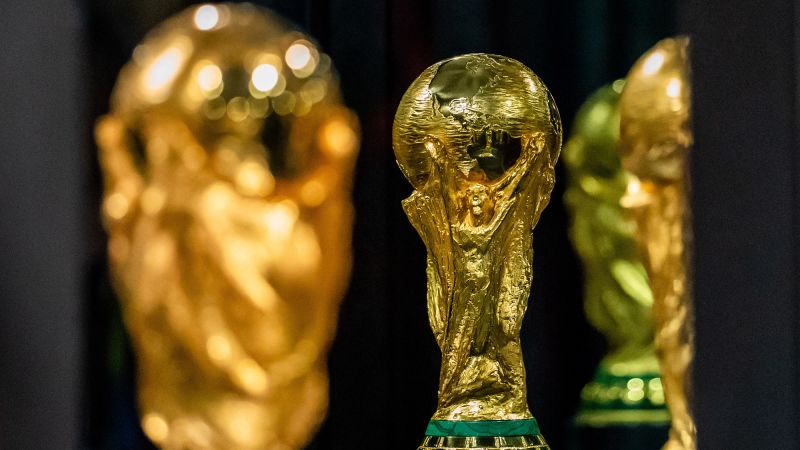
Think you know who’s going to win the World Cup? So does Goldman Sachs
Think you know who s going – Goldman Sachs, one of the most prestigious financial institutions in the world, has entered the realm of sports forecasting with its latest analysis of the upcoming World Cup. The report, published on Friday, was spearheaded by Jan Hatzius, the bank’s chief economist and head of Global Investment Research. While the firm is known for its rigorous economic models, this latest effort focuses on predicting the outcome of the football tournament, a task that blends data science with an understanding of the unpredictable nature of sports. The report outlines probabilities for each competing nation, offering insights that may or may not align with fans’ own predictions.
Goldman’s Odds and Factors
According to Goldman Sachs’ projections, Spain leads the pack with a 26% chance of clinching the World Cup title, followed by France at 19% and Argentina at 14%. The report incorporates a range of variables, including a team’s historical performance, scoring talent, momentum, and geographical advantages. However, the economists also highlight a potential pitfall: the “winner’s slump,” a phenomenon where teams that have recently triumphed may struggle to maintain their form. This concern is particularly relevant for Argentina, which won the tournament in 2022 and could face challenges in retaining their edge.
Goldman Sachs extended its analysis beyond the top contenders, listing advancement probabilities for all 48 participating nations. For the host countries, Canada, Mexico, and the United States, the odds of reaching the Round of 16 were calculated as 50%, 68%, and 39%, respectively. These numbers reflect the bank’s assessment of each team’s strengths and weaknesses, though they acknowledge that their model is not infallible. The report emphasizes that while historical data and team dynamics are key, other unpredictable elements—such as injuries, coaching strategies, and unexpected player performances—remain difficult to quantify.
Historical Predictions and Model Limitations
Goldman Sachs has a history of attempting to forecast World Cup winners, with past predictions spanning the 2014 and 2018 tournaments. However, the economists caution that their current model is an “estimated guess” rather than a guaranteed forecast. They admit the model’s accuracy is constrained by the factors it incorporates, which, while comprehensive, still leave room for error. For instance, in the 2018 World Cup, the bank’s simulations projected Brazil had an 18% chance to defeat Germany in the final. Yet, Brazil was eliminated in the quarterfinals, and the final match saw France emerge victorious over Croatia.
Goldman Sachs’ model, which draws on nearly 20,000 matches analyzed since 1978, aims to estimate goal-scoring potential based on historical patterns. Despite this extensive dataset, the team acknowledges that certain variables—such as player health, managerial experience, and in-game adaptability—were not fully integrated into the current analysis. These elements, though often overlooked in large-scale models, can significantly influence a team’s performance. As a result, the economists warn that their predictions should be viewed as a “fun exercise” rather than an exact science.
Prediction Markets: A Different Approach
In contrast to Goldman Sachs’ model, online prediction markets have emerged as a popular alternative for gauging potential outcomes. These platforms, such as Polymarket and Kalshi, allow users to trade bets on a wide array of events, from politics to sports. Unlike traditional models, prediction markets aggregate real-time data from millions of participants, reflecting collective wisdom rather than a single institution’s analysis. Victor Matheson, an economics professor at the College of the Holy Cross, argues that these markets are “quite efficient” in capturing the nuances of a sports contest.
“The information that is going into (Goldman’s) model is a tiny sliver of all the information that’s in the possession of the millions of people that have bet into (online) prediction markets,” said Jacek Dmochowski, an engineering professor at The City College of New York.
Dmochowski described Goldman Sachs’ approach as a “fun exercise” that, while informative, may not account for the full spectrum of variables influencing the tournament. He pointed out that prediction markets are dynamic, allowing for real-time adjustments based on new developments. For example, the surprising performance of Russia in the 2022 World Cup might have influenced market dynamics, which Goldman Sachs noted as a factor in the tournament’s unpredictability.
Interestingly, both Polymarket and Bet365 have also offered their own assessments, with Spain’s chances of winning appearing less than 20% in their models. France, however, remains a strong contender across multiple platforms, with similar odds to Goldman Sachs’ projection. While these markets provide a different perspective, Dmochowski cautions that they are not without flaws. Overreactions to player injuries or biases toward underdog teams can skew results, making it challenging to determine which approach is more reliable.
Goldman Sachs itself has recognized the value of comparing its model to these markets. The firm highlighted the inherent unpredictability of the World Cup, noting that the tournament’s outcome could be shaped by factors outside their analysis. “It’s impossible to know who was right,” Dmochowski concluded, underscoring the complexity of predicting a global sporting event. Despite the best efforts of financial experts, the reality of football remains as fluid as ever, with underdogs often defying odds and favorites stumbling at critical moments.
The Science of Unpredictability
Goldman Sachs’ report serves as a reminder that even the most sophisticated models cannot fully capture the chaos of a World Cup. The economists warn that the tournament is a “celebration of uncertainty,” where variables like morale, weather, and tactical decisions can shift the balance of power. While the bank’s data-driven approach offers a structured view of potential outcomes, the unpredictable nature of sports means that any forecast is ultimately a snapshot in time.
For instance, the 2018 World Cup revealed the limitations of even the most advanced predictive tools. Brazil, once considered a strong contender, was knocked out early, while France’s rise to victory was not entirely anticipated. Goldman Sachs had placed France in the top tier of possible winners, yet the final result hinged on a combination of factors that their model may not have fully accounted for. This discrepancy highlights the importance of considering both statistical analysis and human intuition in sports forecasting.
As the World Cup approaches, fans and analysts alike are drawn to these models and markets for guidance. However, the line between prediction and probability is often blurred. While Goldman Sachs’ report provides a data-backed framework, the real excitement of the tournament lies in its ability to surprise. Whether it’s a team’s unexpected surge or a sudden collapse, the World Cup continues to captivate audiences with its blend of skill, strategy, and serendipity.
Ultimately, the role of prediction in sports is to inform, not dictate. Goldman Sachs’ model, like others, is a tool that helps contextualize the competition, but the actual outcome will depend on the unpredictable interplay of talent, teamwork, and fortune. As the economists from the bank and prediction market experts both agree, the most intriguing aspect of the World Cup is its capacity to defy expectations. So, while the numbers may offer a roadmap, the journey to the final is as much about the unexpected as it is about the calculated.
