
Troops must meet weight standard to get free tickets to the White House UFC fight
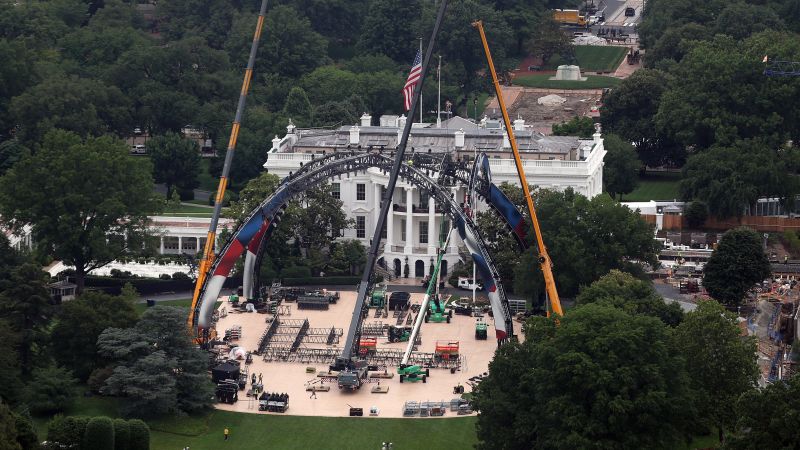
Troops Must Meet Weight Standards to Secure Free Tickets to White House UFC Event
Troops must meet weight standard to get – The Pentagon is finalizing the list of military personnel who will be granted complimentary attendance at the upcoming UFC event hosted by President Donald Trump at the White House. According to internal guidance documents examined by CNN and individuals with knowledge of the process, eligibility for tickets hinges on adherence to specific body composition benchmarks. These standards, which include the DOW waist-to-height ratio, are designed to ensure that service members presenting themselves to the public meet certain physical criteria.
Defense officials have emphasized that the selection process prioritizes individuals whose physique aligns with the department’s newly established measures. The DOW ratio, which requires a waist measurement below 0.55 relative to a person’s height, has become a focal point of the military’s fitness initiatives. This figure is closely aligned with the updated guidelines introduced by the Defense Department earlier this year, which replaced older metrics with a more stringent evaluation of warfighting readiness. The criteria are meant to reflect the physical preparedness of service members, both in appearance and capability.
“Ticket recipients are required to meet the DOW waist-to-height ratio standard of less than 0.55, as well as all service-specific physical fitness test requirements,” stated a memo circulated to military personnel. The document, which outlines the Pentagon’s expectations, uses the agency’s preferred acronym to describe the agency responsible for setting these benchmarks.
The Cleveland Clinic provides context for these measurements, noting that the average height for American men is 5 feet 9 inches and for women is 5 feet 4 inches. At these heights, the proposed waist limits translate to a maximum of 37 inches for men and 35 inches for women, creating a clear visual benchmark for participants. These figures are not arbitrary; they are part of a broader effort to redefine how the military assesses physical fitness in an era where appearance and performance are often intertwined.
Defense Secretary Pete Hegseth has been a driving force behind this focus on fitness. In a speech last year to senior military leaders, he outlined his vision for a stronger, more disciplined force. Hegseth’s remarks, which included a warning against “fat troops” or “fat generals and admirals,” underscore the importance of maintaining a certain image within the Pentagon. The UFC event, which is expected to be a high-profile media opportunity, is seen as a platform to reinforce this message.
The Pentagon has remained silent on the details of the guidance, but sources indicate that the selection criteria for Trump’s televised UFC event are rigorous. One official described the requirements as a clear directive to service members: “No fattys.” Another insider noted that commanders are encouraged to prioritize individuals who are not only physically fit but also demonstrate genuine enthusiasm for the sport. This dual emphasis on fitness and interest in UFC underscores the event’s role as both a morale booster and a public relations tool.
Body Composition and Physical Fitness Standards
The new body composition standards are a significant shift in how the military evaluates service members. By incorporating the waist-to-height ratio, the Defense Department aims to create a more holistic assessment of physical health. This change has sparked discussions about its implications for troop morale and the broader cultural expectations surrounding military fitness. While the metrics are designed to reflect operational readiness, they also highlight the growing emphasis on physical appearance in military circles.
Waist measurements, as part of this standard, are intended to measure fat distribution and overall body composition. The specific thresholds—37 inches for men and 35 inches for women—were determined through data analysis and are consistent with the average heights cited by the Cleveland Clinic. These numbers serve as a benchmark for both junior and senior personnel, though the process of selecting attendees appears to favor those in lower ranks. The rationale for this preference is twofold: to showcase a diverse representation of the military and to highlight the fitness achievements of younger service members.
Despite the free tickets, attendees will still be expected to cover their own travel expenses. This detail adds an extra layer of scrutiny to the selection process, as it places financial responsibility on individuals while ensuring that the event’s budget remains untouched. The Pentagon’s guidance also recommends that commanders focus on selecting troops who reside outside the nation’s capital, possibly to avoid the logistical complexities of coordinating travel for those in Washington, D.C.
Optics and Strategic Messaging
The Pentagon’s meticulous attention to the event’s appearance is a strategic move to reinforce the administration’s messaging. Previous instances, such as Trump’s visit to Fort Bragg, illustrate this trend. During that event, soldiers were handpicked not only for their political affiliations but also for their physical presence. The audience, which was predominantly male, was chosen to project an image of strength and unity.
While the UFC event is meant to be a celebration of physical fitness, it also serves as a tool for shaping public perception of the military. The emphasis on appearance reflects a growing awareness that the visual image of the armed forces can influence public support and morale. By ensuring that attendees meet strict body composition standards, the Pentagon aims to create a cohesive and appealing narrative for the event.
The guidance documents reviewed by CNN indicate that the process is not limited to the UFC fight itself. Commanders are instructed to consider other factors, such as the individual’s ability to engage with the media and their overall demeanor. This approach suggests that the Pentagon views the event as a multifaceted opportunity to showcase the military’s commitment to excellence and discipline. As a result, the selection process for tickets is as much about optics as it is about physical fitness.
In addition to the waist-to-height ratio, the new standards require service members to pass existing physical fitness tests. These tests, which vary by branch of service, assess strength, endurance, and agility. By combining these requirements, the Pentagon is reinforcing the idea that fitness is not just about appearance but also about readiness for combat. The event, therefore, becomes a microcosm of the military’s broader priorities.
The emphasis on physical fitness has been a recurring theme in recent Pentagon policies. From the selection of audience members to the overall appearance of the military, the administration is striving to present a unified front. The UFC event, with its blend of sport and politics, is an extension of this strategy. It is expected to draw attention to the importance of maintaining physical standards, even as the military adapts to new challenges and evolving expectations.
As the event approaches, the Pentagon’s role in curating the list of attendees becomes increasingly apparent. The guidance is a reflection of the agency’s commitment to a specific image of military fitness, one that is both measurable and visually striking. For service members, the opportunity to attend is a coveted honor, but it also comes with a clear expectation of maintaining a certain physique. This approach highlights the intersection of fitness, politics, and public perception in the modern military landscape.
