
They were on the trip of a lifetime. Now they’re quarantined as health officials work to contain a hantavirus outbreak
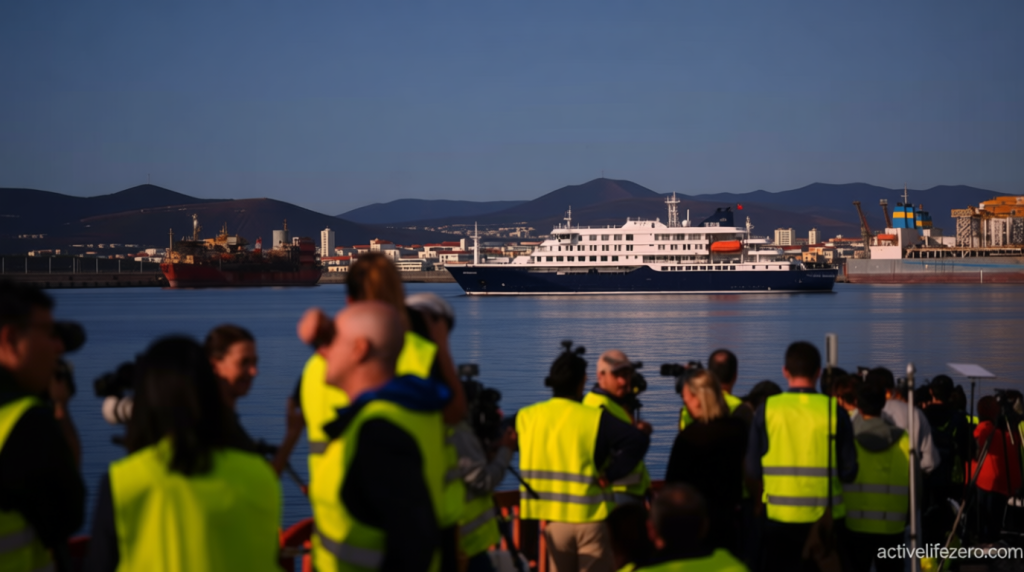
What Was Meant to Be a Once-in-a-Lifetime Journey Has Turned Into a Prolonged Quarantine for Dozens of Travelers
They were on the trip – More than six weeks after embarking on a voyage across the Atlantic Ocean, a group of American passengers and crew members aboard the MV Hondius now face uncertain days of isolation. The cruise ship, operated by Oceanwide Expeditions, originally set out from Argentina with the goal of showcasing remote ecosystems and unique wildlife. However, its itinerary has been upended by a hantavirus outbreak, prompting health officials to initiate a quarantine process to contain the spread of the disease.
A Global Effort to Evacuate and Monitor Infected Individuals
As of Tuesday morning, 122 people — 87 passengers and 35 crew members — had been evacuated from the ship, with most returning to their home countries. Five Australians and one New Zealander are currently in the Netherlands, awaiting repatriation later this week. The remaining 27 individuals, including 25 crew members and two medical professionals, are en route to Rotterdam, where the vessel will undergo disinfection. Oceanwide confirmed their expected arrival on Sunday evening.
Among the evacuees, three passengers have succumbed to the virus since April 11, while several others have confirmed or probable cases. The World Health Organization (WHO) has emphasized that the general public remains at low risk, though the outbreak has raised concerns about the Andes strain of hantavirus, which is known for its potential to transmit between humans. WHO chief Tedros Adhanom Ghebreyesus stated that 11 cases have been reported in total, with nine confirmed as the Andes variant and two classified as probable.
“Hopping back on for a second to let everyone know I’m okay and feeling well,” passenger Jake Rosmarin wrote in a post to Instagram. “The repatriation flight was smooth, and I safely made it to the National Quarantine Unit in Omaha. It’s been a very long few days, but hopefully I can start giving more updates again soon.”
The Spread of the Virus and Its Impact on Travelers
The MV Hondius departed Ushuaia, Argentina, on April 1, making stops in remote locations such as St. Helena and Tristan da Cunha before anchoring off Praia, Cape Verde, near western Africa. Authorities were scrambling to manage the outbreak, leading to the ship’s temporary halt in the Canary Islands, where medical teams boarded to conduct tests and evacuate passengers. A French woman, one of five French nationals repatriated from Tenerife, tested positive during her return flight and is now receiving treatment.
The virus has spread to various regions, with at least 11 additional individuals being monitored across seven U.S. states. Passengers in Arizona, California, Georgia, Texas, and Virginia had already disembarked before the outbreak was fully contained, while others in California, New Jersey, and Maryland were exposed during international flights. This has created a complex web of health assessments, as authorities work to trace all possible contacts and ensure containment.
Quarantine and Monitoring Protocols in the United States
In the U.S., 17 American passengers and one British dual-national are under observation at medical facilities, including the University of Nebraska Medical Center (UNMC). Of these, one individual has been placed in a biocontainment unit after testing positive, while 15 are in quarantine. All are currently asymptomatic, though two others — a couple — were transferred to Atlanta’s Emory University for additional care due to capacity constraints at UNMC. At least one person at Emory is showing symptoms, indicating the need for continued vigilance.
Health officials have established a 42-day monitoring period for those exposed to the virus, with decisions on isolation locations based on exposure timelines. Those who last encountered the virus on May 10 will remain in quarantine or monitored until at least June 21. The process involves regular health checks, testing, and assessments to determine whether individuals can safely return to their communities or require further in-person observation.
The Uncertainty That Lingers for Survivors and Families
For the passengers and crew, the next few weeks are marked by uncertainty. While the WHO has confirmed human-to-human transmission of the Andes strain, the exact scale of the outbreak and its long-term implications remain unclear. Some travelers have expressed relief at being in a controlled environment, while others grapple with the emotional toll of prolonged separation from loved ones.
Quarantine conditions at the National Quarantine Unit in Omaha are described as minimalistic, with basic amenities such as a bed and an exercise bike. This setup reflects the logistical challenges of managing a large-scale health crisis in a single location. Meanwhile, in the Netherlands, the remaining passengers await repatriation, with their own experiences of isolation shaping the broader narrative of the outbreak.
Visualizing the Outbreak: Maps and Data as Tools for Understanding
Experts are using maps and charts to track the outbreak’s progression and identify patterns of transmission. These tools help illustrate the ship’s route through the Atlantic, the locations where passengers disembarked, and the spread of the virus to different regions. The data also highlights the role of close contact in the transmission process, particularly during the ship’s stops in remote territories with limited medical resources.
As the situation unfolds, authorities are emphasizing the importance of continued testing and monitoring. The MV Hondius’s journey has become a case study in global health preparedness, showcasing how quickly a rare virus can disrupt international travel and require coordinated efforts across borders. The ongoing quarantine efforts underscore the delicate balance between containing the outbreak and minimizing the impact on travelers’ lives.
The Human Cost and Global Response
While the WHO has praised the swift action taken by health officials, the outbreak has left a personal mark on those affected. For instance, Jake Rosmarin’s Instagram post, though hopeful, reflects the resilience of individuals navigating this unexpected situation. His message, posted on Monday, captured the sentiment of many: a mix of relief, frustration, and the desire to share updates with family and friends.
The broader response has included collaboration between countries to ensure the safety of passengers. Oceanwide Expeditions has been working closely with international health agencies to facilitate evacuation and disinfection processes. This coordination has been critical in managing the outbreak, yet it has also exposed gaps in preparedness for such rare but potentially severe viral events.
As the ship arrives in Rotterdam, the focus shifts to disinfection and the next phase of containment. The virus’s presence on the vessel has led to heightened scrutiny of its environments and surfaces, with measures aimed at preventing further spread. Meanwhile, in the U.S., the monitoring of 18 individuals continues, with their health status and potential for transmission under constant evaluation.
With the outbreak still in its early stages, the road ahead is uncertain. While the WHO’s reassurances suggest the risk to the general public is low, the virus’s ability to spread between humans raises questions about its potential for larger outbreaks. The experiences of those aboard the MV Hondius serve as a reminder of the interconnectedness of global health, where a single voyage can ripple across continents and challenge containment strategies.
For now, the passengers and crew remain at the center of this unprecedented situation. Their stories, from the initial excitement of the expedition to the current reality of quarantine, highlight the unpredictable nature of the hantavirus and the resilience of those working to combat it. As the next few weeks unfold, the world watches closely, hoping for clarity and a path toward recovery for all involved.
