How reliant is Ukraine on US support – and could Kyiv carry on without it?

Daftar Isi
Ukraine’s Ability to Keep Fighting Faces a New Test
Activelifezero.com – Ukraine is confronting renewed uncertainty over the depth and reliability of American backing as Russian strikes continue and diplomatic efforts show little sign of ending the war. The immediate concern in Kyiv is not simply the level of financial assistance, but access to military systems, intelligence and technology that European allies cannot readily replace.
Relations between Washington and Kyiv have become increasingly strained. President Donald Trump has criticized Ukrainian President Volodymyr Zelensky, arguing that Kyiv has not secured a negotiated conclusion to the conflict. Ukrainian officials, meanwhile, have raised alarms over delays involving essential military support.
Trump recently dispatched an envoy to Norway and Russia in an effort to push peace discussions forward. The trip produced a plan to restart trilateral negotiations, but no broader breakthrough. As diplomacy remains unsettled, Russian attacks have continued to inflict casualties and damage across Ukraine.
A Shift in the Balance of Aid
The United States stopped announcing new aid packages for Ukraine’s war effort at the start of 2025. Before that decision, Washington had delivered at least $131.5 billion in total support since Russia launched its full-scale invasion in 2022. That figure still makes the United States Ukraine’s biggest individual donor during the war, Kiel Institute for the World Economy data shows.
European support has increasingly filled part of the gap. European Union governments and institutions together have committed at least $228.5 billion since 2022, putting the bloc ahead of the United States in combined donations. Germany, Denmark, the Netherlands and Sweden have provided the largest volumes of military assistance among EU members, while the United Kingdom and Norway have also made major contributions outside the bloc.
This shift has given Ukraine more room to sustain its defense, especially as it expands its domestic arms industry. Yet European assistance does not eliminate American influence. A significant share of equipment transferred by NATO partners is made in the United States and purchased by European countries before being passed to Ukraine. Such transfers still need Pentagon approval.
That approval process offers Washington an important form of leverage. Analysts see economic, military and political pressure as the three principal ways the United States could shape Kyiv’s choices if it seeks a settlement that Ukraine considers unacceptable.
Patriot Interceptors Remain a Critical Weakness
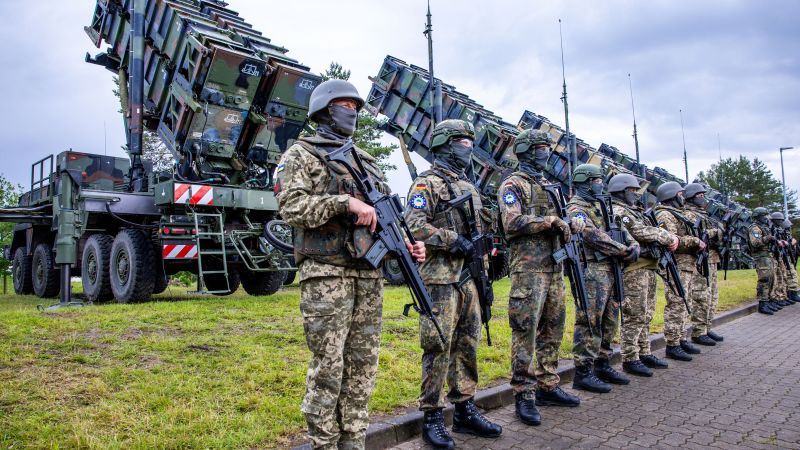
Ukraine’s most urgent military shortfall involves Patriot interceptor missiles. The country relies on the US-made system to defend against ballistic missile attacks, one of the most difficult threats for air defenses to stop.
Zelensky said deliveries of interceptors that had already been agreed were still being held up.
The delivery of interceptors to protect us against Russian ballistic missiles is still delayed. We are waiting for interceptors that were already agreed on, but they are still not coming.
Ukraine exhausted its Patriot interceptor supply last week, leaving major population centers more exposed. During the overnight attack that struck Kyiv into Thursday, none of the ballistic missiles were brought down. That outcome suggested Patriot stocks were either depleted or close to it.
For civilians, the consequences extend beyond military calculations. Effective interception can determine whether residents have time to seek shelter and whether attacks strike their intended targets. A shortage of interceptors increases the danger from Russia’s ballistic missile campaign at a moment when cities already face repeated air raids.
Ukraine has pressed allies for two priorities: continued pressure on Russia and stronger long-range weapons support.
Not to lift sanctions from Putin … (and) to give us better missiles.
Because weapons orders create business for US defense manufacturers, analysts believe any prolonged effort to obstruct allied purchases of American arms would be difficult to sustain. Still, even temporary delays can matter greatly when Ukraine’s defensive inventories are low.
Intelligence and Technology Cannot Easily Be Replaced
Financial support from Washington has fallen sharply, but Ukraine’s dependence on the United States remains especially pronounced in intelligence and advanced technology. Patriot interceptors are only one example. Kyiv also lacks substitutes for systems including Starshield, the military version of Elon Musk’s Starlink satellite network, and sophisticated American missile-warning capabilities.
European countries have not developed equivalent systems on the same scale, in part because they relied on US capabilities for decades. Max Bergmann, director of the Russia program at the Center for Strategic and International Studies, described the strategic problem facing Europe and Ukraine.
That is something Europeans don’t have, and they don’t have it because we have told them for the last 30 years not to develop it … because they can rely on us.
Bergmann said the present situation is demonstrating that European allies cannot assume US support will always be available.
We’re in a situation where America is proving to everyone in Europe that it simply can’t be relied upon.
He warned that a loss of critical support could bring severe economic harm, greater civilian casualties and further displacement. However, he questioned whether it would force Ukraine to abandon its resistance.
This could be really devastating for Ukraine in the sense that it could cause tremendous economic damage, tremendous loss of civilian life, civilians leaving. But I doubt it’s going to actually break Ukraine’s will to fight.
Warnings of Incoming Strikes
Zelensky has also said Ukraine on several occasions received no US intelligence warnings of approaching ballistic missile attacks. In those instances, Russian missiles struck without the usual air-raid sirens giving people a chance to move into shelters.
The episode illustrates why the debate over US backing reaches far beyond the size of aid packages. Ukraine has gained more European funding, more weapons from partners and a faster-growing domestic defense sector. Yet its capacity to protect cities, maintain battlefield communications and anticipate missile attacks remains closely tied to American systems and information.
Kyiv may be better positioned than it was at the beginning of the invasion to endure reduced US assistance, but carrying on without Washington would impose serious costs. Europe can help finance the war effort and deliver equipment, while Ukraine can continue building its own industry. Replacing the most specialized US defenses, intelligence and satellite capabilities would be a far more difficult task.
Related Reading
Frequently Asked Questions
What is How reliant is Ukraine on US support?
How reliant is Ukraine on US support is the main topic of this guide. The article explains the context, practical details, and next steps readers should understand.
Why does How reliant is Ukraine on US support matter?
How reliant is Ukraine on US support matters because readers are looking for a useful answer, not just a short summary. Good content should match search intent and help them decide what to do next.