Musk contributed more than $150 million to bolster GOP in Texas Senate race, filings show

Daftar Isi
Elon Musk’s donations reshape the financial battle in Texas Senate contest
Activelifezero.com – Texas’ closely watched Senate race has become an even larger test of political spending power after new federal filings revealed more than $150 million in donations from Elon Musk to a leading Republican super PAC.
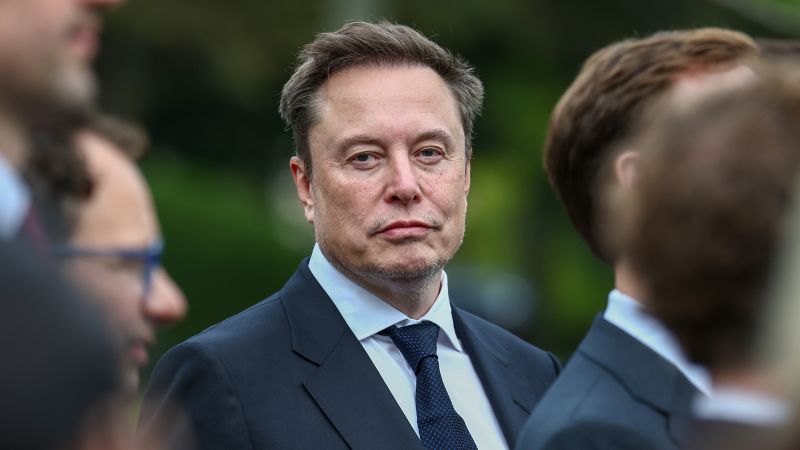
The technology billionaire gave $75 million to the Senate Leadership Fund on September 9 and contributed another $83 million on September 23. The Senate Leadership Fund is the principal Republican super PAC focused on Senate elections. Its filings show transfers matching each of Musk’s donations to Texas PAC, an organization created for the unusually competitive Texas contest.
The timing of the transactions was striking. Senate Leadership Fund sent $75 million to Texas PAC on September 10, one day after Musk’s first contribution. It transferred $83 million more on September 24, the day after his second gift. Together, the paired contributions and transfers exceeded $150 million.
A major Republican spending advantage
Texas PAC has supported Republican Texas Attorney General Ken Paxton in his contest against Democrat James Talarico. The winner will seek the Senate seat now held by Republican Sen. John Cornyn.
The financial support arrived as Republican advertising in the state accelerated sharply. Texas PAC spent more than $77 million on advertisements in September alone. Including its September spending and advertising reservations through Election Day, the group is expected to spend nearly $160 million promoting Paxton.
That scale of outside support gives Republicans a substantial advantage in the overall spending battle, even as Talarico has posted extraordinary fundraising figures through his campaign. The contest has already drawn national attention, and political advertising connected to the race has moved beyond half a billion dollars.
Musk’s involvement reflects his continued importance to Republican political operations following the 2024 election cycle. He contributed more than a quarter-billion dollars in support of President Donald Trump’s presidential campaign that year. The Texas race now places him at the center of a pivotal midterm fight in a state that has become deeply connected to his business operations.
Texas ties add another dimension
Musk has built a large corporate presence in Texas, where operations for companies including SpaceX, Tesla and X have been concentrated. In 2024, X and SpaceX moved their headquarters from California to Texas.
The state’s role in Musk’s business empire adds local significance to his political activity. His donations are not simply part of a broad national spending strategy; they are also being deployed in a Senate race taking place where several of his most prominent companies have substantial operations.
Super PACs such as Senate Leadership Fund and Texas PAC may raise and spend unlimited sums independently of candidates’ campaigns. Their ability to finance extensive advertising can shape the information voters see in the final stretch of a campaign, particularly in a state as large and expensive to reach as Texas.
Talarico sets fundraising record
While Republican-aligned organizations hold a large spending edge, Talarico’s campaign has raised money at a historic pace. It announced $64 million in third-quarter fundraising, surpassing the previous quarterly Senate candidate record of $57.9 million set by former South Carolina candidate Jaime Harrison in 2020.
Talarico has raised more than $134.3 million since launching his campaign in September 2025. His campaign said an overwhelming share of that money came through small contributions, highlighting a sharply different fundraising model from the enormous checks moving through outside Republican groups.
Paxton raised $18 million during the third quarter through his campaign and affiliated committees. Talarico’s larger direct fundraising total has not erased the broader Republican advantage in television spending and outside advertising.
The contrast illustrates the multiple financial fronts of modern Senate campaigns. Candidates can build large donor networks and attract small-dollar supporters, while party-aligned super PACs can independently fund massive advertising efforts. Both forms of fundraising matter, but they do not always translate into equal television exposure or comparable influence over the campaign’s final message.
An unsettled race despite unprecedented spending
Two recent polls found no clear leader in the Paxton-Talarico matchup, despite the enormous volume of advertising already placed. The lack of a decisive advantage suggests that the race remains highly competitive even as donors and outside groups commit unprecedented sums.
Talarico recently appeared alone at a town hall with Texas voters, where he described his approach to energy and immigration as independent of party pressure.
“Stand up to my own party” and “the other party” on energy policy.
He also criticized what he called “extremism” in both parties on immigration.
The Texas Senate contest is therefore shaping up as a defining 2026 midterm race: a campaign marked by record candidate fundraising, vast outside spending, intense national interest and no settled outcome. Musk’s six-figure-million-dollar role has made the state an especially vivid example of how a small number of wealthy donors can influence the financial landscape of a major election.
Related Reading
Frequently Asked Questions
What is Musk contributed more than 150 million?
Musk contributed more than 150 million is the main topic of this guide. The article explains the context, practical details, and next steps readers should understand.
Why does Musk contributed more than 150 million matter?
Musk contributed more than 150 million matters because readers are looking for a useful answer, not just a short summary. Good content should match search intent and help them decide what to do next.