It’s official: Trump’s midterm convention was a bust

Daftar Isi
Trump’s Midterm Convention Fails to Deliver a GOP Lift
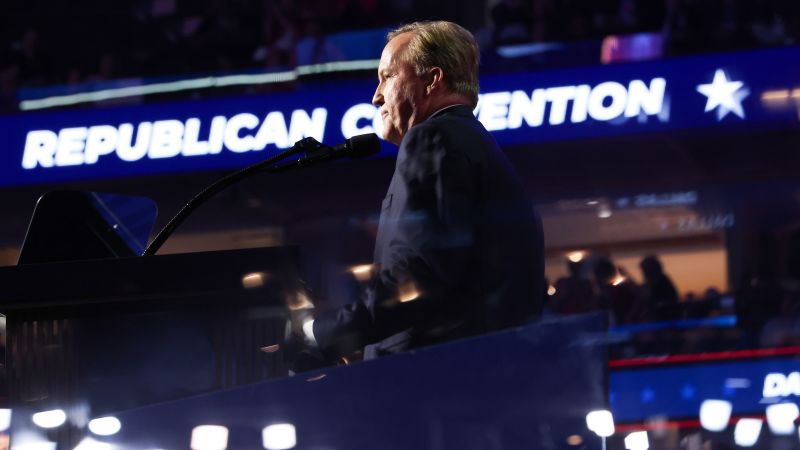
Activelifezero.com – The Republican Party’s September convention in Dallas was promoted as a major midterm showcase for President Donald Trump and the candidates aligned with him. Instead, the event appears to have produced little measurable benefit for the GOP, while polling since the gathering has generally moved in Democrats’ direction.
The two-day event, held September 9 and 10 and informally branded “Trump-a-palooza,” was unusual for a midterm election cycle. Rather than centering on a presidential nomination contest, it placed Trump at the heart of the party’s political message. Republicans did not publicly mount significant resistance to the plan, despite the risk of making a national campaign revolve around a president with historically weak approval ratings.
For a convention designed to generate momentum, the available evidence points to an underwhelming outcome. There was no obvious polling surge for Republican candidates, and several measures indicate that Democrats may have widened their advantage after the Dallas event.
Generic ballot numbers offer little comfort to Republicans
The clearest broad indicator is the generic congressional ballot, which asks voters whether they would prefer a Republican or Democrat for Congress without naming candidates. Such surveys are often used as an early gauge of the national environment before every race is fully defined.
Polling averages maintained by Nate Silver and FiftyPlusOne show Democrats gaining ground since September 9. In both cases, the Democratic edge expanded by at least two points. The movement is not enormous, and much of it remains within normal polling uncertainty, but it runs opposite to the boost Republicans had hoped the convention would create.
Individual surveys reinforce the conclusion that the event did not alter the political landscape in a meaningful way. Polls from CNN, NBC News and Fox News showed no change from their previous measurements. A New York Times-Siena College survey was the only high-quality poll to show a better generic-ballot result for Republicans after the convention, though its earlier comparison point dated to May.
That distinction matters. Political conventions are often judged not only by whether they immediately transform an election, but by whether they create a noticeable short-term improvement in party standing. The Dallas gathering appears to have delivered neither a clear Republican gain nor a reliable enthusiasm boost.
Voter intensity remains tilted toward Democrats
Republicans also entered the fall facing concerns about enthusiasm. A Marist poll found that 76% of Democrats cared a great deal about which party controls Congress, compared with 67% of Republicans. That gap does not by itself determine turnout, but it highlights a challenge for a party attempting to energize its coalition for midterm contests.
It is difficult to isolate the convention’s effect from every other force shaping public opinion. Poll changes can reflect economic concerns, campaign advertising, candidate news, events outside the campaign and normal statistical variation. Relatively few voters appear to have watched the convention outside the most politically engaged audience, despite Trump’s claims of exceptionally large television ratings.
As a result, the fairest reading may be that the event had limited influence. But a negligible impact is itself a disappointing result for an expensive, heavily promoted political production intended to improve the GOP’s standing.
Ken Paxton’s race underscores the problem
Texas Attorney General Ken Paxton seemed especially likely to benefit from the Dallas convention. He is running for the Senate in his home state, and the event devoted substantial attention to him and his campaign. Trump’s presence was supposed to help a candidate who has struggled to unite Republican voters in a state that has long favored the GOP.
Instead, Paxton was heard privately voicing concern about the aftermath while speaking with conservative donors and lobbyists.
“So to be honest with you, the numbers — when we did that convention — it dropped our numbers,” Paxton said. “Everybody’s numbers dropped. Right now, yeah, not good.”
Nick Maddux, a senior adviser to Paxton, dismissed the account as “manipulated nonsense” intended to “create a story that doesn’t exist.” He did not provide further detail on that assertion. Maddux also maintained that serious pollsters would say Paxton’s position had improved since early September.
Still, the publicly released Texas polling has offered little evidence of a convention-driven recovery. A ReconMR-Siena College poll conducted across the convention period and a Marist College poll conducted last week each placed Democratic state Rep. James Talarico ahead by 6 points. The former surveyed likely voters, while the latter measured registered voters.
Those were Talarico’s largest general-election leads of the campaign period to that point. Another survey from Texas Southern University showed a narrower race, with Talarico leading 47% to 46%.
Paxton’s personal ratings remain another obstacle. In the Siena survey, his favorable rating stood at 38%, while 55% viewed him unfavorably, leaving him 17 points below water. Marist found an even deeper deficit: 33% favorable and 54% unfavorable, a net rating of minus 21 points. The Texas Southern poll showed some improvement, but Paxton still held a double-digit negative net rating.
A difficult message for a party seeking momentum
Trump also complicated the intended show of support by spending considerable time criticizing Paxton’s appearance, clothing and manner of speaking. That approach may have drawn attention, but it did not obviously address the central challenge facing the Texas candidate: persuading skeptical voters, including Republicans, to see him favorably.
The convention’s broader lesson is less about one poll or one candidate than about political strategy. Major party events can generate headlines and reinforce support among committed activists, but they do not automatically expand a coalition or resolve weaknesses in candidate image and voter intensity.
Republicans still have time before Election Day to reshape the midterm environment, and polling snapshots are not final results. Yet Dallas was meant to be a moment of acceleration. So far, it has looked more like a missed opportunity—one that failed to produce the national bounce Republicans wanted and may have left their most prominent Texas candidate in an even more difficult position.
Related Reading
Frequently Asked Questions
What is It s official?
It s official is the main topic of this guide. The article explains the context, practical details, and next steps readers should understand.
Why does It s official matter?
It s official matters because readers are looking for a useful answer, not just a short summary. Good content should match search intent and help them decide what to do next.