Can aging be treated like a disease? Scientists are starting to find out

Daftar Isi
Scientists Explore Whether Aging Can Become a Medical Target
Activelifezero.com – For decades, medicine has largely addressed the illnesses that become more common with age: diabetes, heart disease, cancer and other chronic conditions. A growing area of research is asking a more fundamental question: could the biological processes of aging themselves eventually be measured and influenced before those diseases take hold?
The aim is not simply to add years to life. Researchers are focused on extending “health span,” meaning the portion of life spent in good health and with preserved function. If the biological changes linked to aging can be slowed or modified, scientists hope it may be possible to reduce the risk of several age-related diseases at the same time rather than treating each condition only after diagnosis.
“Aging has biology. This biology drives diseases,” Nir Barzilai, director of the institute for aging research at Albert Einstein College of Medicine in New York City, said.
Barzilai’s argument is that medicine may one day address shared processes that contribute to multiple illnesses. Instead of responding separately to diabetes, cardiovascular disease or cancer, clinicians could potentially intervene in biological pathways that make those conditions more likely as people grow older.
Promising Evidence, but No Human Proof Yet
The idea has gained momentum because laboratory studies have shown that aging-related biology can be altered in a range of organisms, including roundworms and mice. Researchers have tested medicines, exercise, calorie restriction and other approaches that can slow the buildup of cellular changes associated with aging. In some animal studies, those changes have been accompanied by longer lives.
That evidence is encouraging, but it does not establish that the same result can be achieved in people. Human aging is complex, and an intervention that affects a laboratory animal’s lifespan may not deliver the same benefits, safety profile or practical value in a clinical setting.
Daniel Belsky, an associate professor of epidemiology at Columbia University’s Mailman School of Public Health and the Robert N. Butler Columbia Aging Center, has emphasized that the central hypothesis still needs to be tested in humans.
“We don’t know yet whether we can really do this. But we do have an alignment of evidence to argue this is possible. And we now have a mobilization of resources to actually test it,” Belsky said.
The gap between animal experiments and human trials remains one of the field’s biggest challenges. Researchers have not yet produced clinical-trial evidence showing that altering the biology of aging can lengthen health span in people. Still, the tools and research infrastructure needed to investigate the question are developing quickly.
“For humans, we do not yet have clinical trial evidence that intervention on this biology to extend health span is possible,” Belsky said. “But — and this is where I think the excitement comes from — we are seeing the ground shift in advancing toward those human clinical trials.”
Why Biological Age Matters
A key part of the research involves looking beyond chronological age, or the number of birthdays a person has celebrated. Two people of the same age can have very different health profiles, disease risks and physical resilience. Scientists are therefore trying to identify biological measures that offer a clearer picture of how aging is progressing within the body.
One major area of study is epigenetics, which examines changes in gene regulation that do not alter the DNA sequence itself. Researchers can study chemical markers called methyl groups that attach to DNA. These markers may help reveal patterns associated with the passage of time and changes in the body’s biological state.
Belsky said that by examining methyl groups bonded to DNA, researchers “could track the passage of time in a human body.”
Such measurements are often described as biomarkers of aging. A biomarker is a measurable feature of the body that may provide information about a biological process. In longevity research, the challenge is not merely finding markers that change with age. Scientists must determine whether those markers can reliably indicate whether an intervention is improving a person’s future health prospects.
Searching for Signals That Respond to Treatment
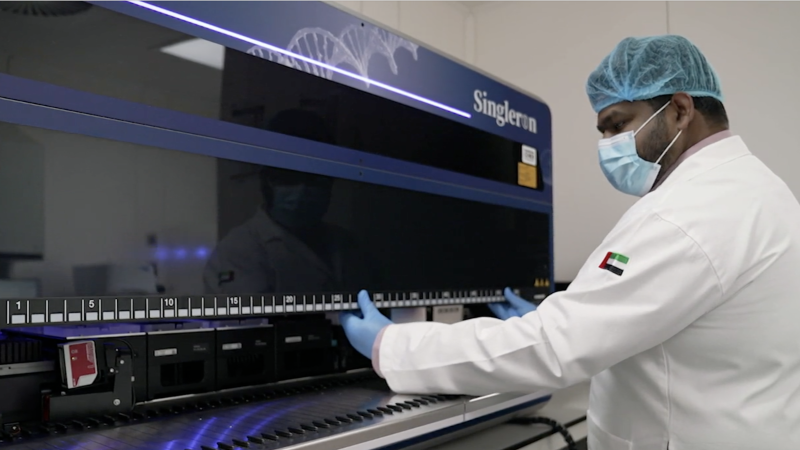
Belsky’s Finding Aging Biomarkers by Searching Existing Trials, known as the FAST project, is collecting multi-omic data. This approach brings together several layers of biological information rather than relying on a single test. The project includes data on proteins, metabolites and epigenetic markings in white blood cells.
The goal is to discover indicators that shift when people receive different interventions. Over time, these indicators could help researchers evaluate whether a treatment is affecting biology in a way that is relevant to aging. But an important link remains unproven: changing a biomarker does not automatically mean that a person will avoid disease or gain additional healthy years.
That uncertainty matters because the outcomes researchers care about most can take decades to observe. A trial examining whether an intervention begun at age 40 or 50 prevents later chronic illness might need to follow participants for 20 or 30 years. Long studies are expensive, demanding and difficult to design.
Researchers hope validated biomarkers could eventually serve as surrogate endpoints in clinical trials. In practical terms, a surrogate endpoint would be an earlier measurable signal that strongly predicts a meaningful long-term outcome, such as reduced disease risk or a longer period of healthy life. Before it can be used that way, however, it must be shown to predict those outcomes reliably.
Longevity Clinics Arrive Alongside the Research
Interest in the science has also helped fuel the emergence of longevity clinics. These programs typically combine conventional health assessments with a broader set of tests intended to provide a detailed view of an individual’s current health and risk factors.
Mayo Clinic opened its Healthy Longevity Clinic in 2023. Singapore’s National University Health System has created a comparable program that pairs detailed assessment with personalized lifestyle or medical interventions.
For patients, the appeal is understandable: earlier insight into health risks and a more individualized prevention plan. Yet the expanding availability of testing should not be mistaken for definitive proof that every biological-age measurement can forecast a person’s future or that every intervention promoted in the longevity space will extend health span.
The most immediate lessons remain familiar. Exercise, nutritious eating, avoiding tobacco, preventive care and managing established health conditions are already central to healthy aging. The newer scientific effort is attempting to determine whether medicine can add another layer: treatments aimed at the underlying biological processes that make age-related disease more likely.
That possibility remains a research question rather than an established medical outcome. But the push to develop better biomarkers and rigorously test interventions may eventually change how doctors think about aging—not as an unavoidable backdrop to disease, but as a biological process that could become increasingly measurable and, perhaps, medically responsive.
Related Reading
Frequently Asked Questions
What is Can aging be treated like a disease?
Can aging be treated like a disease is the main topic of this guide. The article explains the context, practical details, and next steps readers should understand.
Why does Can aging be treated like a disease matter?
Can aging be treated like a disease matters because readers are looking for a useful answer, not just a short summary. Good content should match search intent and help them decide what to do next.