A Texas woman is fighting to preserve land that was supposed to become a public park. Now it may be a data center instead

Daftar Isi
Texas Land Dispute Puts a Longstanding Park Promise at Risk
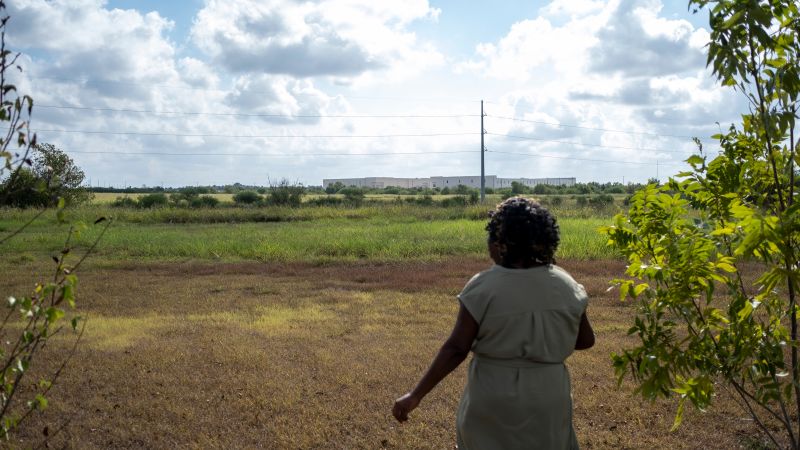
Activelifezero.com – A quiet Taylor, Texas, neighborhood is at the center of a legal and community fight over 87 acres that some residents believed would eventually become public parkland. Instead, the property about 25 miles outside Austin could be developed as a data center, raising concerns about the future of a family legacy and the effects of a major industrial project in a town of roughly 18,000 residents.
For Pamela Griffin, 58, the dispute is deeply personal. The retired learning center director grew up near the land and remembers being told that the descendants of Howard Bland Sr. hoped to one day make it a park for local children. Griffin now lives in the home built by her father, who raised six children there, and she has made protecting the neighborhood a central part of her retirement.
“My daddy passed this land down to us and he told us to guard this land,” she said. “He said this will always be a homestead.”
A deed clause at the heart of the case
The current conflict turns on a short provision in a 1999 deed. The 14-word sentence was meant to protect the property’s future use as a park, Griffin argues. But the wording was not carried into later transfers of ownership, creating a dispute over whether it still applies and whether the land can be used for a data center.
A Texas appeals court is considering Griffin’s effort to halt the project. Texas Attorney General Ken Paxton has also opened an investigation into whether the original deed language was legally altered or removed, and whether the restriction remains enforceable today.
The case highlights how seemingly small details in property records can shape the future of a community. A sentence omitted from a later deed can become consequential when land values rise, ownership changes, and developers propose projects with vastly different effects from the use residents expected.
From cotton fields to a multigenerational neighborhood
Griffin’s family history is intertwined with Taylor’s past. During the 1950s and early 1960s, her grandmother worked as a maid while also chopping and picking cotton in a city known for cotton farming and cattle ranching.
After the Fair Housing Act became law, barring discrimination in housing sales, rentals, and financing based on race, color, religion, or nationality, Griffin’s grandmother bought property on Taylor’s south side. As a Black mother, she purchased parcels for each of her eight children with the hope that the family would retain homes for generations.
That hope endured. Griffin left Taylor after high school but returned in 2019 after both of her parents died. Her father’s house remains filled with family photographs, keepsakes, and other reminders of a life built in the neighborhood.
Returning home also meant taking on what Griffin sees as a responsibility to protect the place her family worked to secure. The question of what happens on the land beside the neighborhood has therefore become inseparable from the larger history of who has been able to own and preserve land in Texas.
Childhood memories and the need for recreation space
As a child in the 1970s, Griffin and other neighborhood children had limited options for recreation. Their parents did not allow them to play at nearby Fannie Robinson Park after some children developed rashes or became ill.
The park had previously been a city dump. In 1955, it became Taylor’s first park serving Black residents after a Black physician negotiated with city and school officials to establish a place for children of color to play.
An empty lot behind Griffin’s family home became an informal alternative. Children chased baseballs there, camped with cardboard boxes and bedsheets, and looked up at the bright Texas sky. What appeared to be an ordinary vacant space became a setting for games, imagination, and friendship.
The lot bordered land owned by the Bland family. Howard Bland Sr. had been a prominent Taylor businessman, community leader, and state lawmaker in the late 19th century. Griffin said children regularly entered the property to recover baseballs, and the family recognized that the neighborhood needed a proper public park.
“The Blands understood the community in a way others did not and “was willing to help when nobody else was not,” Griffin said.
For Griffin, the park promise was not an abstract planning idea. It was tied to memories of neighbors, family, and a childhood need for safe outdoor space.
Data-center worries spread beyond the property line
Residents are also weighing the broader consequences of a data center arriving near their homes. Communities encountering such proposals often focus on possible noise, water demand, and pressure on electrical supplies. Those questions have become part of the conversation in Taylor as Griffin organizes meetings, attends public events, and speaks publicly about the project.
Data centers support digital services by housing equipment that processes and stores information, but their development can bring large infrastructure demands. For nearby residents, the key issues are often practical: how a facility may affect the surrounding environment, local utilities, and the character of an established neighborhood.
Griffin’s campaign has transformed a period she expected to devote to a slower pace of life. Instead, she is pursuing a court challenge while trying to preserve what she believes was promised to the community decades ago.
The outcome could determine more than the use of a single parcel. It may clarify the force of past deed restrictions, test the durability of commitments made across generations, and decide whether land once imagined as a shared park becomes part of Texas’ expanding data-center landscape.
Related Reading
Frequently Asked Questions
What is A Texas woman is fighting to preserve?
A Texas woman is fighting to preserve is the main topic of this guide. The article explains the context, practical details, and next steps readers should understand.
Why does A Texas woman is fighting to preserve matter?
A Texas woman is fighting to preserve matters because readers are looking for a useful answer, not just a short summary. Good content should match search intent and help them decide what to do next.