What college students really need in their first aid kits

Daftar Isi
Stocking a First Aid Kit for College: What Actually Matters When the Health Center Is Closed
Activelifezero.com – It is two in the morning, the campus clinic has locked its doors hours ago, and the nearest round-the-clock pharmacy sits on the other side of town. A student is doubled over with a splitting headache, retching into a bathroom sink, or gasping through a chest so congested that breathing feels like pulling through wet sand. Calling an emergency room feels like overkill; urgent care would cost a small fortune. What fills the gap between “I need relief tonight” and “I need to see a doctor tomorrow” is a well-organized first aid kit kept within arm’s reach of the dorm room.
The guidance below draws on urgent-care experience inside a university health center and on the practical reality of parenting college-age children. The goal is not to replicate a pharmacy shelf but to assemble a compact, accessible collection of tools, over-the-counter medications, and emergency supplies that cover the most common late-night scenarios without requiring a trip across campus.
The Single Most Critical Item: Naloxone Spray
Before any thermometer or ibuprofen bottle, the kit should contain a naloxone nasal spray — Narcan OTC, now available at pharmacies without a prescription. The U.S. Centers for Disease Control and Prevention identifies accidental poisoning, including drug overdose, as the leading cause of death among young adults in the United States. On college campuses, the specific danger is fentanyl laced into counterfeit pills: fake Adderall (amphetamine/dextroamphetamine), counterfeit Xanax (alprazolam), or imitation OxyContin and Percocet (oxycodone) products that students take believing they are grabbing a study aid or a pain reliever.
Fentanyl can suppress breathing within minutes. If a roommate goes unresponsive, a single spray of naloxone into the nose can restart respiration while help is en route. Two operational rules matter: the spray contains exactly one dose, so never waste a test puff before administering; and always dial 911 first, then stay beside the person until paramedics arrive. This is not a convenience item. It is a lifesaver.
Diagnostic Tools That Change the Conversation
Campus health centers see hundreds of patients a day. Walking in and telling a triage nurse,
“I felt feverish.”
gives the nurse almost nothing to work with. Walking in and saying, “My temperature read 102.7 degrees Fahrenheit at 1 a.m.,” lets the nurse triage urgency in seconds. An accurate digital thermometer converts a vague complaint into actionable data.
A pulse oximeter — the small clip-on device that reads blood-oxygen saturation — serves a parallel function for respiratory complaints. If a student is coughing hard or reporting shortness of breath, a reading below 94 percent signals that the situation warrants immediate medical attention rather than another night of OTC cough syrup. The more precise the data a student can hand to a clinician, the faster and safer the care becomes.
Pain Relief: Knowing Which Molecule Does What
Students surveyed across the country consistently name pain relievers as the most-reached-for item in their kits. The three over-the-counter options differ meaningfully, and a student should understand the distinction before reaching for a bottle:
Ibuprofen (Advil, Motrin) is a nonsteroidal anti-inflammatory drug. It reduces swelling, lowers fever, and eases pain including menstrual cramping. It is the workhorse for most aches and is recommended as the primary full-size bottle in the kit.
Acetaminophen (Tylenol) handles headaches, sore throats, and fever effectively and is gentler on the stomach than ibuprofen. Its principal caution is hepatic: regular use alongside heavy alcohol intake can irritate the liver. A smaller bottle of acetaminophen rounds out the kit for situations where the stomach is already upset.
Aspirin (Bayer, Excedrin) is generally not recommended for teenagers and young adults. Physicians may, however, prescribe or recommend aspirin/caffeine combination products specifically for migraine, so a student with a diagnosed migraine pattern should follow their doctor’s individual guidance rather than self-selecting aspirin from a shared family supply.
Rehydration: The Step Most Kits Forget
A pounding headache caused by alcohol or a stomach virus will not resolve with a pain reliever alone. The underlying problem is dehydration, and the body needs electrolytes as much as it needs water. Single-serving electrolyte powder packets — the kind sold in sports-drink aisles — take up negligible space in a kit and convert a glass of plain water into an effective rehydration solution. Keeping a generous supply means the difference between a miserable morning and a functional one.
Heartburn and the Antacid Question
College life is a cocktail of caffeine, stress, late-night pizza, chocolate, alcohol, and nicotine — a combination that reliably triggers acid reflux. Antacids rank as the second most-used kit item among students. A simple, fast-acting antacid such as TUMS or its generic equivalent, available in chewable or gummy forms, addresses occasional heartburn within minutes. If a student finds themselves reaching for long-acting acid-blocking medications (H2 blockers or proton-pump inhibitors) on a regular schedule, that pattern warrants a physician visit to investigate the underlying cause rather than continued self-treatment.
Avoiding the Combination-Product Trap
It is tempting to grab one multi-symptom cold pill and call the night handled. Most combination cold products bundle a fever/pain reliever (acetaminophen), a decongestant (phenylephrine), and a cough suppressant (dextromethorphan) into a single tablet. Taking one of those while also popping a separate acetaminophen for a headache means doubling up on the same active ingredient — a common and avoidable error. Treating each symptom with its own targeted medication, while checking labels for overlapping ingredients, reduces the risk of accidental overdose and drug interactions.
Placement and Accessibility
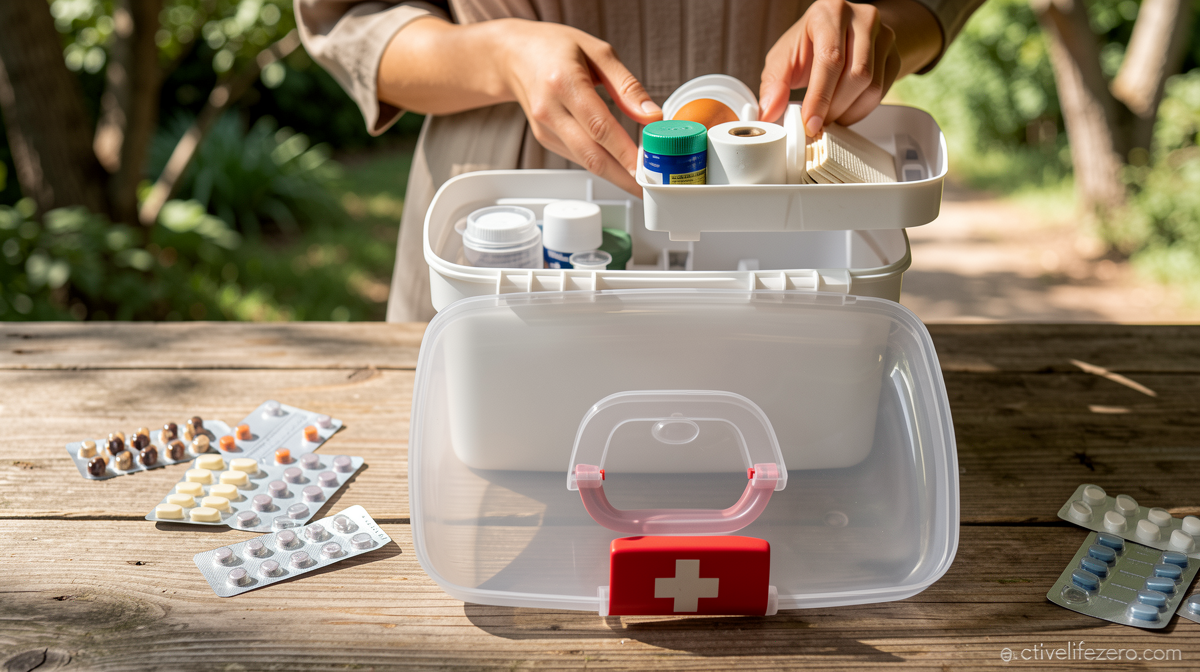
A first aid kit that lives in a locked closet three floors away is functionally nonexistent at 2 a.m. The kit belongs in the dorm room or at least in the hallway closet of the student’s own floor: thermometer, oximeter, naloxone spray, ibuprofen, acetaminophen, electrolyte packets, antacid, adhesive bandages, and a basic wound-cleaning supply. Review the contents each semester. Replace expired medications. Confirm the naloxone spray has not passed its date. The kit’s value is proportional to how quickly a student can open it, find what they need, and act.
Related Reading
Frequently Asked Questions
What is What college students really need in their?
What college students really need in their is the main topic of this guide. The article explains the context, practical details, and next steps readers should understand.
Why does What college students really need in their matter?
What college students really need in their matters because readers are looking for a useful answer, not just a short summary. Good content should match search intent and help them decide what to do next.