Tesla keeps hyping robotaxis as its future. But it’s trailing rival Waymo in a field yet to prove profitable

Tesla’s Robotaxi Hype Lags Waymo’s Real-World Lead
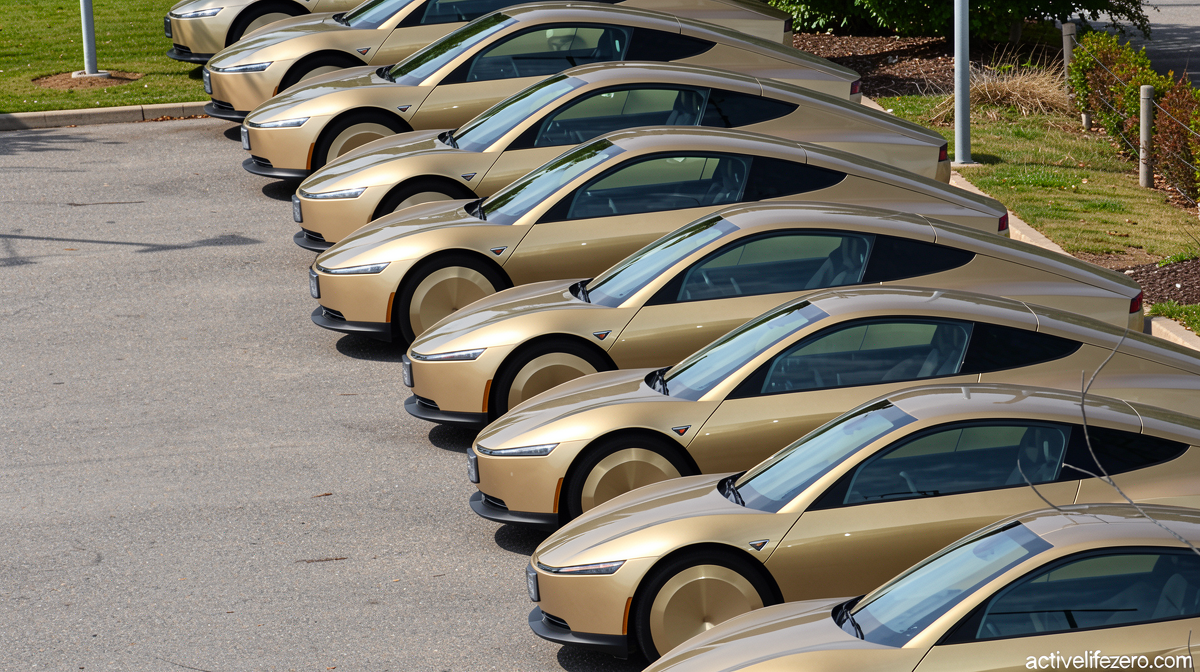
Activelifezero.com – Tesla keeps hyping robotaxis as its next defining product, yet the company’s actual driverless footprint remains a fraction of what its closest rival already delivers. No autonomous-ride operator has posted a profitable quarter to date, a fact that casts a long shadow over the Thursday evening event where Tesla plans to unveil its long-teased Cybercab service. Ahead of the presentation the company dropped a 51-second clip on X showing the vehicle threading through Austin traffic while riders summon trips via a smartphone app. Narration was sparse. The public first saw the Cybercab’s exterior at a marquee Hollywood showcase roughly two years earlier, and prototype units have since rolled through streets in several U.S. cities.
What the teaser sidesteps entirely is the question that determines whether the entire venture can sustain itself: can a fleet of driverless vehicles generate more revenue than it burns through in operations? Tesla declined to answer that question before the event.
What Tesla Has Actually Deployed So Far
The company’s live robotaxi pilot, built around Model Y SUVs, has been running since June 2025. Early sorties placed a Tesla employee behind the wheel as a safety monitor. In recent weeks some vehicles have completed trips with no human aboard. Even so, unsupervised rides remain restricted to six cities across Texas and Florida—a narrow corridor compared with the sweeping national rollout its chief executive has sketched for investors.
Elon Musk told shareholders in January that Tesla will eventually “make several times more Cybercabs per year than all our other vehicles combined.” A year earlier he projected the service would reach half the American population by 2025. Tesla stock (TSLA) has climbed just seven percent over the trailing six months and closed Wednesday more than twenty percent below its year-ago level, a signal that the market has grown skeptical of those timelines.
“Investing is about betting on the future,” Bryant Walker Smith, an autonomous-vehicles scholar at Stanford Law School’s Center for Internet and Society, observed. “Tesla is very good at selling that future. But at least with respect to automated driving everywhere and all the time, the company has been far less successful at actually delivering it.”
Waymo’s Operational Gap Is Quantifiable and Widening
The nearest competitor to Tesla’s driverless ambitions is Waymo, Alphabet’s robotaxi division. In March the company disclosed that its fleet was completing up to 500,000 paid, fully driverless rides per week—a figure that had doubled over the preceding twelve months. On Tuesday it added Denver, San Diego, and Tampa to its network, bringing the total to fourteen cities offering unsupervised service. Since its 2018 launch, Waymo has logged 220 million miles of driverless customer rides.
Tesla, by contrast, reported in July that its robotaxi fleet had accumulated 380,000 miles of unsupervised operation. That total represents less than 0.2 percent of Waymo’s stated mileage. The disparity reflects years of head start, broader geographic coverage, and a materially larger installed fleet rather than any single engineering shortcut.
The Unit-Economics Wall No Operator Has Cleared
Even if Tesla eventually scales Cybercab service nationwide, the economics remain unsettled. The obstacle, Smith argued, is less about sensor fusion or path-planning algorithms and more about unit economics.
“If you set aside development and hardware costs, you have the ongoing operational costs,” he said. “How do you compete with a Uber driver who might be making under minimum wage to provide and maintain their own car, to clean it and do all the other services that Waymo and Tesla may ultimately have to pay real people real money to do?”
That question strikes at the structural margin problem. A human-driven ride-hail vehicle is maintained, cleaned, and fueled by a single individual whose labor cost is embedded in the fare. A robotaxi operator must contract or employ separate teams for every one of those tasks, at scale, in every city it serves. The compression is architectural, not cyclical.
Consumer behavior compounds the difficulty. Convincing Americans to abandon personal vehicle ownership in favor of on-demand rides—whether human-driven or autonomous—remains an open question, Smith noted. And for the subset of riders who already prefer ride-hailing, the market is saturated.
“Capturing market share in an already-saturated market for ride-hail” will be a challenge, Anthony Townsend, a senior research associate at Cornell Tech and author of Ghost Road: Beyond the Driverless Car, cautioned.
Financial Transparency Remains Thin
Neither Waymo nor Tesla has published standalone financial results for its robotaxi operations. Waymo has described a “path to profitability” without disclosing the underlying unit economics, and Tesla has not broken out Cybercab or robotaxi revenue in its quarterly filings. Until both operators disclose per-ride margins, fleet utilization rates, and maintenance costs, investors and analysts are left to extrapolate from aggregate figures.
Tesla keeps hyping robotaxis as its core growth narrative, and the Thursday event will almost certainly reinforce that story. But the scoreboard—measured in miles driven, rides completed, and cities served—tells a different story for now, and the gap between Waymo’s operational reality and Tesla’s aspirational timelines continues to widen.
Frequently Asked Questions
When does Tesla plan to launch its Cybercab robotaxi service? Tesla has scheduled a Thursday evening event to unveil the Cybercab. A limited Model Y-based pilot has been operating since June 2025 in six cities across Texas and Florida, with some recent trips completed without a human aboard.
How does Waymo’s current scale compare to Tesla’s? As of March, Waymo reported up to 500,000 paid, fully driverless rides per week across fourteen cities and 220 million cumulative driverless miles since 2018. Tesla’s July figure stood at 380,000 unsupervised miles—less than 0.2 percent of Waymo’s total.
Has any robotaxi operator turned a profit? No. Neither Waymo nor Tesla has disclosed standalone profitable results for its driverless ride operations, and industry analysts point to structural unit-economics challenges as the primary barrier.
What cities currently offer unsupervised robotaxi rides? Waymo operates in fourteen cities, including recent additions of Denver, San Diego, and Tampa. Tesla’s unsupervised service is confined to six cities in Texas and Florida.