Digital reconstruction reveals the face of ‘Little Foot,’ a nearly 4 million-year-old human ancestor

Digital Reconstruction Reveals the Face of Little Foot
Activelifezero.com – For decades the most complete early hominin skeleton ever pulled from South African earth sat locked in a museum vault, its skull so compressed by millennia of sediment that no conservator could restore it by hand. Now a team of paleoanthropologists and imaging scientists has used digital reconstruction to reveal the face hidden inside that crushed cranium — and the virtual visage upends long-held assumptions about how much variation existed among early human ancestors across Africa.
The specimen, nicknamed “Little Foot,” is an individual of the genus Australopithecus dating to approximately 3.67 million years ago. These bipedal, tree-climbing hominins occupied a transitional ecological niche between ape-like locomotion and the fully upright posture of later Homo species. They shared their landscape with sabre-toothed cats and other predators, relying on arboreal escape as a primary survival tactic.
Twenty Years of Excavation and a Near-Complete Skeleton
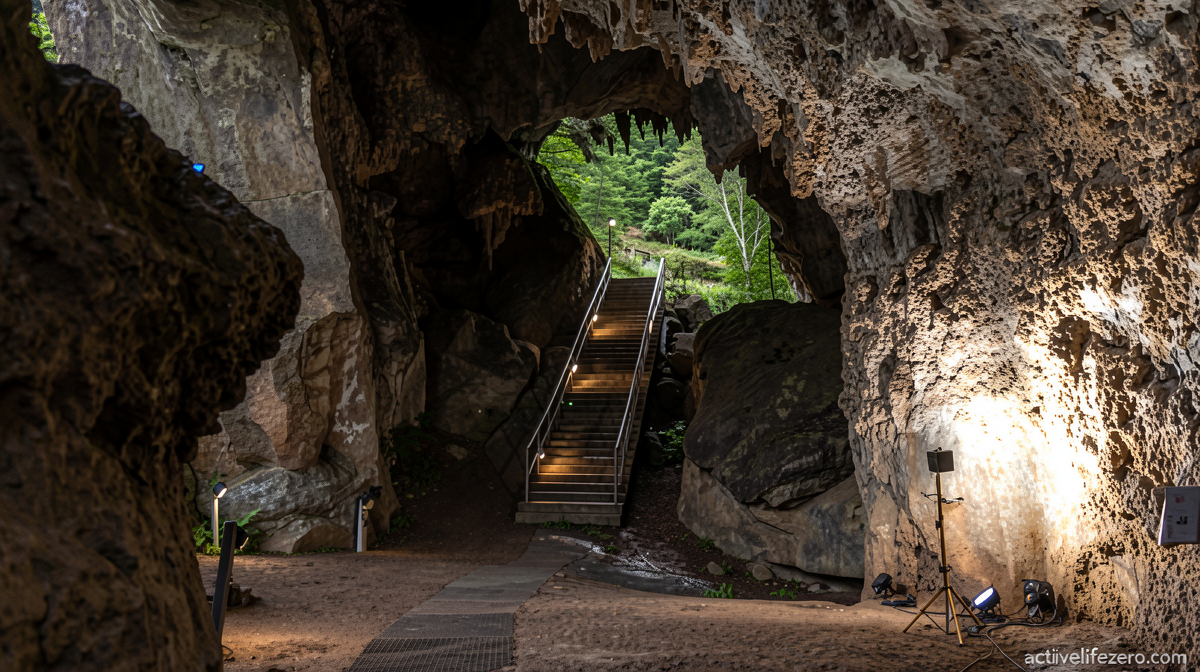
The story begins in the University of the Witwatersrand’s museum collection in Johannesburg, where paleoanthropologist Ronald Clarke noticed four small bones that matched no catalogued specimen. That anomaly pulled him into the Sterkfontein Caves, northwest of Johannesburg, where during the 1990s he uncovered what turned out to be an almost entirely articulated skeleton. Freeing the fossil from its matrix of compacted cave sediment demanded twenty years of painstaking, hand-tool excavation.
The result is extraordinary: at roughly 90 percent intact, Little Foot remains the most complete Australopithecus skeleton known to science. Dr. Amélie Beaudet, an honorary researcher in the School of Geography, Archaeology and Environmental Studies at the University of the Witwatersrand, has devoted years to studying the fossil, which was recovered within the Cradle of Humankind World Heritage Site — a UNESCO-designated region in Gauteng province that has produced some of the oldest evidence of human evolution in southern Africa.
Why Only a Computer Could Undo the Damage
Despite the skeleton’s remarkable completeness, the skull posed an intractable problem. Millions of years of shifting and compaction had progressively crushed the cranial bones, warping them beyond recognition. Physical reconstruction — the standard approach for many other fossils — was simply not feasible; no conservator could reassemble the warped elements into a coherent three-dimensional structure without extensive guesswork.
Beaudet and her collaborators therefore turned to virtual methods. The skull left South Africa for the first time in its history and was transported to England, where it underwent high-resolution scanning at the Diamond Light Source synchrotron facility on the Harwell Science and Innovation Campus in Oxfordshire. The machine bathed the specimen in intense, nondestructive X-rays, generating more than 9,000 high-resolution cross-sectional images and terabytes of volumetric data.
Those images were then processed on a supercomputer at the University of Cambridge, which rendered every facial bone in three dimensions. Working entirely in software, the team realigned each element to its correct anatomical position, effectively reversing millions of years of sedimentary compression. For the first time, the upper face — including the orbital region where Little Foot’s eyes would have sat — became visible and measurable.
What the Virtual Face Tells Us
The reconstructed visage was compared against three other Australopithecus specimens (one from South Africa, two from Ethiopia) as well as modern great apes. The findings were unexpected. Little Foot’s facial dimensions fell between those of a gorilla and an orangutan, while the overall cranial shape tracked more closely with orangutans and bonobos. More strikingly, the size of the face, the geometry of the eye sockets, and other measurements aligned more tightly with East African Australopithecus fossils than with other South African specimens.
“All this shows the complexity of the patterns of variation in the genus Australopithecus and the latter’s proximity to the great apes,” said Dr. Zeray Alemseged, Donald N. Pritzker professor of organismal biology and anatomy at the University of Chicago, in an email. “Not surprising as they share a common ancestor.”
Alemseged was not part of the research team. His observation underscores a broader implication: Australopithecus was not a single, uniform lineage but a mosaic of regional forms, each shaped by local ecological pressures while retaining deep anatomical ties to the great apes from which the genus diverged.
FAQ
Where was Little Foot discovered? The skeleton was excavated from the Sterkfontein Caves, located northwest of Johannesburg, South Africa, within the Cradle of Humankind World Heritage Site.
How old is the Little Foot fossil? Little Foot dates to approximately 3.67 million years ago, placing it firmly in the Pliocene epoch.
Why couldn’t researchers physically repair the skull? Millions of years of sediment compaction had warped the cranial bones beyond the point where manual reassembly was possible. Only nondestructive digital imaging and virtual realignment could restore the original geometry.
What technology was used to reconstruct the face? The skull was scanned at the Diamond Light Source synchrotron in Oxfordshire, producing over 9,000 cross-sectional images. A supercomputer at the University of Cambridge then rendered and virtually realigned each bone in three dimensions.
What does the reconstructed face imply about Australopithecus diversity? The facial measurements align more closely with East African specimens than with other South African ones, suggesting the genus comprised multiple regional lineages rather than a single uniform population.