UEFA set to drop boycott threat, handing FIFA some breathing room, AP says

Daftar Isi
UEFA’s FIFA boycott threat dissolves ahead of Poland tournament
Activelifezero.com – The six European squads set to compete at next week’s Women’s Under-20 World Cup in Poland will not be forced to withdraw after all. UEFA, the continental governing body for European football, is on the verge of formally rescinding its decision to boycott upcoming FIFA-sanctioned competitions. A person familiar with internal deliberations confirmed to the Associated Press on Wednesday that UEFA’s member associations are scheduled to convene Thursday to vote the boycott measure out of existence, effectively ending a months-long standoff that had cast a shadow over the sport’s global governance structure.
The development arrives at a moment of acute practical urgency. Poland’s tournament, which was set to open within days, faced the prospect of losing every European participant — including the host nation’s own team — had the boycott remained in force. That scenario would have gutted the competition’s competitive integrity and sent a seismic shock through women’s football at the youth level. With the threat now receding, organizers can proceed under the original schedule without restructuring the draw or filling vacancies from other confederations.
How the feud ignited
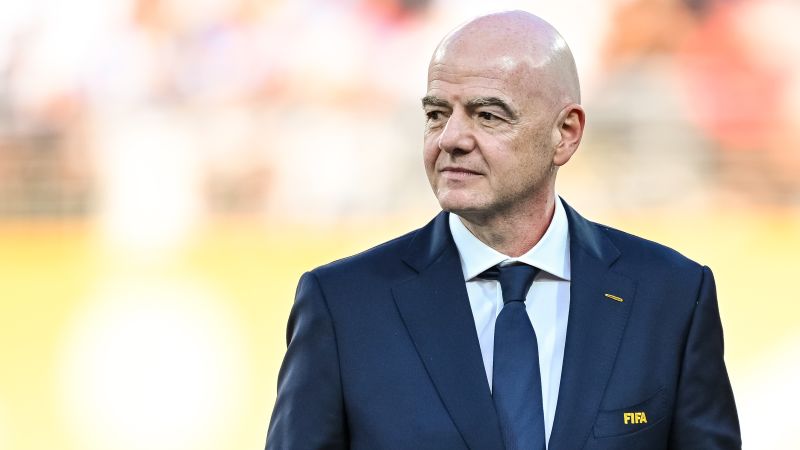
The rupture between Europe’s football authority and the world body traces back to a leaked proposal known internally as the FIFA Forward Enterprise, or FFE. The plan would have carved out a slice of commercial and operational rights attached to the World Cup and sold them to outside investors — a move that struck at the heart of how the tournament’s revenue is governed. When details surfaced, UEFA moved quickly and publicly to condemn both the scheme and the leadership of FIFA president Gianni Infantino, whose position had already been under sustained pressure from multiple quarters.
In July, UEFA’s member associations cast votes in favor of boycotting future FIFA tournaments. The organization then hardened that posture earlier in August, reaffirming the boycott even after FIFA announced it had scrapped the FFE proposal and issued an apology for what it characterized as “mistakes.” The doubling-down signaled that Europe’s confederation wanted more than a retraction; it demanded structural guarantees that no successor initiative would replicate the original plan’s logic.
The thaw
Behind the scenes, however, sustained dialogue between the two bodies produced a shift. UEFA officials reportedly received assurances that a project of the FFE’s nature will never be revisited. Those assurances appear to have been sufficient to move the continental body back toward normalcy. The Thursday gathering of member associations is expected to formalize the reversal, closing a chapter that had consumed considerable institutional energy on both sides of the Atlantic divide.
For Infantino, the reprieve is significant. His tenure as FIFA president has been tested repeatedly, and the prospect of Europe’s largest and most influential confederation sitting out its competitions represented perhaps the single most destabilizing challenge to his authority in recent memory. Removing that threat grants him operational breathing room — time to consolidate internal support, manage the calendar, and navigate the next electoral cycle without the constant overhang of a continental walkout.
The road to next year’s election
Yet the reprieve does not erase the underlying contest. UEFA president Aleksander Čeferin recently told The Rest is Politics podcast that he expects Infantino either to step down voluntarily or to face a formal challenge at next year’s presidential election.
“He expects Infantino to resign or at least face a challenge in next year’s presidential election,” Čeferin indicated in the interview.
The mechanics of that contest are now taking shape. Any candidate wishing to contest the presidency must lodge their bid by November 18. As of this writing, no challenger has publicly declared. What is clear, however, is that the election will reduce to an arithmetic exercise across FIFA’s 211 national associations: which blocs will back the incumbent, and which will coalesce around an alternative? Europe’s 55 member federations, aligned under UEFA’s institutional weight, will constitute the single largest voting bloc. Their posture — whether supportive, neutral, or oppositional — will likely determine the outcome before any other regional calculation is complete.
The broader implication for world football governance is that the near-crisis of the past two months has exposed how thin the institutional membrane remains between the continental confederations and the global body. A single leaked commercial proposal was sufficient to trigger a boycott vote by the confederation controlling the sport’s wealthiest leagues and most populous fan base. The fact that the episode resolved through back-channel reassurance rather than through a formal governance mechanism — a binding arbitration, a constitutional amendment, or a revenue-sharing treaty — suggests that the structural tensions underlying the dispute have not been addressed. They have merely been deferred.
For now, Poland’s tournament proceeds. The six European teams take the field as scheduled. Infantino retains his office. And the question of who, if anyone, will stand against him in next year’s election remains open — a question that will be answered not in boardrooms but in the voting halls of two hundred and eleven national associations, each weighing loyalty, ambition, and the simple arithmetic of power.
Related Reading
Frequently Asked Questions
What is UEFA set to drop boycott threat?
UEFA set to drop boycott threat is the main topic of this guide. The article explains the context, practical details, and next steps readers should understand.
Why does UEFA set to drop boycott threat matter?
UEFA set to drop boycott threat matters because readers are looking for a useful answer, not just a short summary. Good content should match search intent and help them decide what to do next.