Tropical Storm Moke forms in the Pacific, set to impact storm-weary Hawaii

Daftar Isi
Hawaii Faces a Second Tropical Blow Within Days of Hurricane Lala’s Devastation
Activelifezero.com – Less than seven days after Hurricane Lala carved through the Hawaiian islands with catastrophic force, the state now confronts Tropical Storm Moke — a system that, while projected to be weaker in wind, carries a rainfall signature that could compound already-catastrophic flooding and mudslide damage across the Big Island. The storm formed Friday afternoon roughly 650 miles southeast of the eastern coastline of Hawaiʻi Island, the National Hurricane Center confirmed, and forecasters expect it to hold tropical-storm strength while steering on a path reminiscent of Lala’s.
Track Uncertainty and the Strength Question
The critical variable in Moke’s forecast is its ultimate intensity. Models have yet to converge on how powerful the system will become, and that answer will dictate its closest approach. A stronger Moke would bend northward, drawing its center nearer to the islands; a weaker version would remain farther offshore. Current guidance places the storm’s center approximately 180 miles south of the Big Island at its closest point on Sunday — a considerably wider margin than Lala’s eyewall, which brushed the southern coast with its center only about 30 miles out. That distance, however, remains fluid and could tighten or widen over the coming days as the system organizes further. Confidence in both track and intensity is expected to sharpen within the next 24 to 48 hours.
The Rainfall Threat: Where Lala Already Broke the Ground
Even though Moke will likely stay farther from shore than Lala did, its precipitation load poses a danger of equal or greater consequence. The same slopes and valleys that absorbed more than three and a half feet of rain during last weekend’s hurricane are now saturated, compacted, and littered with debris. The hurricane center has warned that far less rainfall will be needed to trigger “life-threatening flooding and mudslides” under these conditions.
Projected totals for the Big Island range from five to ten inches, with central and eastern slopes facing up to fifteen inches. Maui and the remaining islands carry lower confidence but generally lighter accumulations of one to four inches, with isolated pockets reaching five inches. Rainfall is expected to reach the Big Island by late Saturday night or early Sunday local time, then propagate across the remaining islands from Sunday night into Monday.
Recovery Still Fragile: What Lala Left Behind
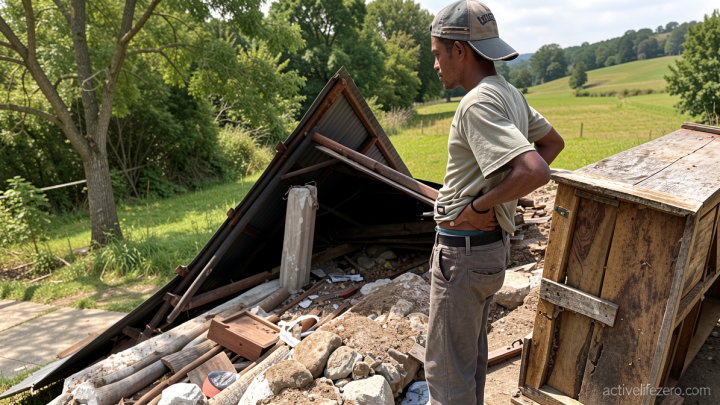
The state entered this new storm event with infrastructure shattered and communities still in the earliest stages of rebuilding. Governor Josh Green told reporters Thursday that more than 100 homes were destroyed by Lala on the Big Island. In Naʻalehu, a community in the island’s southern sector, mud, water, rock, and debris obliterated large swaths of residential areas, burying some structures under up to ten feet of sediment. Thousands of residents remain without electricity as crews work through downed trees and snapped utility poles. Roads washed away by floodwater are only now beginning reconstruction.
Human losses continue to be tallied. The Hawaii Police Department confirmed the death of a 93-year-old woman attributed to “storm-related injuries” on the Big Island last week. A separate investigation is underway into the death of an unidentified man in his sixties, which authorities believe may also be storm-related.
In a grim reminder of the hurricane’s reach, a recovery team is working to locate and secure human remains displaced from cemeteries inundated during Lala. Major Gen. Stephen Logan, adjutant general of the State of Hawaii Department of Defense, said at Thursday’s news conference that the team had recovered more than 60 remains as of that day.
Preparedness Measures and Official Guidance
State officials are pre-positioning supplies and reserving hotel rooms to shelter those who may be displaced by renewed flooding, landslides, or extended power outages. Water levels at Wahiawa Dam, which surged more than 20 feet during Lala, are under continuous monitoring.
Hawaiʻi Volcanoes National Park announced Thursday that it will close at 5 p.m. Friday ahead of the storm. The park remains without power, internet, or telephone service in the aftermath of Lala, and many staff members are still recovering, the announcement noted.
Officials are urging residents in flood-prone and slope-vulnerable zones to act before the rain arrives, reasoning that evacuation will become exponentially harder once winds and downpours begin.
“If you can leave a flood-prone area early, stay with friends or family, think about that now,” National Weather Service meteorologist John Bravender said. “So you can get ready for that before the rain starts this weekend.”
The convergence of a saturated landscape, a weakened storm track that still delivers heavy precipitation, and a population still coping with infrastructure collapse makes this the most consequential weather event for Hawaii since Lala itself. Residents who survived last week’s catastrophe now face the prospect of a second, slower-moving deluge aimed at the same vulnerable terrain.
Related Reading
Frequently Asked Questions
What is Tropical Storm Moke forms in the Pacific?
Tropical Storm Moke forms in the Pacific is the main topic of this guide. The article explains the context, practical details, and next steps readers should understand.
Why does Tropical Storm Moke forms in the Pacific matter?
Tropical Storm Moke forms in the Pacific matters because readers are looking for a useful answer, not just a short summary. Good content should match search intent and help them decide what to do next.