Hong Kong’s Tiananmen vigil fell dark years ago. Now its organizers have been convicted

Daftar Isi
Conviction Lands on the Last Organizers of Hong Kong’s Tiananmen Candlelight Vigil
Activelifezero.com – A Hong Kong court has delivered guilty verdicts against two of the principal figures who planned and ran the city’s annual candlelight remembrance for the 1989 Tiananmen Square crackdown — effectively closing the legal chapter on what was, until recently, the sole large-scale public memorial for that event held on Chinese territory. The convictions, handed down at West Kowloon Court on Friday, carry a maximum penalty of ten years’ imprisonment under the national security statute Beijing imposed on the city in 2020.
The two found guilty of inciting subversion are Chow Hang-tung, a young human rights lawyer who chose to represent herself in court, and Lee Cheuk-yan, a former opposition legislator. A third defendant, veteran pro-democracy lawmaker Albert Ho, had already entered a guilty plea earlier in the proceedings and awaits sentencing at a later date. All three served as leading officers of the Hong Kong Alliance in Support of Patriotic Democratic Movements of China, the organization that coordinated the yearly vigil from its inception through 2019.
A Tradition That Outlasted the Handover
On June 4, 1989, Chinese military units moved tanks into Beijing’s Tiananmen Square and used force to disperse student-led demonstrations demanding political reform. No official death toll has ever been published by the Chinese government; independent estimates place fatalities anywhere from several hundred to several thousand, with far more wounded. Within mainland China the episode remains heavily censored, and public discussion is effectively prohibited.
In Hong Kong, however, a tradition took root almost immediately. Every year on the anniversary date, mourners gathered in Victoria Park in the Causeway Bay district, filling the space of multiple football pitches with the glow of candles. The vigil grew into one of the city’s most recognizable annual observances, drawing tens of thousands who used the occasion to call for full democratic governance in Hong Kong and an end to single-party rule across China. The practice survived the 1997 handover from Britain to China and continued alongside a political framework that permitted pro-democracy candidates to contest legislative seats.
That framework, and the vigil itself, were dismantled in the aftermath of the massive and frequently violent pro-democracy protests of 2019. A package of new national security offenses was introduced, and the annual candlelight gathering was effectively silenced. Its disappearance stands as one of the most conspicuous symbols of how quickly Hong Kong’s once-loud public sphere was narrowed.
The Trial and the Charges
Prosecutors contended that the Alliance, through its public statements and continued advocacy after the national security law took effect, had incited subversion by calling for the end of what they described as “one-party dictatorship.” The state’s case was that such calls constituted an unlawful attempt to overthrow China’s fundamental political system and its central governing bodies. Prosecutors further argued that the Alliance organized a series of events — including the vigil itself — designed to cultivate public hostility toward Beijing.
The defense rejected the characterization. They maintained that the Alliance’s campaign was directed toward advancing democratic participation, not toward toppling the Chinese Communist Party, and that advocating for political reform does not equate to subversion under the statute.
Reactions and the Broader Political Climate
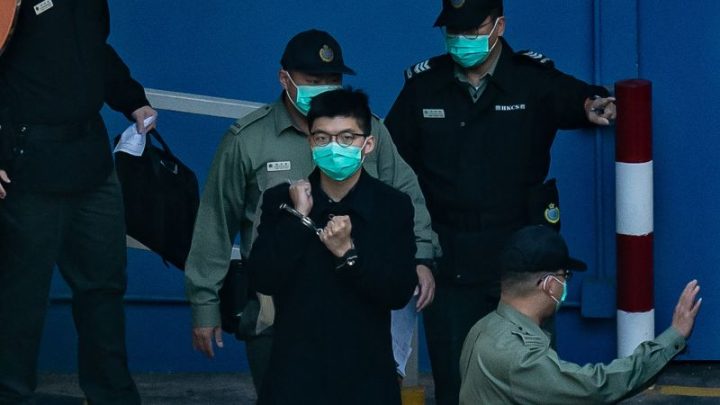
Security arrangements outside the courthouse on Friday were markedly heightened. Officers checked the identities of many attendees and searched bags before entry. Tang Ngok-kwan, a former member of the Alliance, told reporters that police turned him away from the building because he declined to surrender copies of past news coverage about the crackdown on the vigil.
Another supporter present at the proceedings, Margaret Chan, dismissed the prosecution’s logic outright.
“Patriotism is in the alliance’s name. We all love our nation. What does it incite people for? To love their country?”
The Hong Kong Special Administrative Region government, responding to inquiries ahead of the verdict, issued a statement through its spokesperson. Using the territory’s formal title, the office said:
“The HKSAR Government strongly condemns any biased remarks and smears against the HKSAR’s effort for safeguarding national security.”
The spokesperson added that rights and freedoms remain protected under the national security framework.
Beijing and the Hong Kong administration have consistently framed the post-2019 legal measures as necessary to restore order and stability after the upheaval of 2019. Critics, international human rights organizations, and several Western governments — including the United States — have argued that the crackdown has suppressed dissent and eroded the distinctive freedoms that distinguished Hong Kong from mainland China for decades.
A Rare Mention from the Top
The verdict arrived just days after Chinese President Xi Jinping, in a speech that made an uncommon reference to the turbulent period of 1989, praised the decision to clamp down on the Tiananmen protests. The remark was notable precisely because of its rarity; official Chinese discourse almost never names the events of June 1989 directly.
For Hong Kong residents who remember the vigils, the conviction of the organizers marks not merely a legal outcome but the formal judicial acknowledgment that publicly commemorating that history — even quietly, even with candles — now carries the weight of a criminal charge. The vigil’s organizers have been found guilty; the vigil itself has been gone for years. What remains is a question the city’s authorities have not answered: whether a society that cannot name its own recent past can claim to be free.
Related Reading
Frequently Asked Questions
What is Hong Kong s Tiananmen vigil fell?
Hong Kong s Tiananmen vigil fell is the main topic of this guide. The article explains the context, practical details, and next steps readers should understand.
Why does Hong Kong s Tiananmen vigil fell matter?
Hong Kong s Tiananmen vigil fell matters because readers are looking for a useful answer, not just a short summary. Good content should match search intent and help them decide what to do next.