‘You better treat me as a hostile witness,’ Suge Knight associate says in combative testimony during Tupac murder trial

Tupac Trial: ‘You Better Treat Me’ Witness Sparks
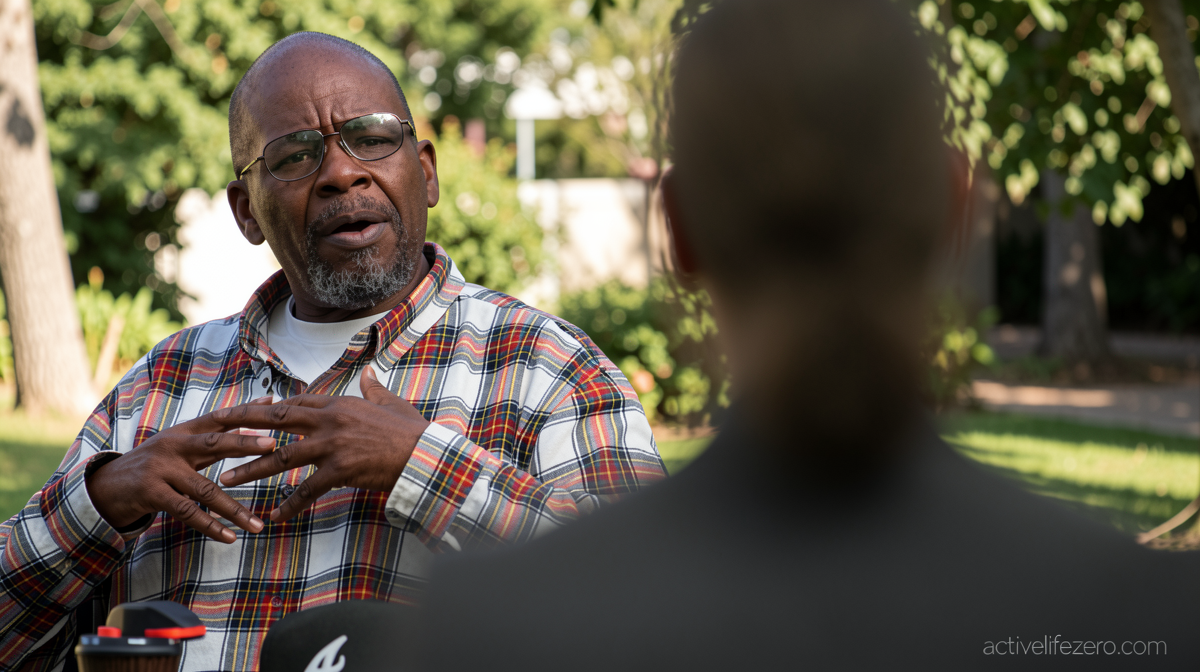
Activelifezero.com – The second day of the Tupac Shakur murder trial turned electric when a court-summoned witness opened his testimony with the blunt declaration, “You better treat me as a hostile witness,” and meant every syllable. James McDonald, a 61-year-old grandfather and former security operative for Death Row Records founder Marion “Suge” Knight, made no effort to soften his arrival on the stand. His combative, reluctant demeanor — punctuated by direct challenges to both prosecution and defense counsel — gave jurors an unfiltered look at the gang ecosystem prosecutors say produced the fatal shots fired at Shakur in September 1996.
McDonald, a former Mob Piru Bloods member, was compelled to appear by subpoena. Prosecutor Binu Palal acknowledged the compulsion early: “You didn’t volunteer to come or anything like that?” McDonald’s reply was flat. “Not at all.” From that point forward, his self-identification as a hostile witness shaped every exchange, and his candor about decades of territorial warfare between Los Angeles’ Crips and Bloods offered the jury a window into the retaliatory cycle at the heart of the case.
The Night at Club 662 and the Retaliation Cycle
On the evening of September 7, 1996, McDonald was coordinating security at Club 662, the Las Vegas nightclub operated by Knight. Shakur and his entourage were en route to that venue when their vehicle was struck by gunfire roughly a mile away. Investigators have concluded that Duane “Keffe D” Davis, now on trial, obtained the weapon used to kill Shakur and was seated in the vehicle from which the shots originated.
Prosecutors frame the homicide as one link in a chain of retaliatory strikes between Crips and Bloods, centered on the fate of Orlando “Baby Lane” Anderson, a nephew of Davis believed to have fired the shots that killed Shakur. Anderson was himself killed in a separate gang-related shooting two years after Shakur’s death. McDonald’s own brother, Alton “Buntry” McDonald, was connected to the attack on Anderson that same Las Vegas night.
McDonald described how the rivalry between Death Row Records and Sean “Puffy” Combs’ Bad Boy Records reignited what had settled into a relatively quiet standoff between the two street organizations. “It was peace, and when the two record companies got into it, Bad Boy went to Keffe D, and Suge came to us,” he told the court. “So that intertwined everything, and yes, we had issues.” Members of his gang understood within hours of the shooting that payback would come swiftly, even before Shakur succumbed to his wounds six days later. “Pac was shot. Retaliation is a ‘mug’. Come on, man. Like, it was for real, for real,” McDonald recalled.
A Witness Who Would Rather Be Anywhere Else
McDonald’s black Atlanta Braves cap sat folded beside him as he shifted uncomfortably through questioning about the specific activities of other gang members. Though he acknowledged a personal dislike of Davis, he drew a firm line around what he would disclose under oath. “You’re asking me questions, I can’t answer those questions,” he said, glancing toward the bench. “Talk to your lawyer, man,” he told Davis directly when pressed for names present at Club 662. “This dude is trippin’.”
His frustration escalated when defense attorney Michael Sanft pushed for further detail on gang operations. McDonald erupted: “I’m not finna send him to prison. You are!” Earlier, when Palal asked whether McDonald recalled occasions when neighborhood disagreements turned physical, the response was sharp. “Are you serious? Don’t ask me that right here,” McDonald said. “I can say that on both sides, when each neighborhood met each other, we had a lot of tension, I’ll say that.” He capped his testimony with a broader observation: “Any time you’re dealing with the gang life, there’s going to be violence at any given time.”
Following McDonald’s heated appearance, the jury heard from Reggie Wright, Jr., who at the time of the shooting served as the official head of Death Row Records’ security apparatus. Wright’s testimony, delivered from a motorized scooter parked outside the courtroom due to a medical condition, added another layer to the prosecution’s narrative of that chaotic Las Vegas night.
Frequently Asked Questions
Who is James McDonald and why was he called to testify? McDonald is a 61-year-old former Mob Piru Bloods member who once ran security operations for Suge Knight’s Death Row Records. He appeared under a court summons and styled himself a “hostile witness” throughout his testimony.
What did McDonald say about the retaliation culture after Shakur was shot? He stated that members of his gang understood within hours that payback would come, saying, “Retaliation is a ‘mug’… it was for real, for real.” He noted that people left Las Vegas that same night once word spread.
What role did the record-label rivalry play? McDonald explained that the conflict between Death Row and Bad Boy Records reignited dormant gang tensions, intertwining business disputes with the existing Crips-versus-Bloods territorial warfare.
Is the trial ongoing? The testimony described here came from the second day of the trial of Duane “Keffe D” Davis, who faces charges connected to the September 1996 killing of Tupac Shakur in Las Vegas.